The Sistine Chapel is one of Rome’s most unforgettable attractions, but visiting with kids or as a family can feel overwhelming if you don’t know what to expect. The line often forms before the Vatican Museums even open, and by mid-morning the entrance can feel more like a subway platform at rush hour than the gateway to one of the world’s most famous works of art.
Knowing what actually happens once you’re inside, from the crowd flow and strict rules to the pace of the visit, helps families plan ahead and enjoy the experience instead of feeling rushed. Here’s a realistic look at what your first Sistine Chapel visit involves, from entry to exit.
Getting In Isn’t Instant
Even with a timed-entry ticket, visitors typically walk through a long sequence of Vatican Museum galleries before reaching the chapel itself. This isn’t a design flaw; the Sistine Chapel sits at the far end of the museum complex, so the route funnels everyone past sculpture halls, tapestry corridors, and the Raphael Rooms first. Depending on the day, this walk can take anywhere from 45 minutes to over an hour if you’re stopping to look at anything along the way.
Booking ahead matters more than most people expect. Same-day tickets often sell out by mid-morning, especially from spring through early fall, and walk-up lines outside St. Peter’s Square can stretch past two hours. Reserving a slot online, or joining one of the guided Sistine Chapel tours that include skip-the-line access, removes a huge amount of uncertainty from the day and lets you plan the rest of your Vatican visit around a fixed arrival time.
The Room Is Smaller Than You Picture
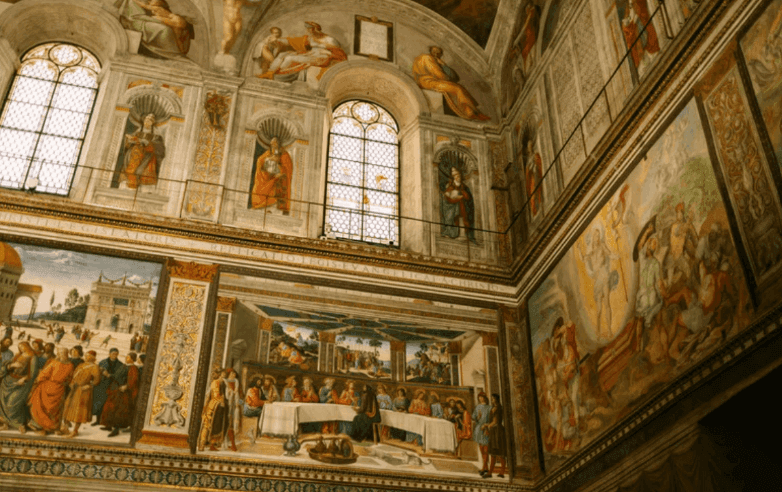
Photos and documentaries tend to make the chapel look vast, but it measures about 40 meters long and 13 meters wide, roughly the footprint of a large gymnasium. On a busy day, several hundred people can be inside at once, which means the space fills up fast and the air can feel warm and close by early afternoon. This is worth knowing going in so the crowding doesn’t come as a surprise.
The ceiling sits about 20 meters overhead, which is why so many visitors end up craning their necks or lying back against the walls to take it all in. There are a few benches along the perimeter, and they fill quickly. If a few minutes of sitting and simply looking matters to you, head toward the edges as soon as you enter rather than lingering in the center aisle.
Silence Is Enforced, Not Just Requested
Unlike most of the museum galleries, the Sistine Chapel operates under strict rules once you’re inside. Photography and video are prohibited, guards actively watch for phones, and loud talking is met with a sharp “shh” or an audible reminder over the room’s speaker system. This is treated as an active place of worship as well as an artwork, and the Vatican staff enforce that distinction firmly.
Guided groups are required to give their commentary outside the chapel doors and let visitors absorb the room in relative quiet once inside. If you’re on a tour, expect your guide to cover Michelangelo’s ceiling panels, the Last Judgment, and the wall frescoes by Botticelli and Perugino beforehand, saving the chapel itself for uninterrupted viewing.
What You’re Actually Looking At
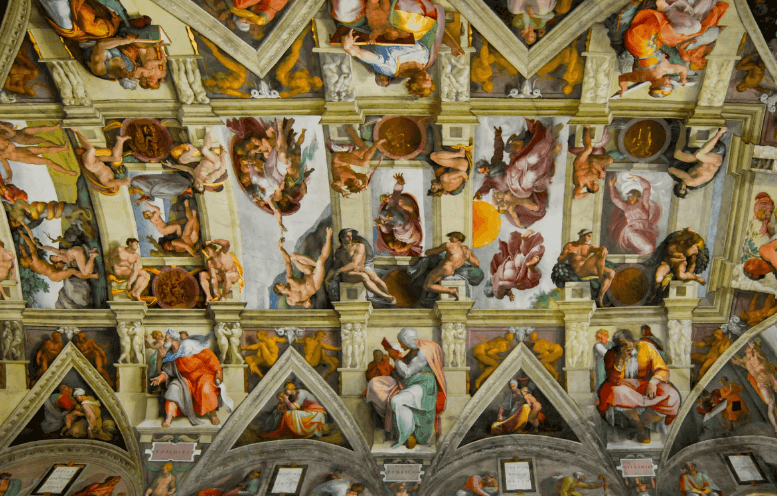
The ceiling, painted between 1508 and 1512, covers roughly 12,000 square feet and includes nine central scenes from Genesis, starting with the Separation of Light from Darkness and ending with the Drunkenness of Noah.
The Creation of Adam sits near the center, not at either end, which surprises visitors who assume it anchors the whole composition. Around these panels are the prophets and sibyls, painted at a scale meant to be legible from the floor far below.
The Last Judgment, covering the entire altar wall, came more than two decades later, finished in 1541. It’s darker in palette and more chaotic in composition than the ceiling, reflecting a very different period in Michelangelo’s life and in the politics of Rome. Spend time on this wall specifically; many visitors focus so hard upward that they walk past the altar wall without giving it equal attention.
Timing Your Visit for Fewer Crowds
Early morning entry, ideally the first slot of the day, offers the clearest sightlines and the most breathing room. Late afternoon, particularly in the final two hours before closing, is the second-best window, since many tour groups have already moved through by then. Wednesdays tend to be quieter too, since that’s when the Pope holds his general audience in St. Peter’s Square and some visitors adjust their schedules around it.
Avoid the last Sunday of the month if crowd size matters more than saving money. Entry is free that day, which sounds appealing but translates into some of the highest attendance figures of any day of the year.
Making the Most of a Short Window
Most visitors spend between 10 and 20 minutes inside the chapel before the steady flow of people moves everyone toward the exit near the Room of Constantine. Rather than trying to see everything, pick two or three specific panels or figures to focus on before entering, especially if you’re visiting with children or anyone who may tire of looking up for long periods.
A little preparation helps the experience feel less overwhelming and gives your family a better chance to appreciate one of the world’s greatest artistic masterpieces, even during a busy visit.
0
Leave a Reply