Scaling a handmade brand beyond direct-to-consumer sales requires shifting from retail transactions to long-term retail partnerships, catering to a global market worth over $700 billion annually. Wholesale orders give you predictable revenue, larger volume production runs, and invaluable brand exposure on shop shelves across the country.
Transitioning into wholesale means thinking like a buyer rather than a retail customer. Boutique owners care about profit margins, reliable delivery schedules, and how easily your products move off their shelves.
Many independent boutiques are looking for unique products to stock every single season. Capturing their attention requires a clear wholesale strategy built on solid pricing, clean sales collateral, and targeted outreach.
Setting Wholesale Pricing and Order Minimums
Wholesale pricing relies on a mathematical formula that protects your profit margins while leaving room for retail markup. The standard wholesale price is usually 50 percent of your suggested retail price (MSRP).
If an item retails for $40, your wholesale price should sit at $20. Calculate your cost of goods sold (COGS), including materials and labor, to ensure your wholesale price yields at least a 50 percent profit margin. If your cost to make a product is $10, selling it wholesale at $20 gives you a $10 profit, and the boutique owner sells it at $40 to cover their own shop overhead.
To make wholesale orders worth your time, establish clear Minimum Order Quantities (MOQs) and minimum dollar amounts. Setting an opening order minimum between $150 and $300 helps offset your admin and packing costs while keeping the barrier to entry low enough for new stockists. Reorder minimums can be set slightly lower, around $100, to encourage frequent shop replenishment throughout the year.
Crafting Your Digital Line Sheet and Sales Collateral
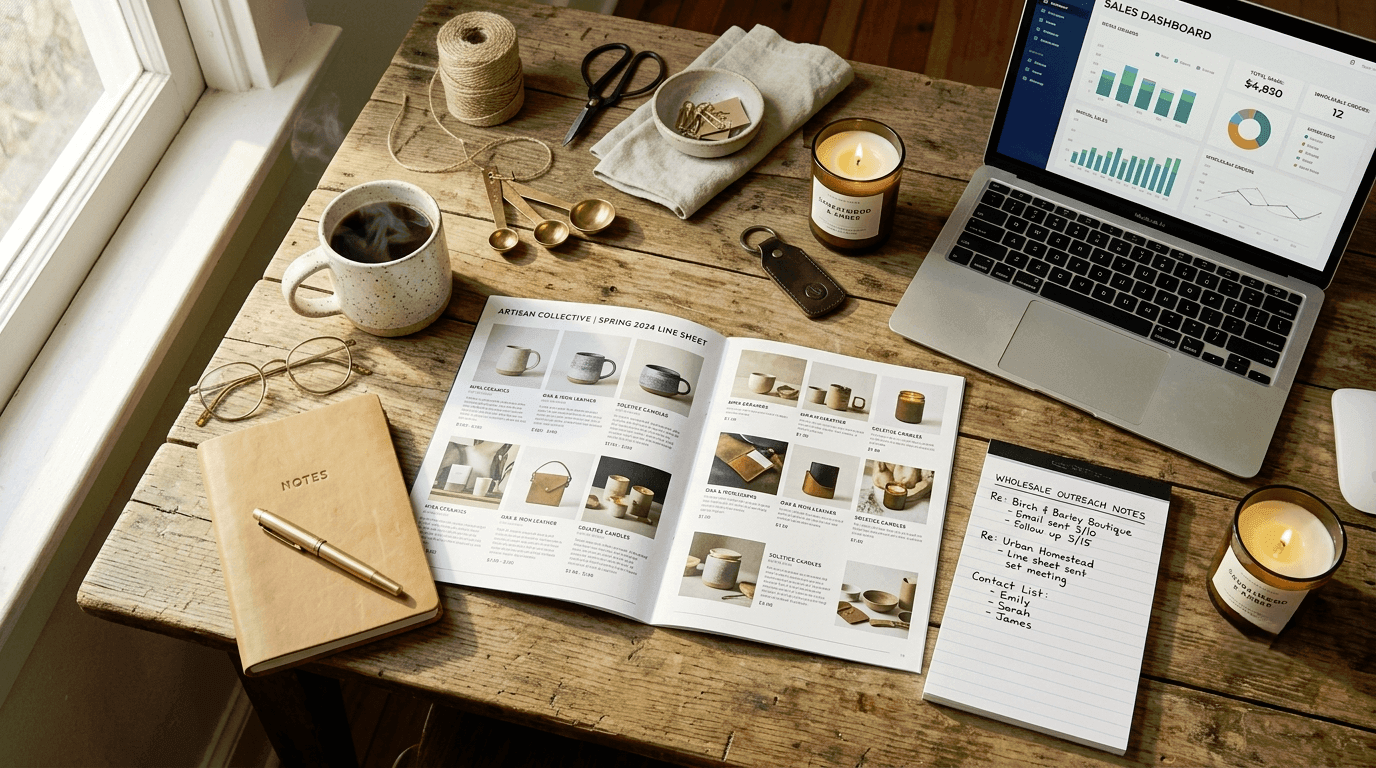
A line sheet is a concise, visual document that tells wholesale buyers everything they need to know to place an order. Unlike a consumer catalog, a line sheet strips away long brand stories and focuses entirely on buyer logistics.
Your line sheet must present essential ordering details cleanly:
- Product photos on plain white backgrounds with clear item titles and SKU codes
- Wholesale price alongside the suggested retail price and minimum order quantities per item
- Wholesale terms covering payment options, order lead times, shipping fees, and return policies
Keep your line sheet in a high-resolution PDF format that stays under 10MB for easy email attachments. You can also host a digital catalog on your website secured behind a password. This allows serious buyers to browse your active wholesale offerings, check inventory availability, and submit order forms directly at their convenience.
Identifying and Researching Ideal Boutique Stockists
Targeting the wrong shops wastes time and lowers your email response rates. Start your research by identifying independent boutiques that carry products complementary to yours without selling direct competitors. Look at where similar maker brands are stocked by checking their stockist pages or social media tags.
Local neighborhood retail corridors and tourist destinations are great places to start. Use Instagram and Google Maps to search terms like “gift shop in [City]” or “handmade boutique near me.” Pay close attention to their store aesthetics, price points, and overall product curation to confirm your work naturally fits their shelves.
Once you find target stores, map out key contact details before reaching out. You need the owner or head buyer’s direct name and email address. Using specialized sales intelligence software can streamline the research process when you are ready to scale your prospect list efficiently. Reaching out directly to a named buyer rather than a general store email drastically improves your open and response rates.
Executing Cold Outreach and Store Pitching
Boutique owners receive dozens of wholesale pitches every week, making concise and personalized communication essential. Keep your cold emails brief, friendly, and focused entirely on why your products will sell well in their specific store.
State clearly why you are reaching out in the very first sentence. Mention a specific detail about their shop, such as a recent Instagram post or a particular product collection they carry, to prove you have researched their store.
Keep your email body under 150 words and include a link to your digital line sheet or wholesale portal. Avoid attaching heavy PDF files to initial cold emails, as they can trigger spam filters.
Offer to send a small product sample if they express interest. A sample lets buyers hold your product, test its quality, and evaluate materials firsthand.
Follow up politely five to seven business days after your initial email if you do not receive a response. Persistence pays off, as store owners are often busy running daily shop operations and appreciate timely follow-ups.
Utilizing Trade Shows and Digital Wholesale Marketplaces
While cold outreach works well for local target lists, trade shows and wholesale platforms allow you to scale your reach globally. In-person trade shows let buyers physically touch your goods and meet you face-to-face, which builds trust quickly.
Digital wholesale marketplaces like Faire, Abound, or Handshake offer streamlined ordering and buyer protection features. These platforms expose your brand to thousands of active retail buyers who are actively searching for new inventory. Keep in mind that platforms charge commission fees on initial orders, so factor those costs into your financial planning.
Combining direct outreach with a marketplace presence creates a well-rounded distribution model. Direct sales preserve your full wholesale margins, while digital marketplaces pull in discovery traffic from buyers you might not have found through manual research.
Managing Wholesale Relationships and Order Fulfillment
Landing a new stockist is just the beginning of a successful wholesale pipeline. Retaining stockists through exceptional customer service and reliable order fulfillment drives consistent long-term revenue.
Ship orders promptly within your stated lead times and pack items securely to prevent shipping damage. Include clear packing slips, clean retail-ready packaging, and barcode labels if requested by the buyer. Check in with store owners 30 days after an order delivers to ask how the inventory is moving and offer product suggestions for their next replenishment order.
Maintaining an organized wholesale CRM spreadsheet or software tool helps you track buyer interactions, order histories, and follow-up schedules. Consistent communication transforms one-time test orders into recurring quarterly accounts that support steady business growth year-round. Even if you’re starting from scratch, there are many tools that will help you grow.
Optimizing Your Wholesale Operations for Growth
Building a thriving wholesale business takes patience, refined pricing, and consistent weekly outreach. By focusing on buyer needs, delivering professional sales collateral, and maintaining strong relationships with stockists, you can turn your handmade products into a scalable wholesale enterprise. Explore our blog for additional insights on making your handmade goods business a viable enterprise, not just a hobby.
0
Leave a Reply