There are already enough surprise expenses in family life without adding a leaking roof or water-damaged ceiling to the list. Between school runs, meals, laundry, work, and everything else that fills the week, checking the outside of the house can easily fall to the bottom of the list. But ten minutes this fall could save your family a much bigger headache, and potentially thousands of dollars, by spring.
Most expensive problems around the house start small and stay quiet. Water is patient. It finds a tiny gap, works its way in over a season, and by the time a stain appears on the ceiling, a simple fix can turn into a major repair. Fall is when that clock starts running. Leaves come down, temperatures begin swinging above and below freezing, and changing weather puts pressure on every seam and edge of the house.
The good news for busy mums is that getting ahead of these problems does not need to become another weekend project. Ten minutes, a flashlight, and one slow lap around the outside of the house can reveal most of what matters before winter settles in. This is not a professional inspection, and it is not meant to be. Think of it as one small fall habit that can help protect your home, your family, and your budget.

Why Fall Sets the Deadline
Winter does not create damage so much as it enlarges damage that already exists. A hairline crack takes on water, the water freezes, the ice expands, and the crack widens. That cycle repeats every time the temperature crosses the freezing mark, which in most parts of the country happens dozens of times between November and March. A gap you could have sealed with caulk in October becomes a real repair by April.
Fall also brings the debris. Trees drop everything they have over a period of weeks, and much of it lands on the horizontal surfaces of your house and stays there. Wet leaves hold moisture against materials designed to shed it. Add the first heavy storms of the season, and you have both the mess and the force to drive it somewhere it should not go.
So the timing matters. Do this walk after the leaves have mostly fallen but before the first hard freeze, and you catch problems while they are still cheap and while contractors still have open calendars.
How to Walk the Property
Start from a distance
Park yourself at the end of the driveway or across the street and just look at the house for thirty seconds. Distance shows you things proximity hides. Rooflines should be straight. Gutters should run parallel to the fascia they hang from. Siding should sit flat. Anything that sags, bows, or waves at you from fifty feet away is worth a closer look, because it usually means something underneath has moved or gotten wet.
Then work the perimeter
Walk the full outline of the house in one direction, looking up, then down, then up again. Up for the roof edge and gutter line. Down for the foundation, the soil grade, and wherever water has been landing. The goal on this pass is not diagnosis. It is a list.
The Gutter Half of the Check
Clogs, sags, and separated seams
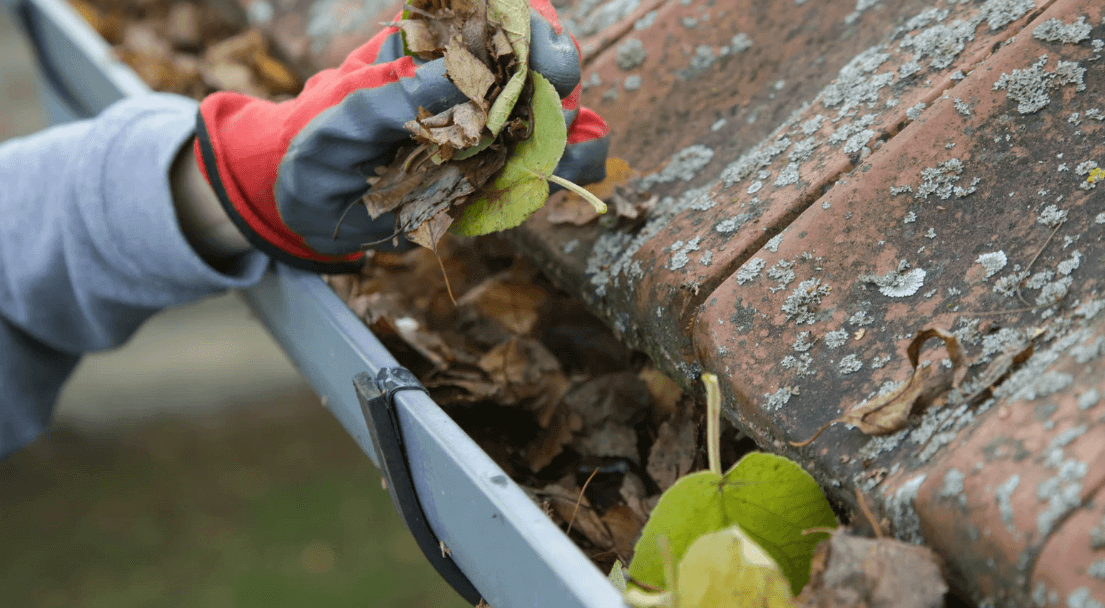
Gutters fail in three ordinary ways, and all three are visible from the ground. They fill up. They pull away from the house. They come apart at the corners and joints where two sections meet.
A full gutter is heavy — water weighs about eight pounds a gallon, and a clogged forty-foot run can hold a lot of it. That weight bends brackets and pulls fasteners out of wood. Look for plant growth, which is a reliable sign that a section has been holding soil and moisture long enough to grow something. Look for rust streaks and for daylight at the seams.
Where the water actually lands
Follow every downspout to its end and note what is underneath it. Water should be moving away from the house, ideally several feet out, onto a surface that drains. If a downspout empties directly against the foundation, you have found a problem that will show up later in a basement or crawlspace. Extensions are inexpensive and take minutes to install.
Check the soil, too. Ground should slope away from the house on all sides. Over years, settling and landscaping tend to flatten or reverse that slope without anyone noticing.
The Roof Overhead
Reading shingles from the ground
You do not need to climb anything. Most of what you want to know is visible with a good look from the yard, and a phone camera zoomed in will show you more than your eyes will.
Look for shingles that have curled at the corners, lost their granules and gone patchy or shiny, cracked in a straight line, or gone missing altogether. Look at the ridge, which takes more wind than any other part of the roof. Look for dark streaks and for any area that appears to dip. If shingle granules are collecting in the gutters or at the base of downspouts in noticeable quantity, the surface layer is wearing through.
The roof is the one system on a house where deferred maintenance compounds fastest, because everything below it — framing, insulation, drywall, flooring, wiring — depends on it staying dry. That is why a small area of damaged shingles is worth handling immediately rather than watching for another season, and why homeowners who find widespread wear often get a straight assessment from a licensed contractor such as Peak and Valley Roofing before committing to either a patch or full replacement. A repair quote and a replacement quote answer different questions, and knowing which one you actually need is worth the appointment.
Edges, valleys, and flashing
Pay attention to the transitions. Valleys where two roof planes meet, the metal flashing around chimneys and vent pipes, and the edges above doors and windows are where leaks start far more often than open field areas. Flashing should be flat, sealed, and rust-free. Loose or lifted metal is an open invitation.
The Attic Tells You the Rest
Ten minutes outside earns you two minutes inside. Take the flashlight into the attic and turn off the light. Any daylight coming through the roof deck is a hole. Then look at the underside of the sheathing for dark staining, at the insulation for compressed or discolored patches, and at the nails for rust or frost, which points to moisture and poor airflow.
Ventilation and insulation belong in the same conversation as leaks. The Department of Energy explains how attic insulation and air sealing work together, and an attic that runs too warm in winter melts snow unevenly, which creates ice at the eaves. If you find persistent damp or any musty smell, the EPA’s mold guidance is a sensible starting point for deciding what you can clean yourself and what needs help.
Write It Down and Rank It
A list is only useful if it survives the walk. Photograph anything questionable, date the photos, and keep them. Documentation helps you track whether something is getting worse year over year, and it helps considerably if you ever file a claim — the Insurance Information Institute is clear that maintenance records and dated photos strengthen a homeowner’s position.
Then sort the list into two columns: things that let water in, and everything else. The first column gets handled now. The second can wait for spring.
Ten Minutes Now, One Less Thing to Worry About Later
As mums, we spend plenty of time noticing the little things that keep family life running smoothly. The house deserves the same kind of quick check before winter arrives. Thankfully, this one does not require special skills, expensive tools, or an entire free weekend. It simply takes a few minutes of attention at the right time of year.
Those ten minutes can mean catching a loose gutter before water reaches the foundation, spotting a damaged shingle before it becomes a ceiling leak, or finding a small gap before winter weather makes it bigger. More importantly, it means one less unpleasant surprise competing with all the other things a family budget needs to cover.
Small problems stay small when someone notices them. Make this quick walk-around part of your family’s fall routine, and ten minutes in October could save you a much bigger job, and a much bigger bill, come spring.
0
Leave a Reply