$3,000 to $8,000. That’s the spread I got when I priced out a single glass sliding door for my sister’s dining room last spring, and the quotes were describing what sounded like the same door. Same width, same finish, roughly the same install timeline. The difference lived in the details nobody puts on the estimate: panel configuration, glass type, hardware, and whether the unit was built to keep heat inside the house or just to move air around.
If you’re staring down the same decision, here’s the good news. Once you know the six choices that actually drive the price and the daily feel of the room, the quotes stop looking random. You’ll know which upgrades earn their money and which are just padding the invoice.
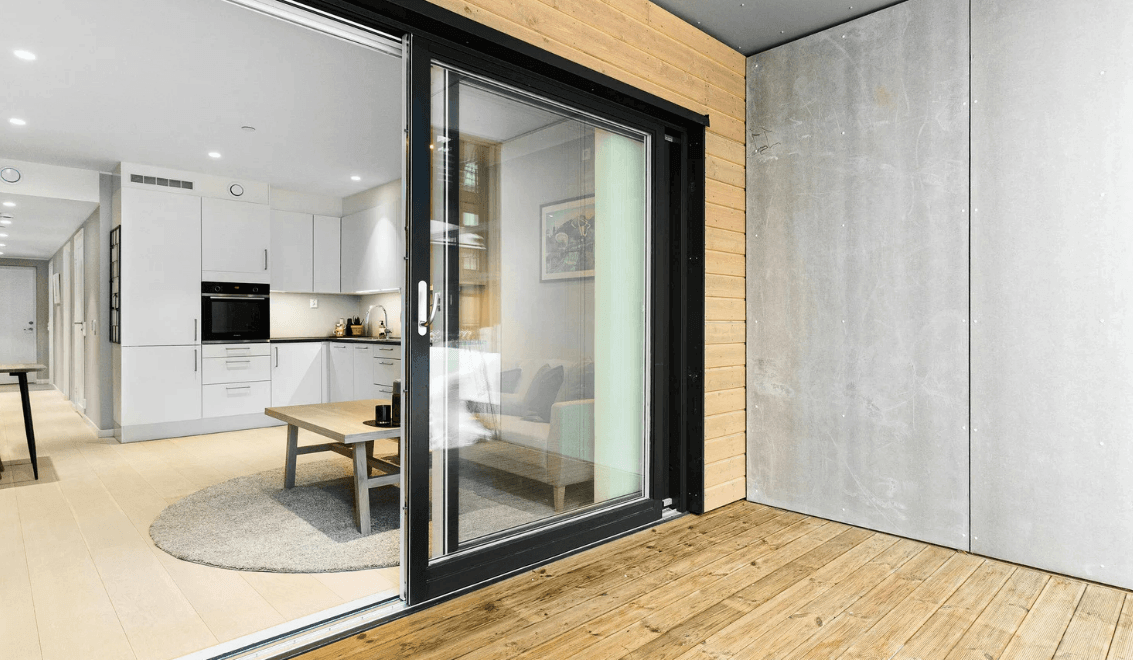
Start With the Opening, Not the Style
Every door conversation has to begin with the hole in the wall. Measure the rough opening width and height in three places for each because walls aren’t square, and note whether you have room for a pocket. A true sliding door needs about half the opening width in clear wall space for the panel to park against. A bi-fold configuration folds panels back like an accordion and needs less wall, which matters a lot in older homes where the wall to the left of the doorway is only a couple feet wide.
I’d pick bi-fold every time for a tight corner. The trade-off is that folding panels take up floor space when they’re open, so watch your furniture layout before you commit. Sliders disappear along the wall and give you back the room.
Glass Type Changes Everything
This is where most of the price variance hides, and it’s the choice I’d protect above all others. Clear glass shows more daylight and a truer view of the yard. Frosted gives you privacy from a neighbor’s second-story window without losing the brightness. Low-E coatings reflect heat back where it belongs: outside in summer, inside in winter.
According to the Department of Energy, windows and doors together account for a meaningful share of a home’s heating and cooling load, which is exactly why glass specs show up on every energy audit you’ll ever get. Thicker glass, tinted glass, and laminated safety glass all cost more and all solve a real problem. If your door faces a west-facing driveway and you’ve watched a toddler run at it at full speed, laminated is worth the upcharge. If your only complaint is glare on the TV from 4 to 6 p.m., a tint is a cheaper fix than blinds you’ll never open.
Frame Material: Where the Money Actually Goes
Vinyl frames are the default for a reason. They’re low maintenance, they don’t need repainting, and they hold up in humid climates. Aluminum is stronger, thinner, and lets you run a larger panel without a chunky frame interrupting the view. Wood and wood-clad frames are beautiful in a Craftsman or farmhouse house, and they’ll ask you to refinish them every few years unless you go with the clad version.
Here’s the part I’d push back on with any salesperson: don’t buy a frame based on a color swatch alone. Ask what the thermal break looks like inside the extrusion, and if they can’t show you a cross section, that’s your answer. In cold climates, a frame without a proper thermal break will sweat and grow mold along the bottom track, no matter how good the glass is.
Energy Ratings You Should Actually Read
Every door in the U.S. carries a label from the National Fenestration Rating Council, which sets the industry standard for how window and door performance is measured. The National Fenestration Rating Council publishes ratings for U-values, solar heat gain, and air leakage, and those three numbers tell you more about daily comfort than the marketing copy ever will.
Lower U-value means better insulation. Lower solar heat gain means less summer heat pushing through the glass. Air leakage tells you how drafty the seams and weatherstripping are.
Match the ratings to your climate instead of buying the priciest unit on the showroom floor. In Phoenix, solar heat gain matters more than U-value. In Minnesota, flip that. A mid-range door with the right ratings will outperform a top-shelf door chosen for the wrong climate, and I’ll argue that with anyone.
Hardware and Tracks: The Quiet Dealbreakers
A sliding door is only as good as its rollers, and rollers are the first thing manufacturers cheap out on. Ask what the roller material is (nylon lasts, steel rusts in coastal salt air) and how the bottom track drains. Water sitting in a track is how you end up with a warped sill and a sticky door six summers from now.
Handles matter too, but for a different reason. A slim flush handle lets a curtain or shade pass over it, which is a small thing until you’ve installed a beautiful door and then discovered your blackout panel gets hung up on the latch every morning. Sit with a sample of the handle in the showroom and open and close it ten times with your eyes closed. You’ll learn more about the feel in ten seconds than from any spec sheet.
Installation: Pay for Competence
A bad install ruins a good door. Flashing mistakes cause water intrusion that shows up as a stain on the interior wall two winters later, long after the installer has cashed the check. Ask for proof of proper flashing detail, not just a price and a handshake. Read every warranty carefully, because manufacturers exclude water intrusion from improper installation in nearly every policy I’ve seen.
According to data from the Bureau of Labor Statistics, construction trades employment remains one of the larger segments of the U.S. workforce, which means you’ll have no shortage of contractors to choose from and every reason to be picky. Get three bids, ask each one what they’d change about the plan, and hire the one who asks you questions about your climate and your room instead of just quoting a number.
A Five-Minute Checklist Before You Sign
- Measured the rough opening in three spots, and it’s within the manufacturer’s tolerance.
- Confirmed you have enough clear wall for a slider, or you’ve chosen a bi-fold instead.
- Know your U-value and solar heat gain targets for your climate zone.
- Roller material and track drainage spec written into the quote.
- Installation flashing detail documented in writing.
- Warranty read end to end, with installation exclusions highlighted.
That’s it. Six checkboxes stand between you and a door that makes the room feel twice as big for the next twenty years.
One last thought on configuration. If you’re weighing a traditional slider against a folding unit, remember that a glass sliding door isn’t the only option when the wall is tight, and a bi-fold door can be the smarter pick for a narrow opening where you still want maximum daylight moving into the room.
Ask your installer to show you both laid out on your actual floor plan before you decide. Seeing the panels drawn over your kitchen table makes the choice obvious in a way no showroom ever will.
So which room in your house has been waiting for one of these? Measure the opening this weekend, snap a photo, and bring it to your first quote. You’ll walk in knowing more than half the people signing contracts that day.
0
Leave a Reply