Just for a moment, let’s be totally honest: with the time it takes to look after our family’s schedules, the endless pile of laundry to deal with, and the constant need to keep the main parts of the house in order, our own bedrooms tend to be forgotten about. It’s very easy for the master bedroom to turn into a place where unfolded clothes, books that have only just been started, and all sorts of other household items are stored.
Your bedroom shouldn’t be just the room where you end your exhausting day by collapsing into bed. It should act as your personal sanctuary, a calm and comfortable setting that enables you to recharge both physically and mentally. The good news is you don’t need a huge remodeling budget or a professional interior designer to change your room’s atmosphere completely.
If you make a few thoughtful changes to your surroundings, you can greatly improve your room’s comfort. Here are five easy, practical ways to make your bedroom healthier and cozier today.
1. Clear the Clutter for a Calmer Space
Have you ever realized how difficult it is to wind down when there’s a mess all around? Visual clutter can sometimes create a sense of restlessness. It can be harder to relax when the last thing you see before bed is a heap of laundry on ‘that one chair’ or a nightstand filled with kids’ receipts and chive toys.
Begin with the obvious surfaces; you don’t need to go through the entire closet in one weekend, but simply clearing the nightstands and dressers will make at once. Buy a couple of nice woven baskets or fabric storage bins since they are ideal for temporarily storing things that don’t have a fixed place and for keeping them out of sight.
Here’s a quick tip: observe the ‘five-minute sweep’ rule by taking five minutes before you brush your teeth to collect up any loose items. This simple habit means that you’ll find your space cleaner in the morning.
2. Improve the Air Quality
We spend a large part of our lives in our bedrooms, even though the quality of the indoor air is usually neglected. A well-maintained bedroom can still have airborne particles from dust, pollen, pet dander, and other sources inside the house. For people sensitive to these allergens and particles, they can worsen symptoms and make it harder to sleep comfortably.
All good initial steps include opening windows when the weather allows, keeping the bedding of pets clean, and vacuuming regularly. Moreover, one way of reducing the amount of airborne particles that stay in the room is to use air purifiers. These purifiers run in the background and capture microscopic particles, which can be especially beneficial for people sensitive to dust, pollen, or pet dander.
3. Keep Indoor Humidity Comfortable
Indoor humidity levels can vary a great deal depending on the season, since cold outdoor air usually has less moisture in it and when it is brought indoors and then heated in the winter the relative humidity decreases. In a similar way, air conditioning can also reduce the humidity level inside buildings since cooling systems tend to remove moisture from the air as they work.
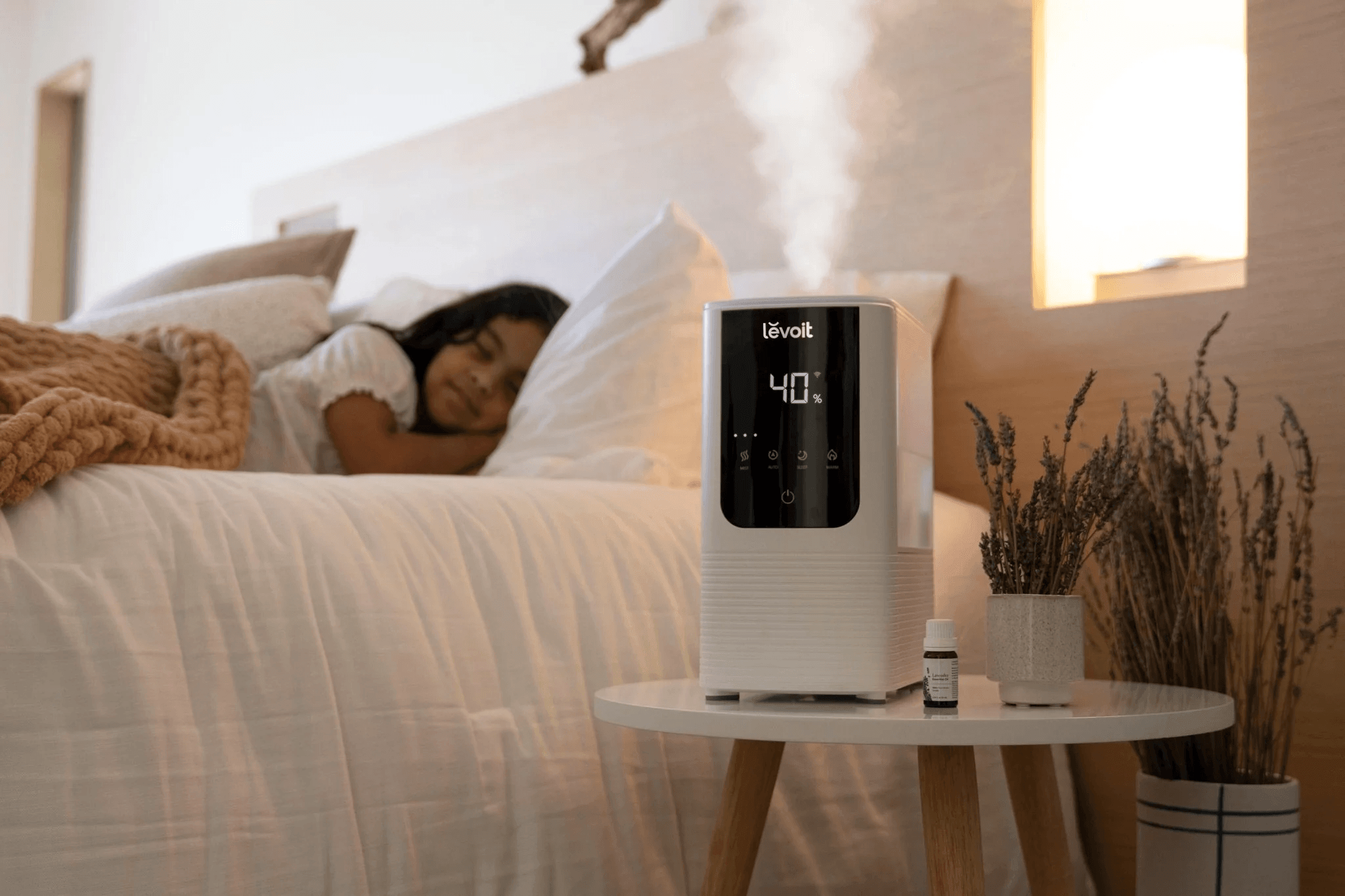
Low indoor humidity can lead to dry skin, dry lips, and dry nasal passages and thus make the room less comfortable to be in at night. One simple solution to this problem is to put some moisture back into the environment. A quiet humidifier can add moisture to dry indoor air and so may make the bedroom more comfortable when the humidity levels are low.
It’s important to remember that higher humidity isn’t always preferable, since maintaining moderate levels can help prevent excess moisture and condensation. Additionally, some people find the continuous background noise of a humidifier less distracting than the occasional noises coming from outside.
4. Choose Breathable Bedding
The bed is the central feature of the room and the items placed on it are very important. A great many people have difficulty in regulating their body temperature at night, and the materials you use for bedding can have an effect. While some synthetic bedding may feel warmer or less breathable than some natural fabrics, comfort will differ depending on the material, the weave, and the way it is constructed.
If you want your bed to seem more appealing, then you should replace fabrics that don’t breathe with natural ones; cotton and linen are commonly used for bedding because they are breathable, and some fabrics derived from bamboo can also feel smooth and comfortable for people who sleep in warm conditions.
Layering is just as important for creating a cozy bed; instead of using a single thick comforter, use a breathable duvet with a thick knit throw blanket at the foot of the bed. This arrangement doesn’t only give a very appealing and fashionable appearance but also enables you to easily regulate your temperature during the night.
5. Soften the Lighting
The lighting in your bedroom has a great influence on your body’s natural circadian rhythm; exposure to bright light in the evening can cause the body to feel awake and at the same time suppress or delay the normal increase in melatonin.
In order to achieve a pleasant and relaxing atmosphere, you should soften the lighting. At least one hour before you intend to go to bed, switch off the ‘main light’. Instead, use bedside lamps. Bulbs with a colour temperature of about 2700K or other warm colour temperatures will produce a softer evening atmosphere.
You should also consider improving your window coverings; attractive blackout curtains can help cut down on light from streetlights or the early morning sun and make your room feel warmer and more suitable for rest.
Final Thoughts
You don’t need a complicated setup to have a healthier bedroom; minor adjustments to the clutter, air quality, humidity, bedding, and lighting can make the room seem more comfortable and purposeful.
What about yourself? Do you have any particular nighttime routines, or favorite tips for making your bedroom feel especially cozy? Please let me know in the comments section below—I’m always on the lookout for new ideas to try!
0
Leave a Reply