Keeping the backyard pool clean can feel like a full-time job, especially when the water suddenly turns cloudy for no clear reason. Before you assume something is broken, it is often just a dirty sand filter that needs a little attention.
Many pool owners think they need to replace the filter when performance drops, but that is rarely true. With a simple cleaning routine, you can bring your sand filter pump back to life and enjoy clear water again without spending extra money.
This guide walks you through each step in a simple, manageable way so you can get your pool back to looking fresh and ready for family time.

What You Need Before You Start Cleaning
Before you touch your sand filter pump, it pays to get organized. Jumping straight into the process without the right tools or knowledge can lead to missed steps, water mess, or even minor damage to your system. Take a few minutes to prepare, and the whole job becomes much smoother.
The Tools and Supplies You Should Have Ready
You do not need anything fancy to clean a sand filter pump. Most of what you need is probably already in your garage or laundry room. Here is what to gather before you start:
- A garden hose with good water pressure
- A chemical filter cleaner or degreaser (liquid or powder form)
- A bucket for mixing or rinsing
- Safety gloves and eye protection
- A wrench or filter key for removing the lid or drain cap
- A flat surface or tarp to work on if you plan to remove internal parts
If you own a sand filter pump like this or a similar multi-port valve system, check your product manual first. Some models have specific valve settings or pressure release steps that differ slightly from standard setups. Knowing your specific sand filter pump’s design ahead of time prevents unnecessary confusion mid-task.
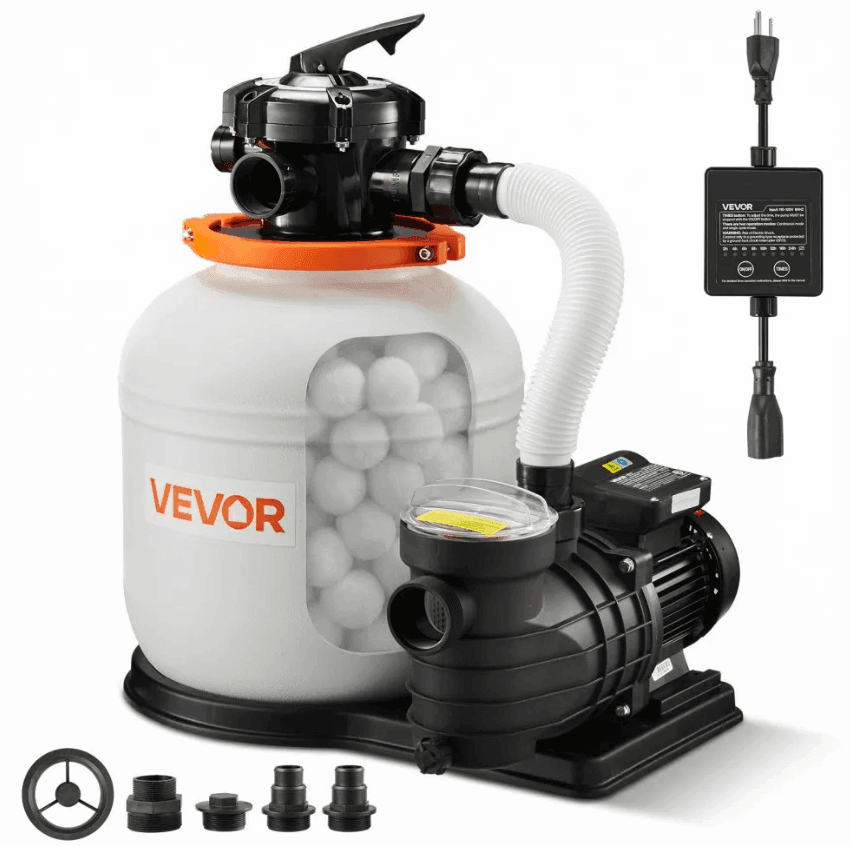
Photo: VEVOR
Understanding How Sand Filters Get Dirty
Sand filters trap debris, algae, oils, and fine particles as water passes through the sand bed. Over time, this buildup does not just slow filtration: it also creates channeling, where water finds narrow paths through the clogged sand rather than flowing evenly. The result is poor water clarity, even though the pump appears to run fine.
Two main types of buildup affect sand filters. The first is physical debris like leaves, dirt, and insects. The second is chemical buildup from body oils, sunscreen, and calcium deposits. Physical debris responds well to backwashing alone, but chemical buildup requires a dedicated filter cleaner to break it down properly.
Safety Checks to Complete Before You Begin
Safety is not optional here. A pressurized filter system that is opened without proper preparation can release water forcefully or damage the multiport valve. Before you do anything else, turn off the pump completely at the power source. Do not simply switch it to a low setting.
Next, release the air pressure from the filter tank. Most tanks have a small air relief valve on top. Open it slowly until you hear the pressure hiss out, then close it again. After that, set your multiport valve to the correct position for the task you are about to perform. If you are backwashing first, set it to BACKWASH. If you are adding a chemical soak, you will set it to FILTER or RECIRCULATE depending on your system. Double-check that all hose connections are secure before you proceed.
Step-by-Step Process to Clean Your Sand Filter Pump
Now that your tools are ready and your safety checks are complete, it is time to move through the cleaning process itself. Each step builds on the last, so follow the order closely for the best results.
Step 1: Backwash the Filter to Remove Loose Debris
Backwashing is the first and most direct way to flush out accumulated debris. It reverses the flow of water through the sand bed, which lifts and expels trapped particles out through the waste line.
To start, attach your backwash hose to the waste outlet so dirty water does not flood your yard or pool area. Then set your multiport valve to the BACKWASH position and turn the pump back on. Run it for two to three minutes or until the sight glass (the small clear window on the valve) shows clear water instead of murky brown or gray water.
Once the water runs clear, turn the pump off again. Move the valve to RINSE and run the pump for about thirty seconds to resettle the sand bed. Skip this rinse step, and you risk sending loosened debris back into your pool. After the rinse, turn the pump off and move on to the next step.
Step 2: Apply a Chemical Filter Cleaner for a Deep Soak
Backwashing handles the physical debris, but it does not touch the oils, scale, and fine organic matter embedded in the sand. For that, you need a chemical soak.
Most filter cleaners come with instructions for either a direct-add method or a pre-mix method. For the direct-add approach, set your valve to FILTER, pour the recommended dose of cleaner into the skimmer basket, and let the pump circulate it for about an hour. Then turn the pump off and let the cleaner sit in the sand bed overnight if possible, or for at least eight hours. This soak time allows the chemical to break down stubborn buildup that a backwash alone cannot reach.
After the soak, set the valve back to BACKWASH and run the pump again for two to three minutes to flush out the dissolved grime. Follow this with another thirty-second RINSE cycle. At this point, your sand bed should be significantly cleaner, and your filter flow rate should improve noticeably.
Step 3: Inspect the Multiport Valve and Reassemble the System
The sand itself is not the only part of your filter that collects grime. The multiport valve, the laterals inside the tank, and the pressure gauge all deserve a quick check while you have the system in maintenance mode.
Look at the pressure gauge first. A clean, properly functioning filter typically operates between 8 and 15 PSI, depending on your system. If the gauge still reads high after the cleaning steps above, you may have a partial blockage in the laterals, which are the spoke-like tubes at the bottom of the sand tank that distribute water. In that case, you can remove the sand, rinse the laterals with a hose, and reinstall.
For the multiport valve, inspect the O-ring or gasket under the lid. If it looks cracked, flat, or brittle, replace it before you seal everything back up. A worn O-ring causes air leaks and pressure loss, which directly affects how well your filter cleans the water. Once everything looks good, reassemble the system, prime the pump, and restart it to confirm normal operation.
Conclusion
Taking care of your sand filter pump is one of those small home maintenance tasks that makes a big difference in how your backyard feels. A quick backwash and an occasional deep clean can keep your pool water clear and inviting all season long.
With a little routine care every few weeks, you can avoid bigger problems and spend more time enjoying the pool with your family instead of fixing it. A clean filter means less stress, clearer water, and more relaxing days at home.
0
Leave a Reply