Knitting colorful items used to be a challenging task. There were many details that required special attention and frequent changes in the kind of yarn. The knitting process took a long time. Self-striping yarns have changed everything about how people used to make their multicolor items. These yarns are made possible by means of modern dyeing technology. As soon as you decide to use such yarns, one color is transformed into another when you knit new rows. You are able to create unique designs and transitions from one color to another without cutting and weaving in ends. Once you learn the properties of such yarns, there are no limits to your creativity.
When choosing materials, look for yarn that feels soft, holds its shape, and shows stitch patterns clearly. Whether you’re using yarn from a local craft store or browsing options like Australian yarn, focus on finding the right weight, texture, and colors for your project. Consistent yarn weight also helps keep your stitches even and your stripes looking neat.
What Makes Self-Striping Yarn Different?
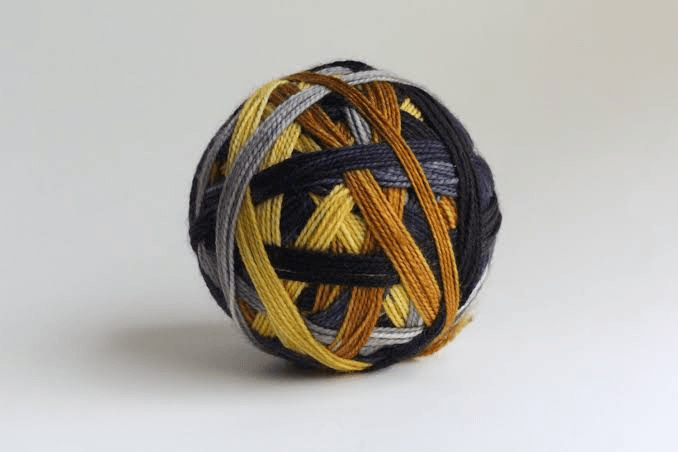
To understand how self-striping materials work, it is good to know how they are different from other dyed types you can find today.
- Yarns Which Self-Strip: Dyed using color repeats that are long enough to go through one or more complete rows of stitches before changing to the next color.
- Variegated Yarns: Dyed using color repeats which are very short, usually only a few inches long for each color. This type of yarn creates a speckled or mottled effect in your knitting.
- Ombré/Gradient Yarns: Dyed in gradual color transitions from lighter to darker shades or in a range of colors. It will normally take an entire ball or skein of yarn to complete one color cycle.
According to survey results conducted by Craft Yarn Council, over 68% of knitters and crocheters enjoy colorwork the most. However, 54% of those surveyed stated that weaving ends was their least favorite part. Using self-striping yarn solves that problem for them since they get to do the work using just one strand of yarn without any complicated processes.
The Science of Repeat Lengths and Stitch Gauge
What makes it easier to maintain stripes clean and visible is their proper alignment with regard to the stitching process. In other words, one needs to focus on the way the project itself is done and the color of the yarn. The dye master uses certain segment lengths when creating self-striping fibers:
| Repeat Classification | Segment Length per Color | Ideal Project Applications | Visual Effect Produced |
| Micro-Striping | 12 to 24 inches | Socks, gloves, baby garments | Fine, delicate 1 to 2 row stripes |
| Medium Banding | 3 to 6 feet | Scarves, cowls, sweater sleeves | Bold, distinct 4 to 8 row stripes |
| Wide Gradient Blocks | 10+ feet | Blankets, shawls, sweater bodies | Broad structural panels and color blocks |
Why Gauge Matters
Since all colored sections remain the same width, altering the total number of stitches will affect the width of all stripes. For instance, when you knit a sock cuff having 60 stitches and using a yarn with a medium repeat of colors, you will probably get 5 rows of plain blue. The same yarn, when used for a cowl with 120 stitches, will cover only 2.5 rows for each color section. It is very helpful to count stitches before starting.
Stitch choice changes how the colors show up. Plain stitches such as garter, stockinette and rib keep the stripes clear. Very busy stitch patterns, such as lace or heavy cables, can compete with the colors and break up the stripes. If you want a textured stitch, knit a small swatch first so you can see how the colors behave before you start the real project.
Advanced Techniques for Self-Striping Yarns: Beyond Basic Rows
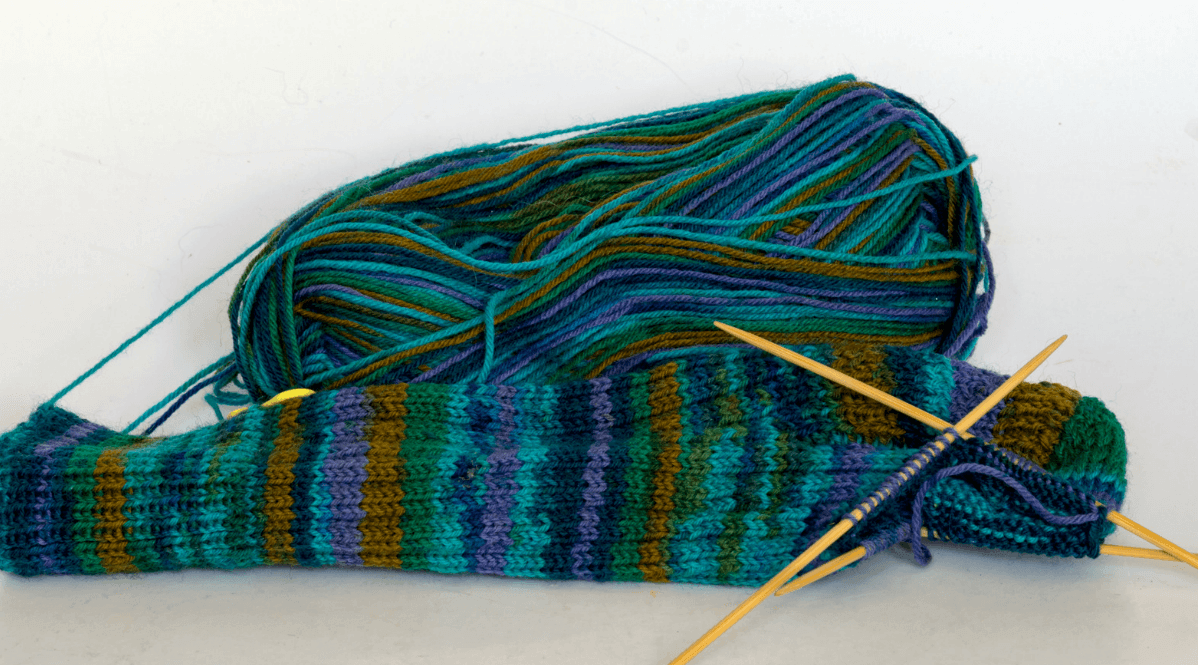
Although stockinette or garter stitch creates simple straight lines across the fabric, you can alter the pattern created by self-striping yarns, forming different patterns.
1. Planned Pooling
With the number of stitches aligned to the dye cycle length, the colors form linear arrays either vertically or diagonally. It is from such an array that diamond shapes, zigzag stripes, or plaid designs can be made using a single strand of yarn.
2. Chevron and Ripple Stitches
Through the combination of self-striping yarn and the manipulation of the number of stitches being worked in vertical directions, you turn the flat stripes into waves and peaks. The color transitions present in the yarn will make the stripe definition very prominent in the direction of your knitting.
3. Entrelac and Modular Knitting
The little diamond pieces that are attached help each of the color sections cover a complete section. The yarn automatically changes colors as it goes from one little diamond to the other. This helps make the basket appear as though you have done stranded knitting.
If you are making a pair, such as socks, mittens or two sleeves, start each piece at the same point in the color sequence. Find where a color begins in the first ball, then unwind the second ball to the same spot before you cast on. This way both pieces end up with matching stripes.
Streamline Your Colorwork Crafting
Self-striping yarns offer you an amazing blend of fashion and convenience. Once you understand how the length of the stripes relates to the number of stitches, you will be able to create anything. It can be anything from cozy winter headwear to something to decorate your living room. Using only high-quality materials such as Australian yarn, you will create items that are gentle on the skin, durable, and colorfast.
0
Leave a Reply