Most people walk right past the beetroot at the grocery store, and it is easy to see why. It looks like more work than it is worth, and for a lot of us, the only beetroot we ever tasted came from a jar at a grandparent’s dinner table. That memory tends to stick.
Lately, though, that reputation has started to shift. Doctors bring up beetroot in checkups. Athletes drink the juice before training. Beetroot powder now sits on store shelves right beside the protein.
There is a reason behind the shift, and it starts with what beetroot contains. Here is a closer look at beetroot’s nutrition, the health benefits behind the attention, how it compares to beetroot supplements for better circulation, and simple ways to work it into your meals.
What Is Beetroot, Exactly?
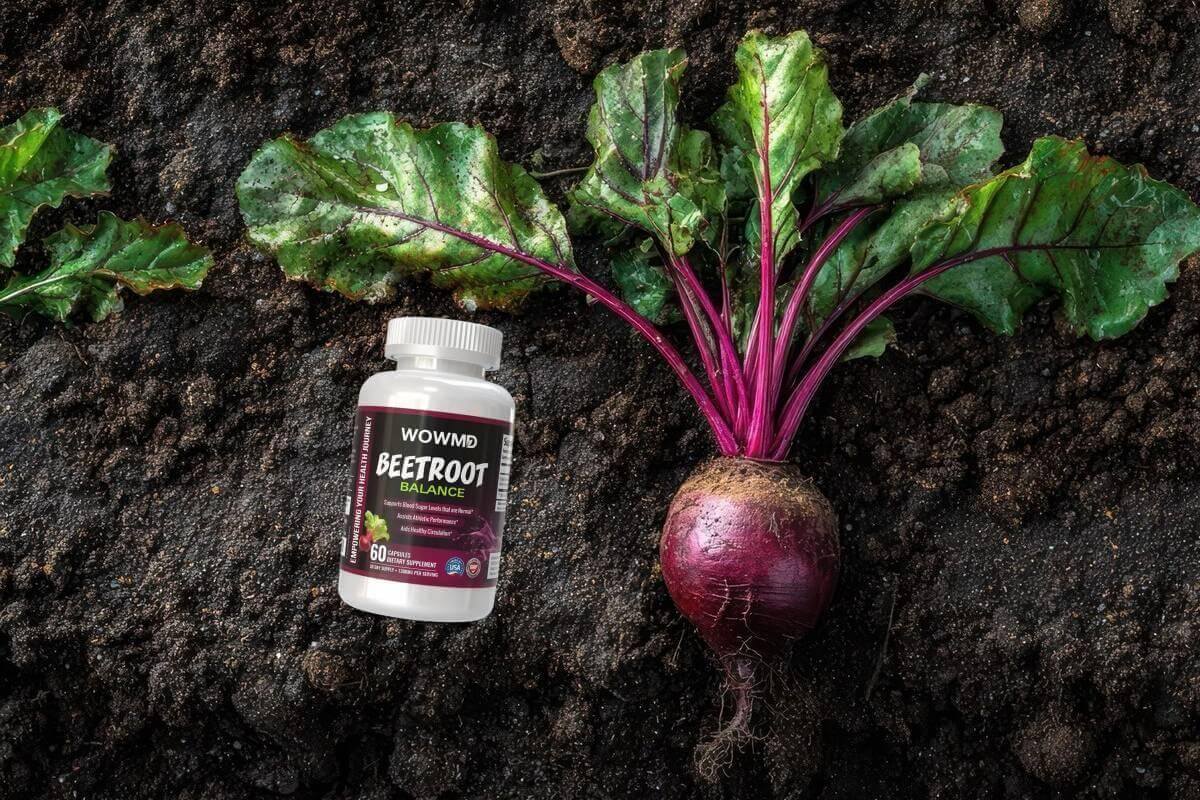
Beetroot is the round red root that grows under the soil, while the leaves grow above it. All season long, the plant pulls nutrients up from the ground and stores them down there, so by harvest everything is packed into that one dense root. That is where the sweetness comes from, and it is why such a small vegetable carries so much.
Beets come from the same family as Swiss chard and sugar beets. Growers just raise each one for a different purpose: chard for its leaves, sugar beets for making sugar, and table beets for the red root you buy at the store.
You will find it sold fresh, pre-cooked, canned, juiced, or dried into powder.
Nutritional Profile of Beetroot
For a vegetable known for tasting sweet, beetroot is lighter than most people expect. One cup of cooked beetroot comes in at around 75 calories, with about 3 grams of fiber and 3 grams of protein.
The rest of what it carries is where things get interesting:
- Folate. One cup covers roughly a third of an adult’s daily need, among the highest of any common vegetable.
- Potassium. Helps the body maintain fluid balance and normal blood pressure.
- Manganese. Involved in bone health and how the body processes nutrients.
- Fiber. Feeds gut bacteria and keeps digestion regular.
- Betalains. The pigments behind the deep red color also act as antioxidants.
- Nitrate. Beetroot holds more of this compound than nearly any other vegetable, and it drives most of the research.
Together, that makes a fairly dense package for a single cup.
Top Health Benefits of Beetroot
Beetroot supports blood pressure, stamina, circulation, brain function, digestion, and antioxidant defense. Most of it traces back to nitrate, which relaxes blood vessels so blood flows more easily. Here is how that plays out, benefit by benefit.
Blood pressure support
Beetroot holds more nitrate than nearly any other vegetable. Once your body converts it to nitric oxide, blood vessel walls relax and open a little wider, which takes pressure off the whole system.
A systematic review in Advances in Nutrition pooled 22 trials and found that beetroot juice lowered the top blood pressure number by about 3.5 points on average. Shifts that size add up over years, which is why beetroot has become a regular part of heart-healthy eating.
Exercise and stamina
Wider vessels mean muscles receive oxygen more easily. Your body ends up doing the same work with less effort behind the scenes.
A review covering 20 separate research summaries found that nitrate from foods like beetroot improved endurance across most measures, largely by lowering how much oxygen the body burns for a given effort. That shows up as everyday activity feeling a little less demanding.
Heart and circulation
Nitrate works on more than blood pressure readings. It also influences how smoothly blood itself moves through the vessels.
In a study of healthy older adults, one serving of beetroot juice made blood platelets less likely to clump together within three hours. Smoother flow is exactly what you want from circulation, and researchers see this as a promising direction for beetroot in older age.
Brain and focus
Your brain runs on a steady blood supply, and that supply naturally slows as the years pass. Anything that keeps vessels open serves the brain as much as the heart.
Research on beetroot and brain function found that nitrate-rich beetroot increased blood flow to the brain, with higher plant nitrate intake linked to better cognitive aging. It is a newer area of study, and an actively growing one.
Digestion
One cooked cup of beetroot provides about three grams of fiber. Fiber supports the healthy bacteria in your gut and helps keep digestion regular. Getting enough of it daily is one of the simplest things you can do for gut health, and beetroot makes that easier.
Antioxidant support
Betalains give beetroot its deep red color. These compounds support your body’s defenses against oxidative stress, the normal wear that builds up as cells produce energy, according to Consumer Health Digest. Beetroot keeps its betalains whether you eat it raw, roasted, or juiced.
What a Beetroot Habit Looks Like
Getting the amount right is simpler than it sounds. About one cup of cooked beetroot a day is the general target, or half a cup of juice, since juicing concentrates everything into less volume.
Here is what that looks like in practice:
- Daily amount: One cup cooked is roughly two medium beetroots.
- Frequency: Nitrate leaves your system within about 24 hours, so eating some most days works better than one large weekend portion.
- Timeline: Give it two to four weeks. Changes build gradually rather than appearing after a single serving.
- Before a workout: Have it two to three hours before you start.
None of this needs to be precise. Beetroot is food, not medication, and a steady habit matters more than an exact amount.
Food vs. Supplements: Which Is Better?
| Form | Whole Beetroot | Powder or capsules |
| Nitrate | Yes | Yes, often concentrated |
| Fiber | About 3g per cup | Little to none |
| Folate and potassium | Yes | Usually stripped out |
| Convenience | Needs cooking | Mixes in seconds |
| Best for | Everyday health | Pre-workout, busy days |
Beetroot powder and capsules now sit on shelves beside the protein, which raises a fair question about whether they do the same thing as the vegetable. The difference comes down to what travels with the nitrate.
Whole beetroot brings fiber, folate, potassium, and betalains along with it, and those are doing real work of their own. Supplements isolate the nitrate and leave most of that behind.
Powder still has a place. It is quick, it tastes milder, and it is a reasonable fallback when cooking beetroot is not happening.
Safety and Considerations
Beetroot is a vegetable, and most people can eat it without a second thought. A few situations are still worth knowing about.
The most common surprise is harmless. About one in seven people pass the pigment rather than break it down, so your urine may turn pink. Nothing is wrong when that happens.
Beetroot is naturally high in oxalates, so if you have had kidney stones before, your doctor can tell you what amount fits your situation.
Blood pressure is worth a quick mention at your next visit. Beetroot gently lowers it, and if you take medication that does the same, your doctor will want to factor both in.
Tips for Adding Beetroot to Your Diet
Beetroot is sold in several forms, and each one suits a different kind of day.
- Fresh beetroot. The complete package with fiber intact. Roast it, boil it, or shred it raw into a salad.
- Pre-cooked packs. Already peeled and cooked, sold near the bagged salads. Slice and serve.
- Juice. Half a cup provides what a full cup of cooked beetroot does, since juicing concentrates it.
- Powder. A spoonful mixes into smoothies, oatmeal, or water, with no cooking required.
- Capsules and gummies. The most convenient forms, though they carry little fiber, and gummies often add sugar.
Fresh and pre-cooked beetroot give you the most complete nutrition, since the fiber and minerals come along with the nitrate. That said, powders and capsules solve a real problem. They keep for months, need no cooking, and deliver a consistent amount every time, which makes daily intake far more realistic for most people’s schedules.
Conclusion
Beetroot is a simple, nutrient-rich food that can support heart health, circulation, exercise performance, digestion, and antioxidant protection. Its natural nitrate content is the main reason it has gained so much attention, but the fiber, folate, potassium, and betalains matter too.
Whole beetroot offers the most complete nutrition, while powders, juices, and capsules can make regular intake more convenient. For most people, adding beetroot to meals a few times a week is an easy way to improve overall diet quality.
References:
The Nitrate-Independent Blood Pressure-Lowering Effect of Beetroot Juice: A Systematic Review and Meta-Analysis — Advances in Nutrition, 2017
Best Beetroot Supplements | Dietitians Recommended | Consumer Health Digest:
0
Leave a Reply