People keep asking if you’re tired. You slept eight hours, and someone at work still asks whether everything’s okay. That gap between how rested you feel and how rested you look is one of the more quietly irritating parts of aging, and it usually traces to a small area around the eyes doing an outsized amount of communicating on your behalf.
For moms especially, that gap tends to show up in a very specific way: you got the sleep you could get, you’re managing the school run and the laundry and everything else just fine, and it’s still your eyes that give people the wrong impression before you’ve said a word.
The fear that stops most people from addressing it is looking done rather than looking rested. That concern is reasonable given how the procedure was performed decades ago, and it’s also largely outdated. Patients across Scottsdale raise it in nearly every consultation, often surprised to learn how much technique has evolved since the results they’re picturing were common.
Here’s exactly what changed in how surgeons approach this.
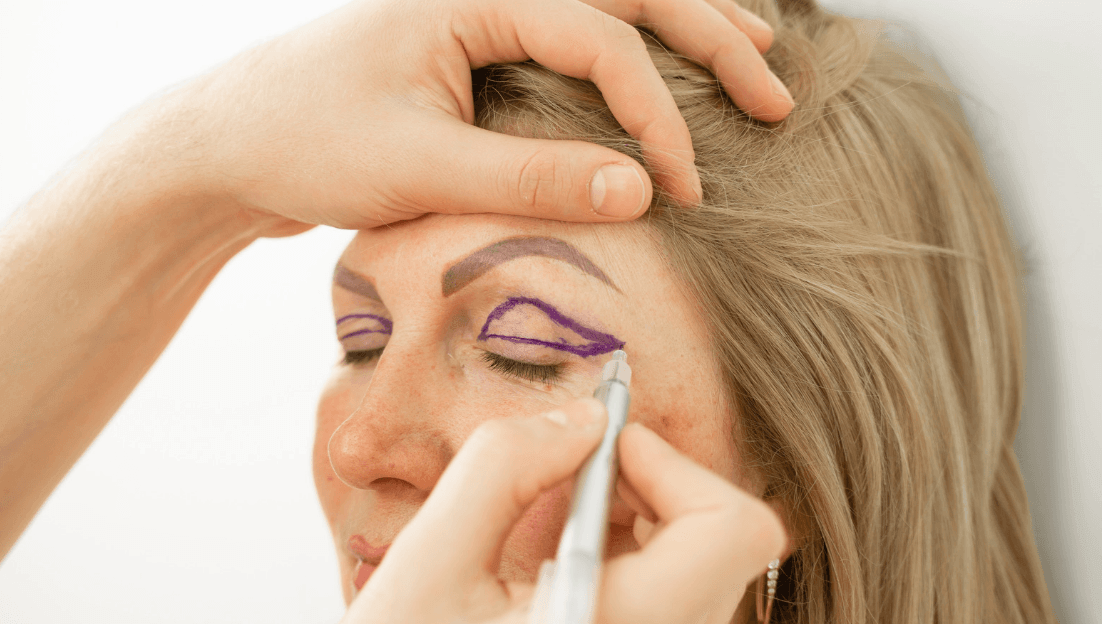
Skin Removal and Fat Repositioning Serve Different Goals
These are different interventions solving different problems, and conflating them is where poor results originate.
- Skin excision: addresses redundancy in the envelope, removing excess that creates sagging or folds
- Fat management: addresses volume, either excess creating bulges or deficiency creating hollows
- Older technique’s approach: defaulted to removing both aggressively, reasoning that less tissue meant a tighter, younger appearance
- The resulting problem: a hollowed, skeletal look that people came to associate with obvious eyelid surgery
Contemporary practice treats volume as something to redistribute rather than eliminate, since hollowness reads as aged rather than refreshed.
Conservative Technique Preserves Your Own Eye Shape
The shift toward restraint is documented in the clinical literature. Commentary published through the NIH’s National Center for Biotechnology Information describes an evolution in upper lid surgery from traditional tissue resection toward techniques maintaining anatomical integrity, advocating conservation of fat pads over reduction to sustain natural contours and improve long-term outcomes.
Preserving fat rather than removing it protects the eye’s underlying structure, which is what keeps the result looking like a refreshed version of the patient’s own eye rather than a surgically altered one. The distinction matters most years down the line, since a conservatively treated eyelid continues to age in step with the rest of the face, while an over-resected one often looks increasingly hollow as natural volume loss compounds on top of what surgery already removed.
This is worth sitting with if you’re a mom weighing the decision: you’re not signing up for a face that looks different at pickup next year. A conservative approach is designed to age alongside you, the same way it would have anyway — just without the heaviness that made you look tired in every photo.
Upper and Lower Lids Address Different Problems
Upper lid surgery typically deals with skin redundancy hooding the lid and sometimes obstructing the visual field. It’s the more straightforward of the two, with a shorter recovery and a more predictable result.
Lower lid surgery addresses puffiness from herniating fat, hollowing at the tear trough, or both simultaneously. It’s technically more demanding and carries a greater risk of complications, including lid retraction, which is why the approach matters considerably. Many patients need only one of the two, and a surgeon recommending both when one would suffice is worth questioning.
Recovery timelines matter differently when you’re the one running a household. Since upper lid work tends to have a shorter, more predictable recovery, it’s often the piece moms ask about first — a shorter stretch of concealer and sunglasses at drop-off versus a longer one, which is a real, practical part of the decision alongside the medical one.
Conservative Techniques Protect Natural Eye Contours
The recognizable look comes from a specific set of choices: too much skin removed, too much fat taken, and the resulting hollow, tight appearance around an eye whose shape has been subtly altered. Once volume is removed from the upper lid, it’s difficult to restore, which is exactly why the mistake tends to be permanent in a way more conservative techniques never risk becoming.
Restraint isn’t the surgeon being cautious; it’s the technique that produces a result nobody identifies as surgery. Patients evaluating blepharoplasty in Scottsdale should ask specifically how a surgeon decides how much tissue to remove and how they avoid the overcorrection that defines the outdated look. That reasoning is something Shapiro Plastic Surgery walks through clearly at consultation, since the difference between restraint and overcorrection often comes down to a surgeon’s specific decision-making process.
Incisions That Hide in Natural Creases
Upper lid incisions are placed within the natural crease, where the fold conceals them almost completely once healed. This is one of the more reliably inconspicuous scars in facial surgery.
- Upper lid crease incision: hidden within the natural fold, virtually undetectable once fully healed
- Subciliary incision: placed just below the lashes for lower lid work
- Transconjunctival incision: approached from inside the lid, leaving no external scar at all
- Selection depends on need: the right approach depends on whether skin excision is also required alongside fat repositioning
Systematic review evidence indicates both lower lid approaches can safely accomplish fat repositioning, with selection depending on whether skin excision is also needed. Asking which route a surgeon plans and why is a reasonable question.
For moms who’d rather not field questions from anyone — including sharp-eyed kids — this is often the most reassuring part of the whole conversation: there’s no visible sign to explain, because there’s nothing to see.
Final Thoughts
The whole objective here is a result nobody can identify. Not younger exactly, and definitely not altered, just less tired-looking in a way that doesn’t invite a specific explanation. That outcome comes from conservative tissue handling, preserving volume rather than stripping it, and keeping your own eye shape intact. When you’re evaluating a surgeon, ask what they’d preserve rather than what they’d remove, since that question tends to reveal their whole philosophy quickly.
A consultation with a board-certified surgeon who’ll tell you when the answer is something other than surgery is worth considerably more than one that agrees with everything you ask for. And it’s worth remembering you don’t have to decide anything today. Plenty of moms sit with this question for a long time before ever booking a consultation — looking into it is not the same as committing to it, and a good surgeon will treat it that way too.
0
Leave a Reply