Any homeowner can decide that their living space needs some upgrades. They may want to change places and sell it, or just do some renovating to keep things fresh. Knowing how to do proper layouts and save on certain upgrade items could come in handy. That’s exactly what we’re doing in this article: we’ll go over kitchen layout ideas, provide useful tips, and even touch on financing.
Layout Is The Key to a Good Kitchen Upgrade
The kitchen is one of the most important spaces in a house, and any buyer is going to assess how conveniently everything is laid out. From a purely functional perspective, navigating a poorly planned kitchen layout is a nightmare: you can bump your pinky against the stove, hit your head on a cupboard, and have your fridge not open all the way.
If you don’t want to create such an experience, a good start is the kitchen work triangle. It’s the spatial relationship between your stove, sink, and refrigerator. Each foot of the imaginary triangle located between these three should measure between 4 and 9 feet. But even after ensuring proper spacing, you need to consider zoning. If you don’t properly plan out prep, cooking, and cleaning zones, it’s yet another inconvenience.
Top 5 Functional Kitchen Layout Ideas
After considering these two concepts, you need to choose the kitchen layout. Although there are plenty of options, most usually pick between these five.
- The Galley Layout
Modeled after ship and train kitchens, the galley does one thing well: keep things tight and within arm’s reach. Two parallel countertops with a central walkway create a compact work triangle, placing appliances and prep areas in a logical sequence. It can feel a bit cramped, and the fix is vertical and involves open shelving, which removes the tunnel effect and makes the space feel open.
For sizing, a walkway of at least 42 inches is comfortable for daily movement; 48 inches is the practical minimum if two people regularly cook at the same time.
- The L-Shaped Layout
With an L-shaped layout, you run cabinets and counters along two adjacent walls. In turn, it maximizes workspace and storage, while keeping the center open for movement. The layout’s one weak spot is the corner. Dead corner space is a common complaint, but it’s an easy fix. Pull-out organizers and lazy Susan units transform hard-to-reach corner cabinets into genuinely useful storage.
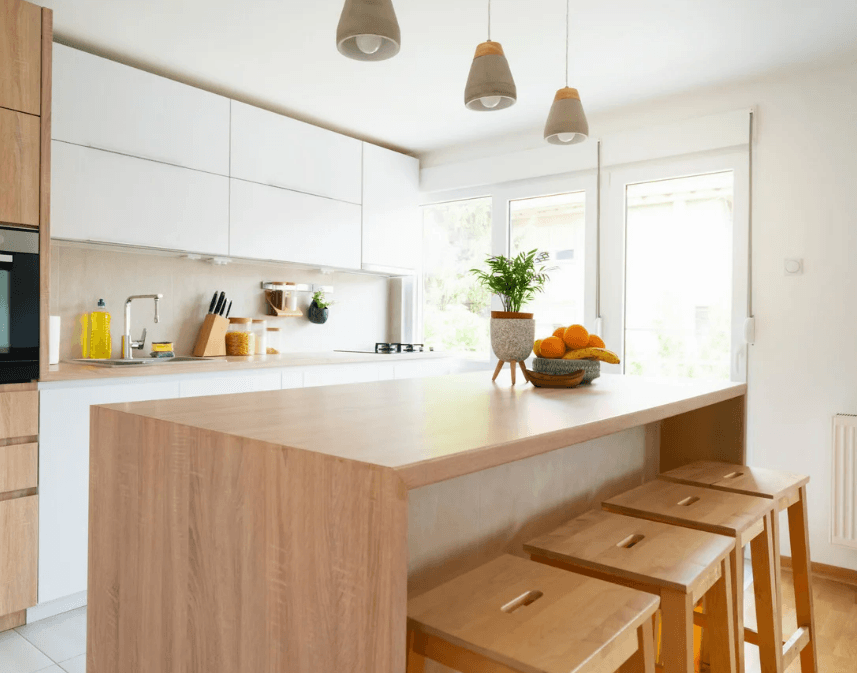
You could also add a breakfast bar at the end of one run. And if the budget allows, a freestanding island that maintains at least 42 inches of clearance on all sides is a good addition to avoid significant structural changes.
- The U-Shaped Layout
U-shaped layouts suit homeowners who spend a lot of time in the kitchen. With cabinetry and counters running along three walls, it creates a natural work triangle among the cold storage, cooking, and cleaning zones. Its main challenge is corner space. Lazy Susan units, pull-out shelves, and vertical dividers are the most practical fixes.
You can convert to a G-shape to extend utility. It’s also a good idea to consider a three-layered approach to lighting, with LEDs under cabinets, recessed fixtures overhead for ambient lighting, and pendant lights for the peninsula.
- The Island Layout
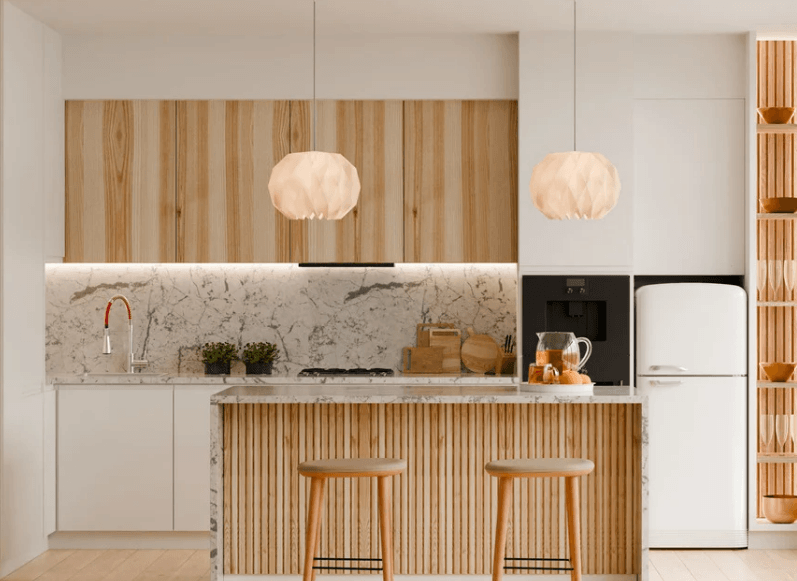
A kitchen island is just that — a small functional space. When positioned correctly, it functions as a prep station, casual dining spot, and storage solution in a single footprint. If you decide to go with this one, clearance is everything. Aim for 42 to 48 inches between the island and surrounding counters for comfortable movement.
For the best functional return, keep the design simple and ensure extra prep surface and under-counter storage deliver more daily value than loading the island with appliances.
- The Single-Wall Layout
Often dismissed as a compromise, the single-wall kitchen layout is one of the most efficient configurations available. All cabinets, appliances, and counters run along one wall, keeping the rest of the floor completely open. Sequencing is everything in such a layout.
Storage is the layout’s main constraint, and vertical space is the fix. Tall cabinetry handles appliances and bulk items, while open shelving keeps everyday essentials accessible without adding visual clutter. For extra prep room, a slim rolling island adds meaningful counter space without any permanent commitment.
The Right Layout Makes the Difference
Every kitchen layout mentioned above is as solid as they come. However, there’s one common thread: a well-planned ticket works better than one that’s simply well-decorated.
Take the Garcias, a family of four who were tired of their kitchen working against them. Rather than committing to a full remodel, they focused on layout first. They repositioned their prep station closer to the range, installing pull-out cabinet organizers and adding task lighting above the main work wall. The workflow difference was immediate.
But as they priced out countertops, lighting fixtures, and storage solutions, the total rose above expectations. Rather than stalling mid-project, they explored personal financing solutions. After carefully considering options, they got a good offer, which helped spread the cost over time and keep the work on schedule.
The result was a kitchen that finally made sense; no demolished walls, no luxury finishes, just smarter use of the space they already had. Whatever kitchen layout fits your home, that’s the approach worth taking.
0
Leave a Reply