If you’ve ever stood in the lumber aisle planning a DIY project, you’ve probably noticed that two boards that look nearly identical can have very different price tags. Whether you’re building a simple shelf, tackling a furniture makeover, or taking on a larger home improvement project, understanding lumber grades can help you choose the right materials without overspending.
Lumber grading is a standardized system that describes the quality, strength, and intended use of a given board. While the markings and labels can seem confusing at first, learning the basics can save you money, help your projects turn out better, and make shopping for wood much less intimidating.
Let’s look at the many options of lumber grades and how you can choose the right one for your project.
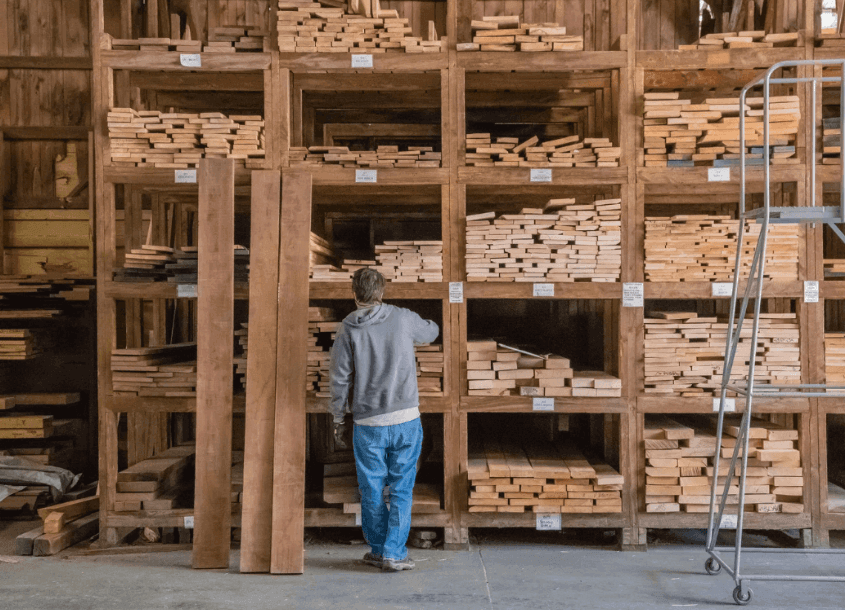
Structural vs. Appearance Grades: Two Different Systems
The first thing to understand is that lumber grading operates under two largely separate frameworks depending on what the wood is being used for.
Structural lumber is graded for strength. The grades, Select Structural, No. 1, No. 2, and No. 3, reflect how well a board will perform under load. Knots, slope of grain, checks, and other characteristics are evaluated because they affect the wood’s mechanical properties.
This is the grading system that matters for framing, joists, rafters, and any application where the lumber is doing structural work. Building codes typically specify minimum grades for structural applications, and inspectors look for grade stamps.
Appearance grades are used for lumber where visual quality matters more than load-bearing performance. Finish lumber, trim, cabinetry stock, and furniture-grade wood fall into this category. The grading terminology here differs by species and association, but the general principle is consistent: higher grades have fewer and smaller defects, tighter grain, and better overall appearance.
Mixing these systems up is a common source of confusion. A No. 2 structural board and a No. 2 appearance board are graded under different criteria for different purposes. They’re not directly comparable.
Reading a Grade Stamp
Structural lumber sold in the United States carries a grade stamp that includes several pieces of information: the mill number, the grading agency (such as WWPA or SPIB), the species or species group, the moisture content designation, and the grade itself. It’s a lot of information compressed into a small mark, but each element is there for a reason.
The moisture content designation is worth paying particular attention to. “S-DRY” or “KD” (kiln dried) indicates the board was dried to 19% moisture content or below before grading. “S-GRN” means the board was graded green, at higher moisture content, and will shrink and potentially warp as it dries. For framing that will be enclosed in a wall, using green lumber can cause problems as the structure dries and moves. Most contractors specify kiln-dried material for interior framing for exactly this reason.
Common Grades and Where They Get Used
For dimensional framing lumber, the grades you’ll encounter most often are No. 2 and Better. No. 2 is the workhorse of residential construction. It allows for larger knots and more variation than No. 1, but it meets structural requirements for standard framing applications and is priced accordingly. Most wall studs, floor joists, and roof rafters in residential construction are No. 2 framing lumber.
Select Structural and No. 1 are specified where higher load capacity or longer spans are required, or where engineering drawings call for premium grades. The price difference over No. 2 is real, so using Select Structural throughout a standard framing job when No. 2 meets code is simply spending more than necessary.
For appearance applications, the grade naming gets more species-specific. Clear grades describe lumber essentially free of knots and defects. Common grades, numbered 1 Common through 4 Common in hardwoods, allow progressively more defects. A 1 Common hardwood board has more character than Clear but is significantly less expensive and perfectly suitable for many furniture and interior applications where tight grain and minor natural features are acceptable or even desirable.
Hardwood vs. Softwood Grading
Hardwood lumber, used primarily for furniture, flooring, and millwork, is graded by the National Hardwood Lumber Association (NHLA) under a system based on the percentage of clear, usable area in a board. The top grades, FAS (Firsts and Seconds) and Select, yield a high percentage of clear cuttings. Lower grades like No. 1 Common and No. 2 Common yield less, but the defective portions can often be cut around for smaller projects.
Softwood grading, which covers the dimensional lumber used in construction, follows the structural and appearance framework described above and is overseen by regional grading agencies.
Choosing the Right Grade for the Job
Understanding lumber grades doesn’t require a contractor’s license, but it can make a big difference in the success of your next project. Whether you’re building something decorative for your home, creating custom furniture, or tackling a larger renovation, choosing the right grade helps balance quality, appearance, and budget.
The next time you’re shopping for lumber, take a closer look at the grade stamp. If you’re unsure, ask questions or ask help from knowledgeable lumber supplier. The grading system exists to give buyers reliable information; using it well is just a matter of knowing what questions to ask. A little knowledge goes a long way toward helping you select the best boards for the job, avoid unnecessary expenses, and create a finished project you’ll be proud of for years to come.
0
Leave a Reply