How often have you woken up and wondered to yourself why your body feels so unusually stiff? There are millions of women navigating similar joint discomfort every day. Research shows that osteoarthritis affects approximately 60% of women who are older than 55 years often triggering chronic pain and restricting daily motion.
Getting older does not mean you must accept persistent physical discomfort or abandon the activities you love. Understanding how your body evolves allows you to adopt targeted strategies for long term health.
Why Aches and Stiffness Increase with Age
As people age, their bodies go through several changes. Muscle strength usually reduces, and joints become less flexible. Also, past injuries and years of doing the same movements may begin to have an effect.
Menopause in women may also play a role. Changes in the body, during and after menopause, can have an impact on both bones and muscles. Diseases like osteoarthritis can lead to constant stiffness and pain.
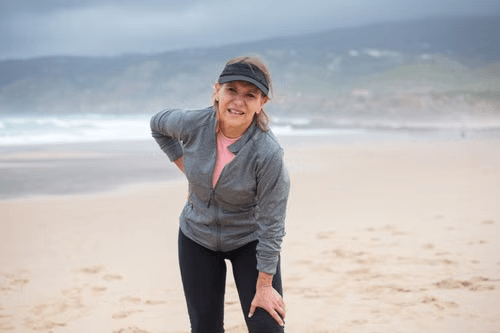
Don’t Skip Strength Training
Many assume that strength training is only for young people who desire to grow their muscles. However, with age, maintaining muscle is essential for performing day-to-day tasks.
Older people don’t have to lift heavy weights. They can just use light dumbbells, resistance bands, and exercises like wall pushups and squats. Being consistent is more important than being intense.
Pay More Attention to Your Joints
Strength and flexibility differ from one another. You may have strong muscles, but fail to lift overhead, rotate your neck comfortably, or twist your hips. This is why mobility exercises are necessary.
Try light movements like shoulder circles and ankle twists. Just five to ten minutes a day will make you more conscious of how your body moves. But, you shouldn’t be forceful. If you experience acute pain in any position, stop and ask for help.
Choose Exercise That Feels Good on Your Body
You don’t need to run or jump to obtain the benefits of exercising. Low-impact activities like walking, swimming, cycling, and water aerobics may be good alternatives if you are unable to do high-impact exercise.
Also, keep in mind that it is not necessary to make a big start. If you have not exercised for a long time, small walks are great for a start.
Look at What You’re Doing Between Workouts
Sometimes, the issue is not with your workouts. The trouble may be that you spend the remaining 23 hours of the day doing the wrong things.
Sitting for hours at a desk, driving for long distances, looking down at your phone, or working in awkward positions can make you feel sore. Try out different positions regularly.
You need to get up and move once in a while, stretch your body, and change shoulder or hip positions after you’ve been sitting for a while. You don’t need to have perfect posture. Instead, move often and change positions.
Allow Your Body Time to Heal
Many believe that exercising more leads to better results. However, the truth is that your body needs to rest. If you are new to strength training, it is essential that you understand the importance of recovery.
Adequate sleep, hydration, and rest days are key to achieving maximum benefits from physical training. Furthermore, you should distinguish between regular post-exercise soreness and pain that increases over time.
It is not advisable to pursue an activity if it causes constant pain. You could either try a different training method or consult someone knowledgeable.
Don’t Hesitate to Seek out Professional Assistance
Pain that occurs repeatedly may require more than just stretching exercises at home. When stiffness makes walking, exercising, sleeping, working, and doing daily tasks difficult, physiotherapy may be an option to consider.
Physiotherapy can offer an opportunity to examine how you are moving, identify areas of weakness or restricted movement, and develop exercises or treatment techniques suited to your needs.
If you are a woman looking for more assistance, it may be a good idea to consider GP physiotherapy and massage as an integral part of the process of minimizing pain, improving movement, and remaining mobile.
The aim is not just to temporarily cover up the pain. It is to understand the reasons behind the pain and address them.
Keep Moving, But Listen to Your Body
Even though your body undergoes some changes as you get older, you don’t have to put up with stiffness or pain. Start with small steps and build up over time.
However, if your condition keeps getting worse, it does not make sense to put up with it. You need to seek professional help as soon as possible. The goal isn’t to turn back the clock. It’s to keep feeling capable, active, and confident in the body you have now.
For further reading on maintaining an active lifestyle, explore our internal guide on low impact routines for joint health.
0
Leave a Reply