Children build movement skills through daily practice, but tasks such as dressing, carrying a lunch tray, climbing stairs, or joining a game can expose gaps in balance, coordination, hand control, or body awareness.
Occupational therapy connects these underlying skills with activities a child needs and wants to do. A therapist observes how the child moves, identifies barriers, and breaks challenging tasks into manageable practice. The therapist focuses on everyday movement as they assess and shape goals.
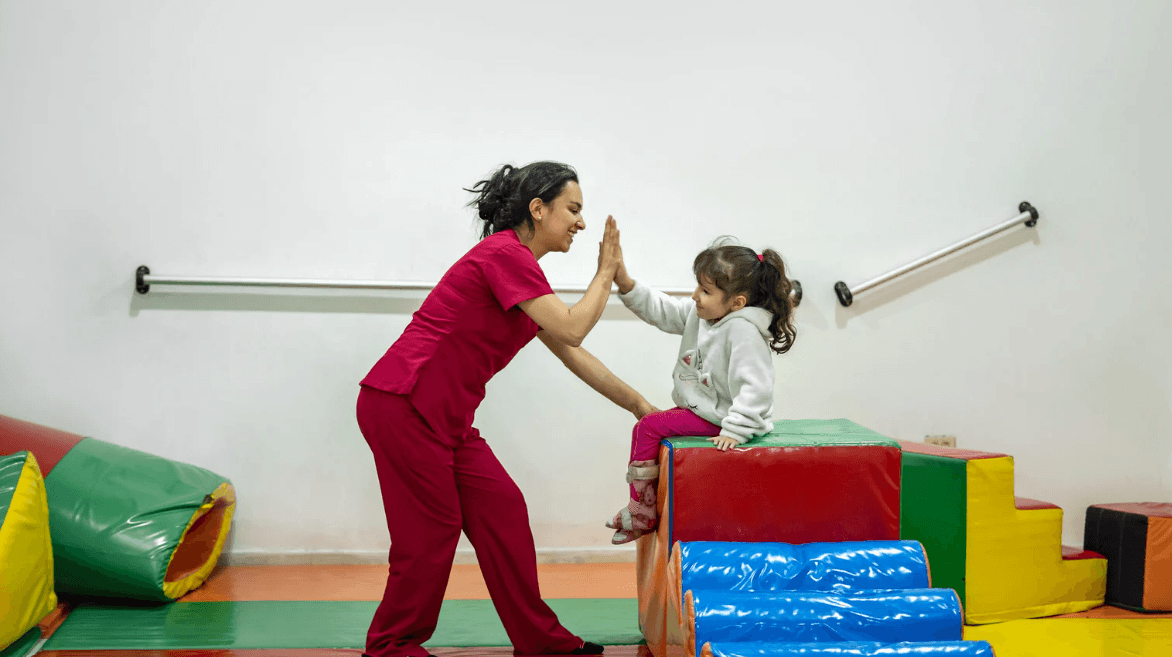
Finding the Movement Bottleneck
Everyday tasks show where movement breaks down: a child might grip a spoon tightly, tire while dressing, or avoid playground equipment. A therapist providing occupational therapy for children looks at how posture, balance, hand strength, and sensory information affect participation. Practice then targets the actual task, such as stabilizing a bowl while scooping or stepping over a low obstacle, rather than repeating an isolated motion without a clear purpose.
Assessment looks beyond whether a child completes a task. The therapist notes effort, pace, posture, prompts, and where movement becomes awkward. Family and school observations add context, helping goals reflect beneficial activities rather than a score or a single clinic exercise.
Building Control Through Real Tasks
A therapist breaks a difficult activity into smaller actions. For putting on a shirt, the child might first practice finding the sleeve opening, then guide an arm through, and finally pull the fabric into place. Repeating each part gives the child time to plan movements and adjust posture.
Practice works best when it resembles the activity itself. Reaching for toys at different heights, carrying light objects, or moving between floor and chair positions builds control that transfers to play and home routines. As skills improve, the therapist changes the task’s pace or setup.
Strengthening Hands For Daily Tasks
Hand control supports many small but demanding jobs. A child needs coordinated finger movements to turn a page, manage a zipper, hold a marker, or use utensils. Occupational therapy activities can include manipulating small objects, using child-safe tools, and practicing pencil grip during a drawing or writing task.
The therapist watches how the hand works with the rest of the body. A stable seated position and well-placed materials can make hand movements easier to control. Repeated practice helps children adjust pressure and coordinate both hands, such as holding paper steady while cutting.
Practicing Balance and Coordination
Walking across uneven ground, stepping into pants, and climbing playground equipment all require balance and coordinated movement. Therapy activities may involve reaching while standing, stepping around objects, or shifting weight between feet. The therapist adjusts the challenge so a child can practice safely while making active movement choices.
Coordination also matters when both sides of the body work together. Catching a large ball, opening a container, or climbing a ladder requires timing, body awareness, and repeated attempts. These activities give children a practical way to practice movement patterns used in play and everyday routines.
Adapting Sensory Demands
Some children find certain textures, sounds, or movement sensations distracting or uncomfortable. Those reactions can affect how they approach dressing, grooming, eating, or busy play spaces. A therapist observes which sensations make a task harder and identifies practical adjustments to the activity or setting.
For example, a child who avoids a grooming routine can practice its steps with familiar objects and a predictable sequence. A child who seeks movement can take brief movement breaks before a seated task. Small setup changes can make it easier to participate and practice a skill.
Carrying Practice Into Routines
Skills strengthen when a child uses them beyond therapy. Caregivers can build practice into familiar routines, such as asking the child to carry napkins to the table or pull up a zipper after getting dressed. The task should fit the child’s current ability, with help reduced as control grows.
A simple note can help families track what works: the task, the amount of assistance, and what made it easier or harder. Sharing these observations with the therapist helps keep goals connected to daily life and supports consistent practice at home, school, and during play.
Conclusion
Movement goals become more beneficial when they connect to a child’s real day. Families can start by noting one task that causes effort, avoidance, or repeated help, then describe what happens during each step. Those details give a therapist a practical starting point for observing movement and setting goals. Track progress through changes in participation, comfort, and the amount of help needed, not just whether the child completed a task once.
0
Leave a Reply