Most buyers can name one ring style before they start looking and have no vocabulary for the rest, which leaves them comparing prices on designs they cannot describe. The style is the part a person sees from across a room. It decides how large the center stone looks, how the ring wears against a wedding band, and how much metal work is between the stone and the finger. Solitaires accounted for 40.3% of designs sold in 2025, down from 47% the year before, and almost all of that lost share went to styles that add stones somewhere else on the ring.
The Solitaire and Its Current Share
A solitaire is one stone on a plain band, held by prongs. Four prongs show more of the stone and six prongs hold it more securely, which is the whole of the choice for most buyers. Nothing competes with the center stone for attention, so every quality of that stone is on display, including the ones a buyer would rather hide.
The style is losing ground slowly to customization. Buyers keep the single stone silhouette from the front and add a detail underneath it or along the shank, which is why the modern solitaire often has a hidden halo, an engraved gallery, or a colored stone tucked into the basket.
Halo and Hidden Halo Construction
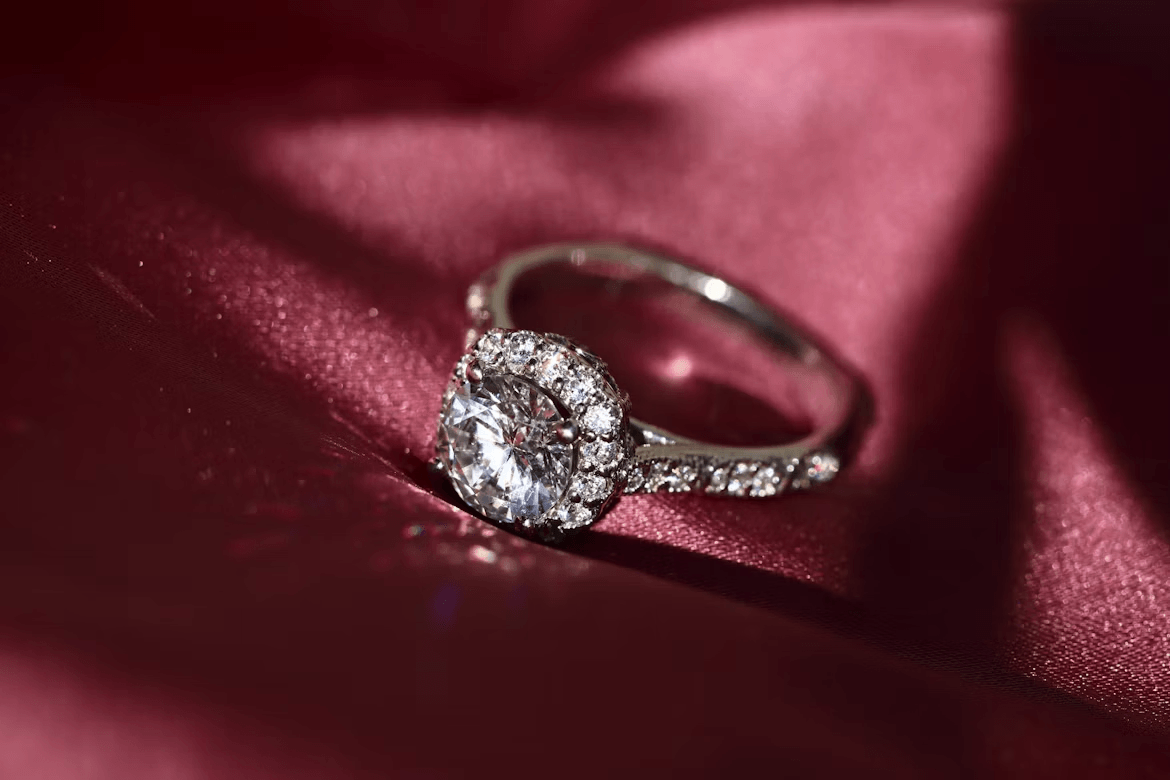
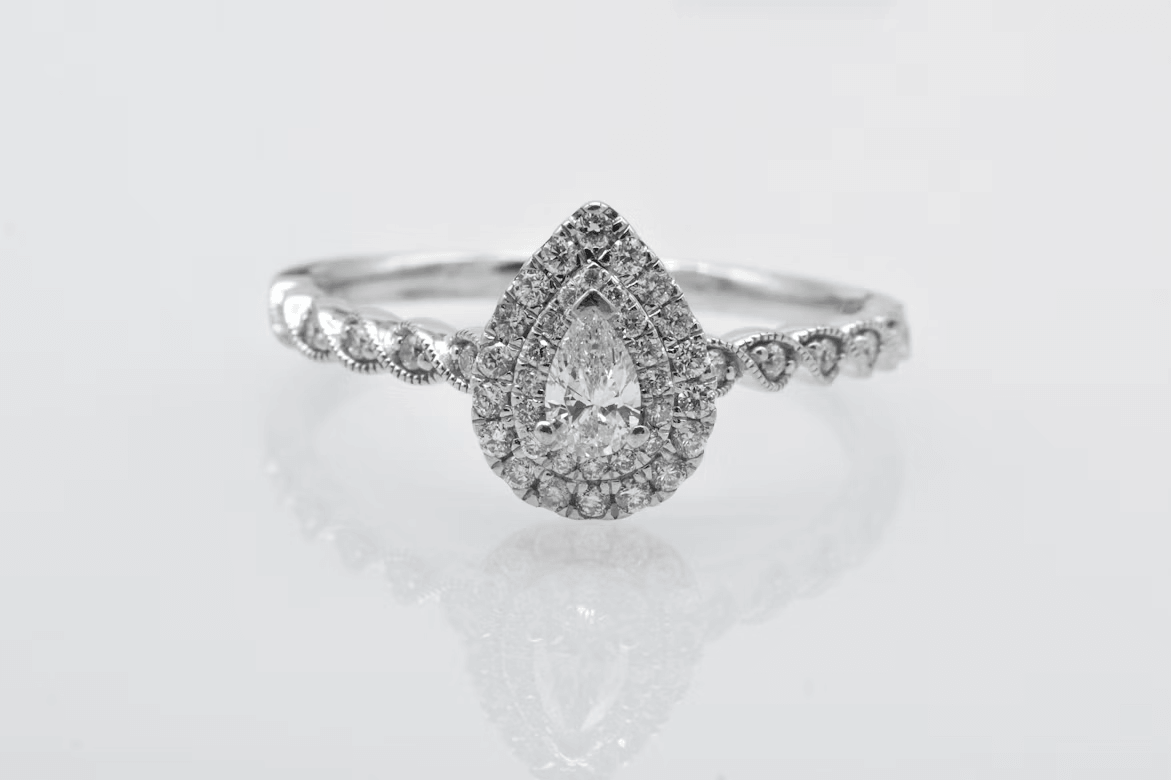
A halo is a ring of small stones circling the center. It makes the center look larger, and it is the most common way to give a 1 carat stone the face up size of something closer to 1.5.
A halo also adds 15 to 30 stones to the piece, each with its own prongs to check, so the maintenance bill rises with the visual size.
The hidden halo puts that circle of stones under the center rather than around it, where it is visible from the side but not from above. Demand for double halos has fallen, while hidden halos have become one of the most requested settings, helped along by celebrity rings that put the detail in front of a large audience.
Settings Matched to Stone Shapes
Settings and shapes are not interchangeable, and the mismatch usually shows up as a durability problem. Pointed shapes need a V prong at each point. Square shapes need a prong covering each corner. Buyers comparing radiant cut engagement rings against a princess for the same square look find that the radiant has cropped corners, which removes the most fragile part of the outline before the setter ever touches it.
Elongated shapes raise a second issue unrelated to breakage. A long stone set east to west across the finger looks very different from the same stone set north to south, and a setting built for one orientation cannot be turned around later without remaking the head.
Three Stone Design
A three stone ring has a center stone with a matched pair beside it. Tapered baguettes, trapezoids, half moons and small rounds are the usual side stones, and each pair changes the width of the ring at the top of the finger by a different amount. The style has been a steady celebrity choice since 2017, which is most of the reason it recovered from a long spell out of fashion.
Proportion matters more here than spending does. Side stones that are too large compete with the center, and side stones that are too small look like an afterthought attached to a solitaire. A common ratio puts each side stone at roughly 25% to 35% of the center weight.
Pavé Bands and Diamond Bands
A pavé setting puts small stones into the band itself, held by tiny beads of metal raised from the surface. It adds light along the shank and it raises the eventual resizing cost, since a band covered in stones can only be sized in limited ways.
Fully set diamond bands were the fastest growing category of 2025, rising from 22% to 34% of sales. Part of that growth comes from buyers treating the band as the main piece and the center stone as a smaller component, which is a reversal of how most people were taught to think about a ring budget.
Bezel Settings and Daily Wear
A bezel wraps the stone in a rim of metal that covers its outer edge. Bezel settings are the most protective option available, they snag on nothing, and they have shaped a great deal of new design work over the past three years, after decades of being treated as the practical choice for manual workers.
Light is what the design costs. A bezel set diamond looks slightly smaller than the same stone in prongs and returns less light through the sides, so half bezels that leave two edges open have become common on new designs.
Two Stone and East West Designs
Toi et moi rings use two stones of similar size side by side, usually in different shapes. The style is up 180% since 2023, and together with bezel, east west and antique cut settings it has tripled its share of the market since 2022. Lab grown stones are what made it affordable to buy two center stones instead of one.
East west settings turn a single elongated stone sideways so it lies across the finger. The look is flatter, more modern and less formal, and it works best on stones with strong outlines like emeralds and marquises, where the sideways orientation still looks deliberate.
First Question Before Comparing Rings
A style is chosen once and paid for repeatedly. The stone count sets the cleaning and prong checking schedule, the shank construction sets what a sizing will cost, and the profile of the head decides which wedding bands can ever sit flush against it. A buyer who asks about those three costs at the counter will hear numbers no price tag shows.
Before comparing any two rings, decide how the ring has to survive an ordinary week. A person who works with their hands should be looking at bezels and low profile settings first, and a person who removes their ring for anything physical can consider the full range. That single question eliminates more unsuitable designs than any amount of comparison shopping on price.
0
Leave a Reply