Most family traditions aren’t planned, they’re noticed. A certain song on Sunday mornings, a particular mug for the first cup of coffee, the way the kitchen table always ends up covered in something. Fresh flowers have a quiet way of becoming one of those traditions, not because anyone decided they should, but because a vase on the table changes the rhythm of a room, and rooms shape how families spend time in them. Long after any single bouquet has faded, the habit of having one tends to stay, and it rarely announces itself as a tradition until someone points out how strange the table looks the one week it’s empty.
It Starts Small
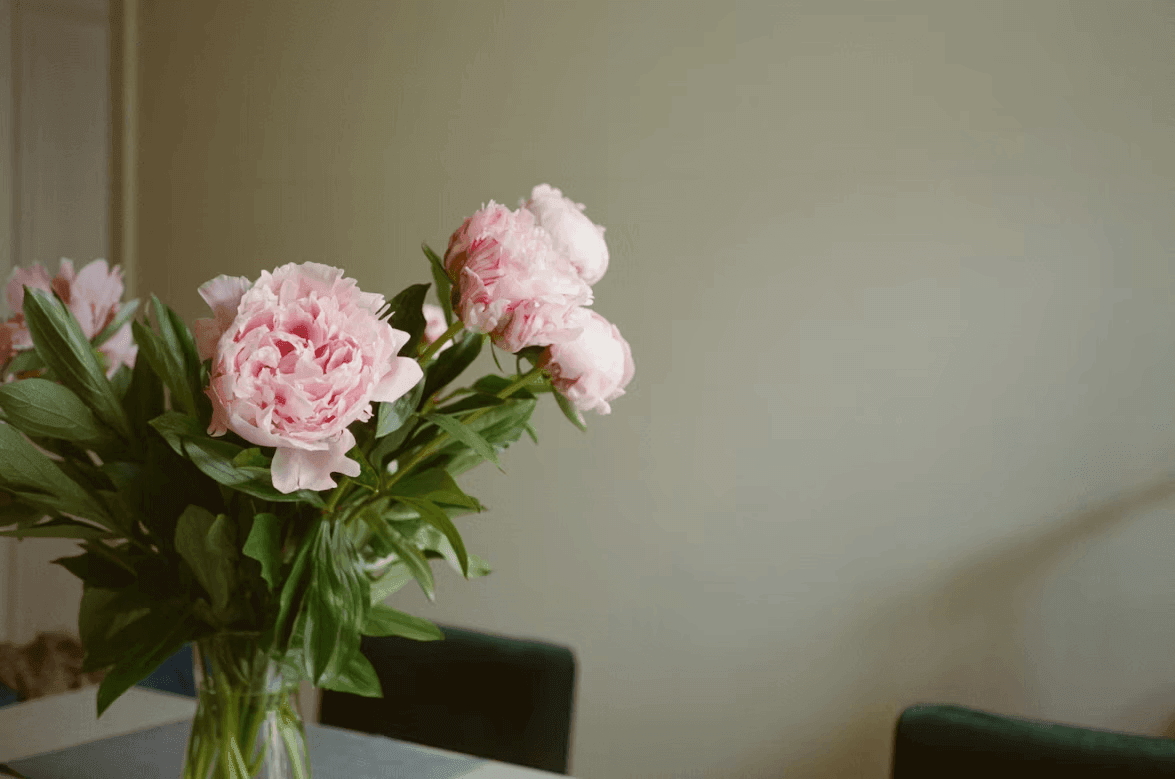
It often starts small. Someone brings home a bunch of peonies on a weekday for no particular reason, and suddenly the table feels like it’s set for something, even if dinner is just pasta. Kids notice first, leaning in to smell the petals and asking why some buds are still tightly closed while others have opened all the way. Within a week or two, they’re the ones trimming stems, deciding which glass counts as a vase, or negotiating over who gets to carry the flowers to the table. None of it is complicated, which is exactly why it sticks.
A lot of family habits fail because they demand too much: a set night for board games nobody can make, a meal plan too elaborate for a Tuesday, a craft project that ends up half-finished in a drawer. Flowers rarely fail that test. There’s no prep the night before, no cleanup beyond a bit of trimmed stem in the sink, and no correct way to do it. That low floor for effort is exactly what lets a ritual survive contact with a real, busy household.
Why Flowers Work So Well for Family Ritual
What makes flowers such good material for family ritual is that they invite hands-on involvement without requiring any skill. There’s no wrong way to arrange a bunch of daisies in a jar, which is exactly why the habit survives busy weeks and short attention spans. There’s also a built-in lesson in patience that most other family activities don’t offer: a closed bud doesn’t open faster because someone wants it to, and watching that slow, uneventful change over a few days teaches kids something about waiting that no screen ever will.
There’s a sensory layer too, one that’s easy to underestimate. Trimming stems means getting hands a little wet and a little green, smelling sap and pollen up close, noticing which flowers are fragrant and which aren’t. For younger kids especially, this kind of tactile, unstructured play with a living thing does something that screens and even most toys can’t replicate. A few simple patterns tend to show up again and again in families that have made flowers part of their routine:
- The Friday flower run: a small errand before the weekend starts, even if it’s just a single bunch from the corner stand. Over time it becomes a marker for the whole household that the week is winding down, a small punctuation mark between work and rest.
- The rough-week bouquet: whoever had the hardest week gets to choose what goes on the table next, turning a small gesture into an easy way for the family to check in on each other without having to say much out loud.
- Birthday colour matching: flowers picked to match the birthday person’s favourite colour for the day, a tiny, low-effort way of making someone feel noticed that costs almost nothing to keep up year after year.
- Kids’ trimming duty: handing the scissors to the youngest child old enough to use them safely, which is usually the moment they start asking questions about how plants actually work, why stems drink water, and why cutting them at an angle matters.
- The weekly photo log: a quick picture of each bouquet, which by year’s end becomes an accidental record of the seasons and, often, of everyone who was around the table that week, tucked in the background of an otherwise ordinary photo.
Making It Last
None of these require a special occasion or an eye for design. The specific flowers matter less than people assume, peonies in early summer, sunflowers in August, whatever’s freshest at the stand in November, so there’s no pressure to recreate last spring’s arrangement. That flexibility is part of what keeps a ritual like this alive for years rather than fizzling out after a month: it bends around whatever the family and the season actually have to offer, rather than demanding a fixed, particular outcome every single time.
It also helps that the whole thing takes minutes, not hours. Compare it to baking together or building something from a kit, both lovely, both real commitments of time and cleanup. A vase of flowers asks for five minutes at most: trim, arrange, done. That low cost in time is often the real reason a ritual survives the years when everyone is busiest, school runs, sports schedules, work trips, rather than the years when there’s plenty of slack to fill. Traditions that need a free afternoon tend to vanish exactly when families need them most; traditions that fit into five minutes tend to be the ones that quietly outlast everything else.
Families who want to take the habit further usually don’t need much more than the basics above, but a few small additions tend to keep it fresh once the novelty of the first few months wears off:
- Rotate who chooses: give each family member a turn picking the bouquet on a fixed schedule, so it never quietly becomes just one person’s job and everyone gets a say in what the table looks like that week.
- Learn one new flower a month: pick something unfamiliar and let the kids look up what it needs, turning the table into a small, ongoing science lesson that costs the price of a bunch of flowers.
- Send flowers, don’t just receive them: occasionally have the kids help choose a bouquet for someone outside the house, a teacher, a neighbour, a relative who could use one, so the habit points outward as well as inward.
Flowers Change With the Seasons
Part of what keeps a flower ritual interesting over years rather than months is that it’s never quite the same twice. Spring tends to bring soft, full blooms, tulips, peonies, ranunculus, the kind that open dramatically over just a couple of days and reward close watching. Summer shifts toward brighter, sturdier flowers that hold up in the heat: sunflowers, zinnias, dahlias, the sort of blooms that don’t mind being left on a warm windowsill. Autumn tends to bring in deeper, warmer tones, chrysanthemums, dahlias in rust and burgundy, the last dahlias before frost. Winter, especially in colder climates, becomes about smaller, hardier arrangements, eucalyptus, evergreen sprigs, whatever holds its shape through the cold months, sometimes stretched by a single bunch of imported blooms as a small splash of colour against the grey.
None of this needs to be planned out on a calendar. Most families discover it naturally, just by noticing what’s cheapest and freshest at the market or the corner stand each week. But it’s worth pointing out to kids explicitly once in a while, that the flowers on the table this month wouldn’t have been available two months ago, and won’t be there in two more. It’s a gentle, repeated reminder that the calendar has a shape, something that’s easy to lose track of in a world where strawberries and tulips are available year-round in a supermarket regardless of season. In households that garden even a little, this can go further still, a windowsill herb pot, a few bulbs planted in a shared patch of yard, so that some of what ends up in the vase was grown rather than bought, which tends to make the weekly ritual feel a little more like a small harvest than a purchase.
Bringing In Every Age
One of the quieter strengths of a flower ritual is how easily it stretches across ages within the same household. A toddler can pull petals off a spent bloom and drop them in a bowl of water to watch them float, which is really just sensory play with better props than most toys on the market. A school-age child can handle scissors, count stems, and start noticing which flowers last longest in a vase, an early, low-stakes lesson in cause and effect. A teenager, often reluctant to join in on family activities that feel babyish, can usually be pulled in through something more like a project: choosing a colour palette, researching a flower’s meaning, or photographing the arrangement for a shared album. And older relatives, grandparents especially, often already carry decades of informal knowledge about which flowers to trust and which to avoid, knowledge that rarely gets passed on unless there’s a regular occasion for it to come up.
A few ways families have found to keep the ritual genuinely multigenerational rather than something only the youngest or only the adults care about:
- Assign roles by strength, not age: let a toddler choose colours by pointing, a child trim stems, a teenager style the final look, so everyone has a real job rather than a token one.
- Ask grandparents for the backstory: many older relatives know a flower’s traditional meaning, growing region, or family history with it, small stories that rarely surface unless someone asks.
- Let teenagers own one part completely: handing over full control of one small decision, this week’s colour scheme, say, tends to work better than asking for general participation.
- Keep a running family scrapbook: pressing a flower from a significant week, a birthday, a homecoming, a hard month, turns the ritual into something with an actual physical record over time.
Where the Habit Comes From
Putting flowers on a table isn’t a modern invention, obviously. Cut flowers have shown up in wealthy households for centuries, and flower markets have anchored city life in places like Amsterdam, Paris, and Bangkok for just as long. What’s changed is the framing. For a long time, flowers on the table signalled status more than affection, proof that a household could afford something purely decorative. The version of the ritual described here is a much smaller, quieter descendant of that tradition, stripped of the formality and the expense, closer to a grocery-store bunch than a florist’s centrepiece.
That shift matters because it’s what makes the ritual accessible in the first place. A family doesn’t need a gardener, a greenhouse, or a standing order with a florist to keep this going. It needs a corner shop, a market stall, or a supermarket flower bucket near the entrance, the kind most people walk past without a second look. The tradition survives precisely because it got smaller and cheaper over time, not because it got more elaborate.
Common Pitfalls, and How to Avoid Them
Most families who try this and let it fade after a few weeks run into one of a handful of predictable snags. None of them are fatal, and all of them have simple fixes:
- Treating it as a chore: if buying flowers becomes just another item on a to-do list, it stops feeling like a ritual and starts feeling like an errand. Pairing it with something already enjoyable, a weekend coffee run, a walk to the market, tends to keep it from tipping into obligation.
- Waiting for the perfect bunch: holding out for flowers that look magazine-ready is the fastest way to quietly stop doing this altogether. A slightly uneven bunch from the discount bucket does the job just as well as anything curated.
- Letting it become one person’s job: when only one parent ever buys or arranges the flowers, the ritual usually dies the first time that person is too busy or too tired. Spreading the task around, even imperfectly, makes it more durable.
- Forgetting to replace wilted flowers: a dying, forgotten bouquet left too long sends the opposite signal of what the ritual is meant to create. It doesn’t need to be replaced instantly, but it shouldn’t be ignored for weeks either.
A Ritual That Doesn’t Need an Audience
Unlike a lot of things families do together now, from group photos to shared posts online, this particular ritual doesn’t ask to be seen by anyone outside the house. There’s no obvious way to perform it for an audience, no natural moment for a photo that isn’t just for the family’s own record. That’s arguably part of its appeal in a period when so much of family life gets narrated for other people. A vase of flowers on a Tuesday isn’t content. It’s just a small, private marker that someone in the house decided the week deserved a bit of colour, and nobody else needs to know or approve.
When Family Is Far Away
The ritual doesn’t have to stay inside one household, either. Plenty of families are spread across borders these days, and flowers travel that distance better than most gestures. A grandmother in Lyon or a sister who just moved to Paris can still be part of a Sunday table setup, just from a distance. Services offering flower delivery to France make it easy to keep that habit alive even when the people who started it aren’t in the same room anymore, turning a local ritual into one the whole family can share, wherever everyone happens to be living that year. A weekly bouquet sent to a relative abroad, timed to arrive on the same day the family at home puts flowers on their own table, is a small way of closing a gap that phone calls alone don’t always manage.
This matters more than it might sound. Distance tends to erode the small, repeated gestures first, the shared meals, the quick check-ins, long before it touches the big occasions like holidays. A flower ritual, precisely because it’s small and repeatable, is one of the easier habits to keep going across time zones and borders, and one of the few that doesn’t require anyone to be free at the same moment on a video call.
A Few Practical Tips to Start This Week
None of this requires a plan, a budget spreadsheet, or a trip to a specialty florist. Most families who keep this ritual going for years started with nothing more than a single impulse buy at a grocery store. A few practical notes for anyone thinking about starting:
- Start with whatever’s cheapest: the point isn’t the flower, it’s the habit. A grocery store bunch works just as well as anything from a boutique florist for building the routine.
- Keep one vase somewhere obvious: a jar on the counter works fine, but having something dedicated and visible makes it far more likely the habit actually sticks.
- Trim stems at an angle under water: a small technical habit worth teaching kids early, it genuinely extends how long the flowers last and gives them a reason to feel useful.
- Don’t skip the bad weeks: a slightly wilted, half-price bunch on a rough week counts just as much as a perfect one on a good week, sometimes more.
- Let it be imperfect: a lopsided arrangement from a five-year-old is the whole point, not a problem to be quietly fixed once they’ve gone to bed.
The Part That Actually Sticks
What sticks with kids isn’t a perfect bouquet, it’s the recurring, unremarkable act of doing it together: the smell of stems being trimmed at the sink, the argument over which vase to use, the flowers slowly opening on the same table where breakfast happens. Years later, that’s usually the part people remember, not the flowers themselves, but the small weekly habit that grew up around them, and how easily anyone can start one of their own, no design skill or special occasion required.
If there’s a single reason this particular ritual tends to outlast so many others families try, it’s probably that it asks for almost nothing and gives back more than its size would suggest, a few minutes, a few dollars, and a living thing on the table that quietly changes over the course of a week. That’s a low bar to clear, and a surprisingly durable one.
None of this needs to start with a grand plan. The easiest way in is usually the least intentional one: buy a bunch of flowers this week, put them somewhere the whole family will see them, and see what happens next. Most of the families who’ve kept this going for years didn’t set out to build a tradition at all. They just noticed, a few months in, that they’d been doing it every week without really deciding to, and that the table looked wrong on the rare week it wasn’t there. That’s usually the moment a habit quietly becomes a ritual, not when it’s announced, but when its absence is the thing that gets noticed first.
0
Leave a Reply