Tokyo might seem intimidating for a first family vacation, with its 23 wards, sprawling train network, and endless neighborhoods to explore. The good news is that it’s also one of the world’s safest, cleanest, and most family-friendly cities. With a little preparation, even first-time visitors can navigate Tokyo confidently within a day or two of landing. Here’s what actually matters before and during your first visit.
Get Your Entry Requirements Sorted Early
Travelers from the US, UK, Canada, Australia, and most EU countries can enter Japan visa-free for stays up to 90 days for tourism. You’ll need a passport valid for the duration of your stay and, in most cases, a return or onward ticket to show at immigration.
Before departure, fill out the Visit Japan Web form. It lets you pre-register customs declarations and immigration details, which cuts down significantly on paperwork at Narita or Haneda airport. Do this a few days ahead, not while standing in the arrival line.
Choose Your Flight and Airport Wisely
Haneda Airport sits closer to central Tokyo than Narita, often shaving 30 to 45 minutes off your transfer time. If both are options for your route, Haneda is usually the better pick for a first trip since it simplifies getting to your hotel after a long flight.
Flight comfort matters more than people expect on routes this long — most transpacific or trans-Asia flights to Tokyo run 10 to 14 hours depending on origin. Flying business class to Tokyo can make a real difference here, since arriving rested means you can start exploring on day one instead of losing it to jet lag recovery. If the budget allows, it’s a worthwhile upgrade for a trip where you’ll want your energy intact.
Figure Out Money and Connectivity Before You Land
Japan still runs heavily on cash, especially at smaller restaurants, shrines, and local shops. Withdraw yen from 7-Eleven ATMs, which reliably accept foreign cards, rather than hunting for a currency exchange counter.
For internet access, rent a pocket Wi-Fi device or buy an eSIM before arrival. Providers like Ubigi or Airalo let you activate a Japan data plan before you even board your flight, so you’re connected the moment you land. This matters more than it sounds — Google Maps and train transfer apps are essential, not optional, in a city this dense.
Learn the Train System Before You Need It
Tokyo’s rail network is efficient but genuinely complex, with JR lines, Tokyo Metro, and Toei Subway all operating separately. Buy a Suica or Pasmo IC card immediately upon arrival — you can now get digital versions loaded onto your phone through Apple Pay or Google Wallet, which skips the physical card line entirely.
Tap in and tap out at every gate, and don’t worry about memorizing routes. Google Maps gives accurate platform numbers, transfer times, and even which train car puts you closest to the exit at your destination. Rush hour, roughly 7:30 to 9:30 am and 5:30 to 7:30 pm, is worth avoiding with luggage in tow.
Pick a Home Base That Matches Your Trip Style
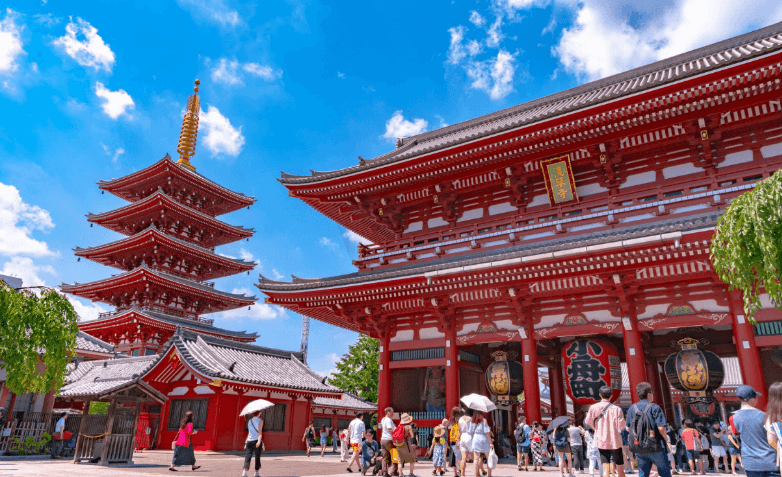
Shinjuku works well for first-timers who want nightlife, shopping, and easy access to nearly every train line. Asakusa offers a quieter, more traditional atmosphere near Senso-ji Temple, good for travelers who prefer walkable streets over neon density. Shibuya sits in between — energetic but still manageable.
Whichever you choose, staying near a major JR Yamanote Line station saves time daily. This loop line connects most of Tokyo’s key districts, so proximity to it means fewer transfers no matter where you’re headed.
Build a Realistic First Itinerary
Resist the urge to cram in ten neighborhoods in three days. A workable first-timer’s pace covers one or two areas per day: Asakusa and Ueno together, Shibuya and Harajuku together, then a full day for Shinjuku’s Omoide Yokocho alleys and the free observation deck at the Metropolitan Government Building.
Reserve a day trip too. Kamakura offers coastal temples and a giant bronze Buddha about an hour from central Tokyo by train, while Nikko provides mountain shrines roughly two hours north. Both make manageable additions without requiring an overnight stay.
Handle Etiquette Basics Without Overthinking Them
Remove shoes when entering homes, some restaurants, and traditional inns. Don’t eat while walking through busy streets, and avoid talking loudly on trains, especially on the phone. Tipping isn’t practiced and can actually cause confusion if attempted at restaurants or taxis.
None of this requires memorizing a rulebook. Watching how locals behave in any given setting will guide you through most situations naturally.
The most useful thing to remember heading into your first family trip to Tokyo is that the city rewards flexibility over rigid planning. Trains run on time, signage is clearer than its reputation suggests, and even taking an unexpected detour through neighborhoods like Yanaka or Koenji can become a memorable part of the experience. Plan the basics, keep your itinerary manageable, and leave room to wander together. Those unplanned moments often become the ones your family remembers most.
0
Leave a Reply