Few desserts evoke the same sense of pure indulgence as a perfectly baked, velvety cheesecake. Whether it is a classic New York-style slice, a trendy burnt Basque masterpiece, or a refreshing no-bake berry variant, cheesecake is the crown jewel of the dessert table.
But because cheesecake is rich, dense, and packed with dairy, it requires careful handling. If you have leftover slices from a weekend celebration—or if you are a professional baker managing inventory—a critical question arises: How long does cheesecake actually last in the fridge?
The short answer is that a standard, properly stored homemade cheesecake will remain fresh and safe to eat for 3 to 5 days in a residential refrigerator. However, its exact shelf life depends entirely on how it was made, how it is packaged, and the type of refrigeration environment it is held in.
Let’s dive deep into the science of cheesecake preservation, storage best practices, and how to spot the signs that your favorite dessert has crossed the line.
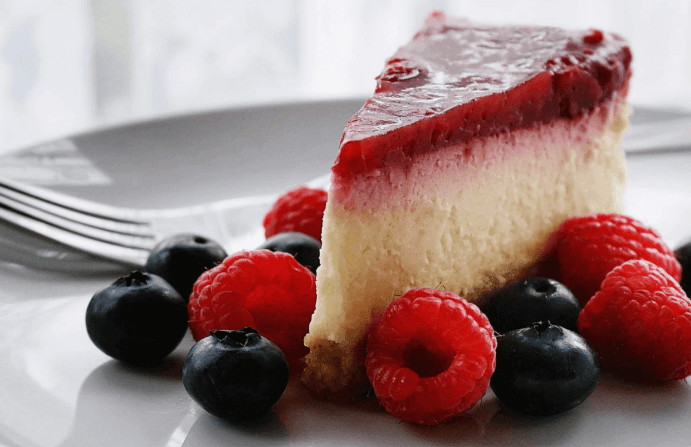
The Quick Guide: Cheesecake Shelf Life
Before breaking down the details, here is a quick-reference overview of how long different types of cheesecake will last when kept constantly refrigerated at or below 40°F (4°C):
| Cheesecake Type | Fridge Shelf Life | Key Characteristic |
| Homemade (Baked) | 3 to 5 days | Contains no artificial preservatives; highly sensitive to ambient moisture. |
| Homemade (No-Bake) | 4 to 5 days | Relies on gelatin or chilling to set; texture can break down faster. |
| Store-Bought / Commercial | 5 to 7 days | Often contains stabilizers or vacuum packaging that extends life slightly. |
| With Fresh Fruit Topping | 1 to 2 days | Fruit releases moisture rapidly, causing the crust to get soggy and mold to form. |
| Opened Commercial Box | 3 to 5 days | Once exposed to outside air, the clock ticks at the homemade rate. |
| Left at Room Temperature | 2 hours maximum | The critical window before dangerous bacterial growth accelerates. |
Why Cheesecake is Highly Perishable: The Science
To understand why cheesecake has a relatively brief shelf life compared to a standard sponge cake, we have to look at its ingredients.
Cheesecake is not really a cake at all—baking experts classify it as a custard or a tart. The primary ingredients are soft dairy products: cream cheese, sour cream, heavy cream, and eggs. This high-protein, high-moisture matrix creates an ideal breeding ground for foodborne pathogens and spoilage organisms if left exposed to the wrong conditions.
Microbiologists measure food safety using a metric called water activity, which dictates how much “free water” is available for bacteria and mold to use for reproduction. Cheesecake has a high water activity level. When kept at room temperature, bacteria like Staphylococcus aureus or Salmonella can multiply to dangerous levels in just a few hours.
This is why food safety agencies strictly enforce the Two-Hour Rule: cheesecake must never sit on a kitchen counter or buffet line for more than two hours total before being returned to cold storage.
Storage Environments: Home vs. Commercial Settings
Where you store your cheesecake matters just as much as how you wrap it. The dynamic changes dramatically when shifting from a quiet home kitchen to a bustling food service operation.
1. The Home Refrigerator
In a residential kitchen, a cheesecake easily lasts its full 5-day span if placed on a main shelf. The primary challenge in a home fridge is odor cross-contamination. Because cream cheese contains a high concentration of fats, it acts like a sponge for airborne aromas. If you store an uncovered cheesecake next to leftover garlic pasta or chopped onions, your dessert will absorb those savory flavors within 24 hours.
2. The Commercial Fridge Environment
For bakeries, restaurants, and catering businesses, managing cheesecake longevity requires a heavy-duty commercial refrigerator. These units are engineered to maintain strict, food-safe temperatures even when the doors are opened and closed hundreds of times a day by kitchen staff.
A commercial fridge relies on powerful, high-velocity fans to circulate cold air evenly across stainless steel shelving. While this constant airflow is spectacular for preventing hot spots and keeping the dairy safely below 40°F (4°C), it presents a unique threat to pastries: evaporative drying.
An uncovered cheesecake placed in a commercial fridge will experience rapid surface evaporation. Within a few hours, the smooth, glossy top of a New York cheesecake will dry out, develop unsightly cracks, and take on a rubbery, leathery texture. Furthermore, because commercial kitchens handle a vast array of raw and cooked ingredients, strict cross-contamination protocols must be enforced to ensure the delicate dessert remains pristine.
How to Maximize the Shelf Life of Your Cheesecake
Whether you are using a standard household refrigerator or a professional commercial fridge, following these preparation and packaging rules will preserve your dessert’s flavor and texture for as long as humanly possible.
Step 1: Cool Completely Before Refrigerating
Never rush a hot cheesecake straight from the oven into a cold fridge. The sudden temperature drop causes thermal shock, which violently contracts the structure and creates deep cracks across the surface.
More importantly, trapping a hot cake inside a container creates immediate steam. This steam condenses into water droplets on the lid, dripping back down onto the cake, creating a slimy surface and a soggy, ruined graham cracker crust. Allow the cake to cool to room temperature on a wire rack first.
Step 2: Wrap Firmly and Securely
To protect against both the drying air currents of a commercial fridge and the unwanted odors of a home kitchen, your sealing technique must be airtight.
- The Best Method: Place the chilled cheesecake on its cardboard round or plastic base. Wrap the entire structure snugly in two layers of plastic wrap, ensuring no gaps remain. For absolute protection, place the wrapped cake inside a dedicated plastic cake carrier or a sealable airtight container.
- Slices: If you are storing individual slices, wrap each piece tightly in plastic wrap or place them inside individual, snap-lock glass containers.
Step 3: Hold the Toppings
If you are baking a cheesecake ahead of time for an event, do not add toppings like strawberry compote, cherry glaze, or fresh whipped cream until right before you plan to serve it.
Fruit glazes contain high levels of moisture and acid that will gradually seep down into the dense filling, breaking down the structural integrity of the cake and causing it to become watery and sour.
Red Flags: How to Tell If a Cheesecake Has Gone Bad
Before taking a bite of a forgotten cheesecake, execute a sensory inspection using these three criteria:
- Visual Signs (The Surface Check): Look closely at the edges where the cake meets the crust. If you see any gray, green, or white fuzzy spots, mold has taken hold. Additionally, look for a distinct color shift; an aging cheesecake will often turn a dull, dark yellow or develop an oily sheen on top.
- Texture Shifts (The Consistency Check): A fresh cheesecake is dense, smooth, and creamy. If the cake has begun to separate, leaving a pool of watery liquid at the bottom of the container (a process known as syneresis), or if the edges have turned hard and rubbery while the center has become slimy, it is time to discard it.
- The Aroma Test: Fresh cheesecake smells delightfully sweet, milky, and faintly of vanilla or citrus. If you open the container and detect a sharp, sour, tangy, or yeast-like odor reminiscent of spoiled milk, microorganisms have altered the dairy. Trust your nose—when in doubt, throw it out.
Long-Term Storage: Can You Freeze Cheesecake?
If you realize you won’t be able to finish your cheesecake within the golden 5-day refrigerator window, the freezer is your best friend. Cheesecake freezes exceptionally well due to its high fat and low water content compared to delicate sponge cakes.
To freeze a cheesecake properly, let it firm up in the fridge first. Once cold, wrap the whole cake or individual portions tightly in a layer of plastic wrap, followed by a sturdy layer of heavy-duty aluminum foil to guard against freezer burn.
If the cheesecake is being prepared for gifting, an event, or customer pickup, custom bakery boxes can provide an additional outer layer for presentation and transport, although the cake should still be properly wrapped and kept at the appropriate temperature.
When stored this way, a cheesecake will maintain peak quality for 2 to 3 months. When you are ready to indulge, simply transfer the cake back into your refrigerator and let it thaw slowly overnight before serving.
0
Leave a Reply