If you’re a parent, you already know this feeling. Saturday starts at a youth soccer game. By afternoon you’re hauling mulch bags across the yard. Sunday is a bathroom project that still isn’t done. By Monday morning, your body is reminding you of every decision from the weekend.
Staying active as a family is something most of us want. The part that gets skipped is recovery. More families are now building simple at-home wellness routines that go beyond just staying active adding stretching, better hydration, consistent sleep, and tools that support the body between activities. Along with those habits, some people are also considering muscle recovery light therapy devices as part of a balanced approach to post-activity recovery at home.
Whether or not that interests you, understanding what recovery actually means, and why it matters for everyday family life is a good place to start.
Recovery Isn’t Just for Athletes
One of the biggest myths about muscle recovery is that it’s only relevant if you train seriously. That’s not how the body works.
Everyday Activities Put Muscles to Work
Think about a realistic family week. Carrying a toddler through a parking lot. Coaching youth baseball on a weeknight. Taking the kids on a trail hike. Raking the yard before a cold front rolls in. Spending a Sunday fixing a fence or building furniture.
None of these feel like athletic training. But your muscles don’t know the difference. Lifting, carrying, squatting, climbing stairs all of it creates microscopic stress in muscle fibers that the body needs time to repair. When that repair happens well, you feel better and move better. When it doesn’t, fatigue and stiffness build faster than expected.
Recovery Helps You Stay Active Longer
Skipping recovery doesn’t keep you productive. It usually means you slow down sooner, stay sore longer, and are more likely to get hurt doing something ordinary. Small, consistent recovery habits help the body reset so you can keep showing up for your family not just this weekend, but next month and beyond.
What Is Red Light Therapy, Exactly?
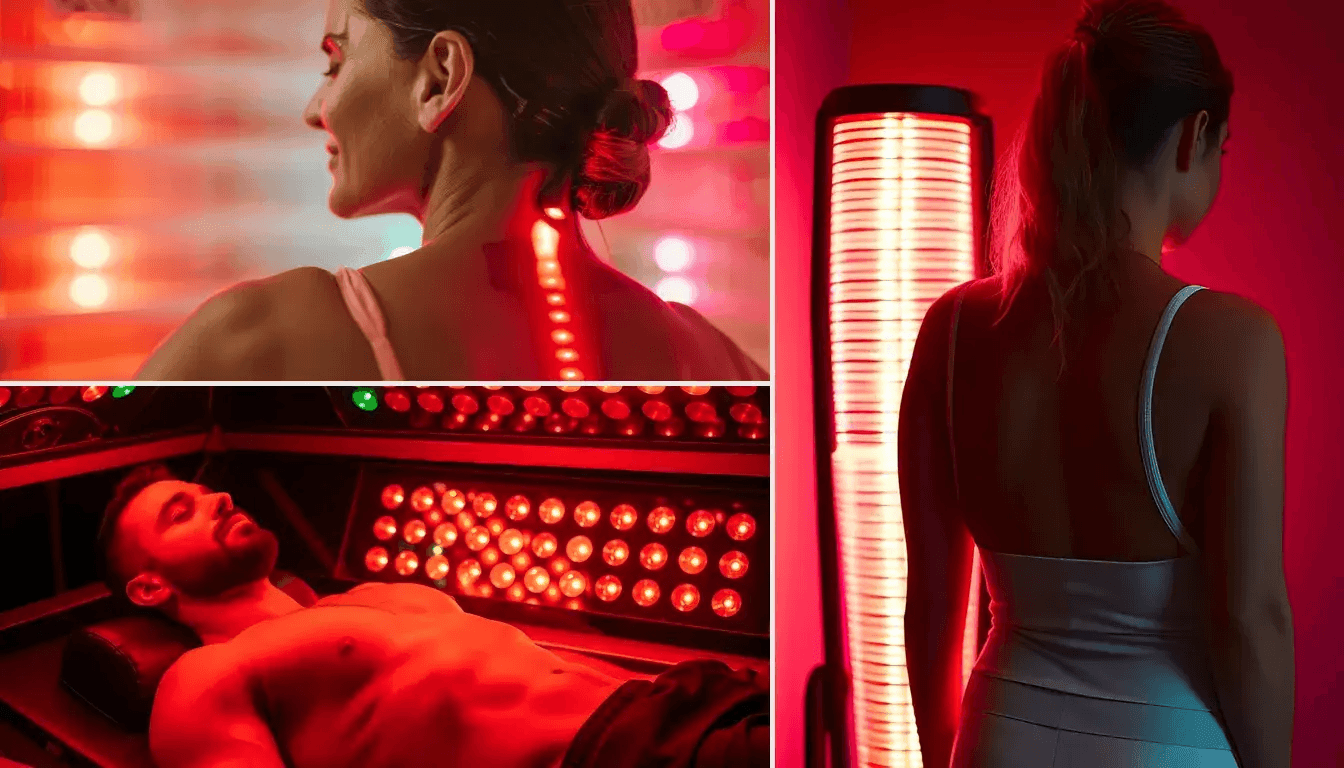
Red light therapy also called photobiomodulation (PBM), meaning the use of specific light wavelengths to support the body’s natural biological processes has grown in popularity as a home wellness tool. It delivers low-wavelength red or near-infrared light to the skin. Red light is visible, typically in the 630–700 nanometer range, while near-infrared light is invisible and reaches deeper into muscle tissue.
How It Works
This light is absorbed by the mitochondria, the structures inside cells responsible for producing ATP, which is the fuel your body runs on. Supporting mitochondrial function is thought to help cells repair more efficiently, support circulation, and reduce the cellular stress that builds up after physical activity. It’s non-invasive and requires no recovery time from the treatment itself, which is part of why it fits into a home routine.
Ways Red Light Therapy May Support Muscle Recovery
The research on red light therapy and physical recovery has expanded in recent years, and some findings are worth knowing.
It has been studied for its potential to reduce delayed-onset muscle soreness, the deep ache that often sets in 24 to 48 hours after activity. A systematic review published in PMC found that photobiomodulation therapy may play a meaningful role in easing that post-activity discomfort across multiple trials.
Research has also explored its effects on healthy circulation and cellular energy production after exercise. A study published in PubMed found that photobiomodulation provided clinically meaningful recovery benefits following high-intensity exercise and, in some comparisons, outperformed cold therapy as a recovery approach.
“From a practical standpoint, there is considerable promise for the application of red light therapy as a viable post-exercise recovery method.” — Lance C. Dalleck, PhD, Professor of Exercise and Sport Science, Western Colorado University, via ACE Fitness
One important note: red light therapy isn’t a replacement for professional medical care. If you’re managing a chronic condition or recovering from an injury, check with your doctor before adding anything new to your routine.
Simple Recovery Habits Every Busy Family Can Practice
Red light therapy is one piece of a larger recovery picture. The basics still carry the most weight.
Stretching after activity even 10 minutes after a hike or a long afternoon on your feet reduces stiffness and supports flexibility over time. Walking on rest days keeps blood circulating without adding physical stress; a 20-minute walk with the kids counts. Sleep is when most of the body’s actual repair happens, and 7 to 9 hours for adults consistently makes a bigger difference than almost anything else.
Hydration is underrated muscles recover more effectively when you’re drinking water steadily through the day. Protein-rich meals give the body the building blocks it needs to rebuild muscle tissue.
Managing stress matters too. Chronic stress keeps the body in a state that’s harder to recover from. Simple habits like limiting screens before bed or spending a few minutes outside contribute more than they seem like they should.
Recovery tools like red light therapy work best alongside these habits, not as a substitute for them.
Choosing Wellness Tools That Match Your Lifestyle
If you’re curious about red light therapy, a few practical questions are worth thinking through before you invest.
Your schedule will shape what’s actually useful. A device requiring 30 minutes of uninterrupted time won’t work on a busy Wednesday evening. One you can use for 10 minutes while the kids finish homework might. Consider which areas of your body need the most support, some devices target specific muscles like the back or legs, while others cover a broader area. Ease of use affects consistency, and consistency is what the research is actually based on. Regular, repeated use tends to show better results than occasional sessions.
Building a Routine That Lasts
The biggest trap with any wellness goal is trying to overhaul everything at once. A more sustainable approach is adding one habit at a time starting with hydration, then layering in stretching, then exploring tools that complement what you’ve built.
Consistency over intensity applies here as much as anywhere else in health. A simple 10-minute recovery habit done five nights a week does more than an elaborate routine you attempt once a month. Recovery is self-care not just for athletes, but for the parent who spent Saturday on a ladder and needs to feel functional again by Monday.
The Bottom Line
Family life is physically demanding in ways that rarely get enough credit. Staying active matters, and so does recovering from that activity well.
Red light therapy is one tool people are exploring as part of a balanced home wellness routine. The research suggests it may offer real support for muscle recovery when used consistently alongside solid foundational habits. If it sounds like it fits your lifestyle, it may be worth exploring as part of a broader approach to keeping your family feeling well and staying active together.
0
Leave a Reply