French entertaining doesn’t have to be complicated. If you can slice, plate, and pour a drink, you can host like a Parisian. Two items do an unbelievable amount of heavy lifting:saucisson and pate en croute. Together, they deliver contrast (rustic vs. refined), variety (lean cured meat vs. rich pâté), and that “wow, you really planned this” feeling—without requiring hours in the kitchen.
This guide walks you through how to buy the right styles, how to serve them at their best, what to pair with them (wine, cheese, bread, condiments), and how to store leftovers safely so nothing goes to waste.
Why this combo works so well
A great appetizer spread is about balance:
- Texture: firm slices + tender pâté filling
- Flavor: salty, peppery, garlicky cured meat + buttery, savory pâté
- Visuals: simple slices look abundant; a cross-section of pâté looks chef-y
- Effort: minimal prep, maximum impact
If you’re building one “signature board” for a party, this pairing can anchor the entire spread.
What to look for when buying saucisson
There are plenty of styles, and your best choice depends on your crowd and your menu. Here’s how to pick confidently.
1) Choose the flavor profile
Common directions you’ll see:
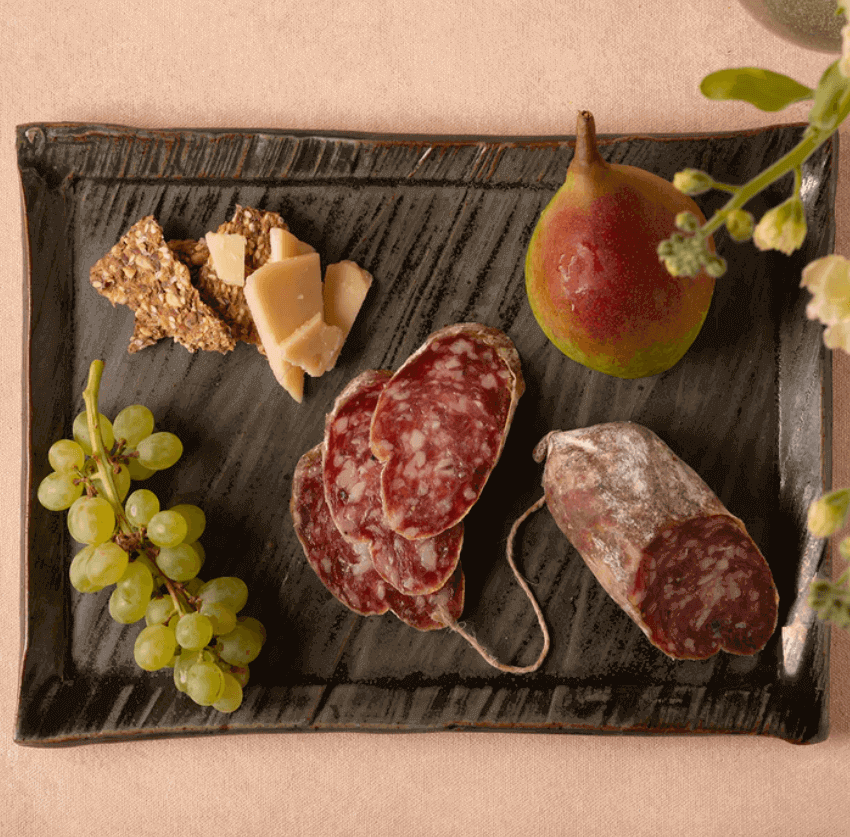
- Classic / pur porc: clean pork flavor, pepper, garlic
- Peppercorn: bold and snappy; great with red wine
- Herbs / herbes de Provence: aromatic and crowd-pleasing
- Smoked: deeper flavor; pairs well with pickles and mustard
- With nuts (hazelnut/walnut): excellent with apples and mild cheeses
If you’re unsure, buy one classic and one “fun” flavor to create variety.
2) Check firmness and slice-ability
A good cured sausage should feel firm and dry, not soft or squishy. If it’s pre-sliced, look for:
- slices that aren’t wet or greasy
- fat that’s creamy-white, not yellowed
- no excessive liquid in the pack
3) Plan your quantity
For appetizers:
- 2–3 slices per person if you have multiple items
- 4–6 slices per person if it’s a charcuterie-forward snack spread
A useful shortcut: 80–120g of charcuterie per person for an appetizer-heavy table.
How to serve saucisson so it tastes its best
Small details matter here—and they’re easy.
Bring it closer to room temp
Cold mutes flavor. If it’s been refrigerated, let it sit 15–20 minutes before serving.
Slice thickness
- Thin slices highlight aroma and spice.
- Slightly thicker slices feel more rustic and “meaty.”
If your guests aren’t used to charcuterie, go a touch thicker—they’ll find it easier to enjoy.
Add two “helpers” on the plate
Charcuterie shines with acidity and crunch:
- Cornichons
- grainy mustard
- pickled onions
- radishes
- thin apple slices
- crusty bread
These cut richness and make each bite feel fresh.
What pate en croute actually is (and why guests love it)
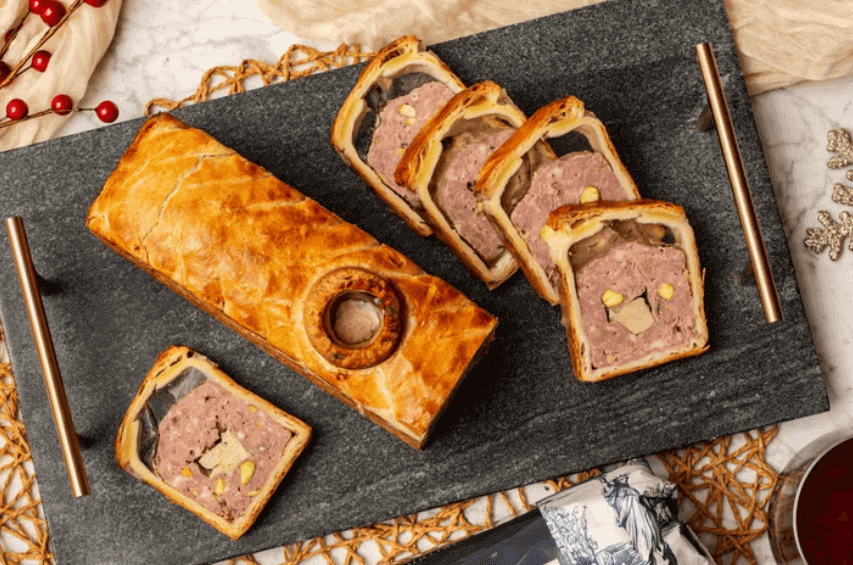
At first glance, it looks like a fancy loaf. In reality, it’s brilliantly practical: a seasoned meat pâté baked inside pastry, often with a visible mosaic of meat, herbs, pistachios, or a thin gelée layer that keeps it moist.
It feels “special occasion,” which is why it shows up at holiday tables, celebrations, and upscale deli counters.
Choosing the right style
When shopping, look for:
- Clean slices that hold their shape
- A pastry crust that looks baked through (not pale or soggy)
- A filling that looks moist, not crumbly
- Balanced fat (some is good; pools of grease aren’t)
If you can choose thickness at the counter, ask for 1–1.5 cm slices—thick enough to feel luxurious, thin enough to portion easily.
The easiest serving formula (works every time)
If you want a French-looking plate without stress, do this:
- One main platter: your charcuterie stars
- One bread basket: baguette + seeded crackers
- One “acid + crunch” bowl: cornichons + pickled onions
- One fruit element: grapes or sliced pears
- One cheese (optional but powerful): brie, comté, or goat cheese
You can assemble this in 10–12 minutes, and it looks abundant.
Mid-table upgrade: make it feel like a curated tasting
Here’s where you re-introduce the stars in a more “intentional” way. About halfway through your spread planning (or midway through the article, if you’re using this as content), call out the pairing directly again: saucisson brings rustic cured spice, while pate en croute adds a refined, pâtisserie-meets-charcuterie centerpiece.
To elevate the experience, create three bite paths and label them (even casually on a small card):
Bite path 1: Classic French
- baguette + pate en croute + cornichon
Bite path 2: Wine bar style
- saucisson + aged cheese + mustard
Bite path 3: Sweet-salty
- saucisson + apple slice + soft cheese
Guests love being “guided,” and it makes your table feel planned—even if it took you 15 minutes.
Pairings: wine, beer, and non-alcoholic options
Wine
- Beaujolais / Gamay: bright, easy, perfect with cured meats
- Côtes du Rhône: peppery reds match spice and richness
- Crémant or Champagne: cuts fat, feels celebratory
- Dry Riesling: excellent with mustard and pickles
Beer
- Saison: peppery, dry, food-friendly
- Pilsner: crisp and refreshing
- Amber ale: works with pastry and richer pâté notes
Non-alcoholic
- Sparkling water + citrus (keeps the palate fresh)
- Apple cider (especially with cured meat)
- Black tea (surprisingly great with rich pâté)
Storage and food safety (so leftovers stay great)
- Keep both items refrigerated until serving time.
- Don’t leave them out longer than 2 hours (less if it’s hot indoors).
- Wrap leftovers tightly:
- saucisson: parchment + a loose wrap (it likes to breathe a bit)
- pate en croute: airtight container to prevent drying
Shelf life (general):
- saucisson: often several days to a week once opened (depending on dryness)
- pate en croute: usually best within 2–3 days after slicing
If your pâté starts to dry, serve it with mustard, pickles, or a tiny drizzle of olive oil to restore mouthfeel.
Saucisson & Pâté en Croûte FAQ
Do I need cheese if I have these two?
Not required, but one cheese adds contrast. Choose either one soft (brie) or one firm (comté).
What’s the simplest bread choice?
A fresh baguette. Warm it briefly if you can.
How do I keep the board from looking sparse?
Add small bowls (pickles, nuts, olives). They fill space and look intentional.
Quick closing
If you’re trying to host with maximum impact and minimal stress, you can build your entire appetizer identity around this duo. Slice, plate, add pickles and bread, pour something crisp—and your table is instantly “French.”
0
Leave a Reply