The early morning alarm goes off, lunches need making, backpacks need finding, and somewhere in the middle of it all, someone decides that today is the day they refuse to wear what you have laid out.
Getting dressed before school can quietly become one of the biggest friction points in a family’s day, and when it happens every morning, it chips away at everyone’s patience before 8am.
For many families, school uniforms offer a practical way around that daily negotiation.
Whether your child is heading into kindergarten or starting middle school, the question of whether uniforms actually make mornings easier is one worth exploring honestly, not as a sales pitch, but as a real conversation between parents who are just trying to get everyone out the door with their sanity intact.
Why The Morning Outfit Battle Happens In the First Place
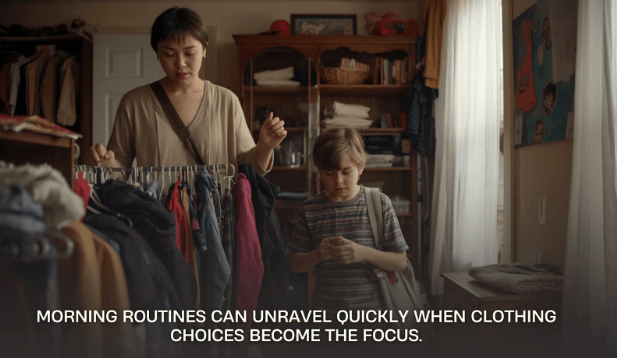
Young children, especially those in preschool through elementary years, are at a stage where personal expression and autonomy feel enormously important.
Choosing their own clothes is one of the few areas where they genuinely feel in control of their day. That instinct is healthy and worth respecting. The problem is that it often collides directly with school start times, dress code requirements, and the reality that some children are simply not natural decision-makers at 7am.
For older kids entering middle and high school, the pressure shifts.
Social comparison around clothing and brands can create its own kind of stress, particularly for families managing tighter budgets or children who are still figuring out where they fit in socially. What a child wears to school can carry far more emotional weight than adults sometimes realize.
Understanding why these battles happen helps parents respond to them more thoughtfully, rather than just trying to push through each morning on willpower alone.
If you are also thinking about how the school environment itself supports your child beyond just clothing, this guide on how to tell if a school truly supports your child’s growth is a useful read for families making big picture decisions.
What Uniforms Actually Take Off the Table
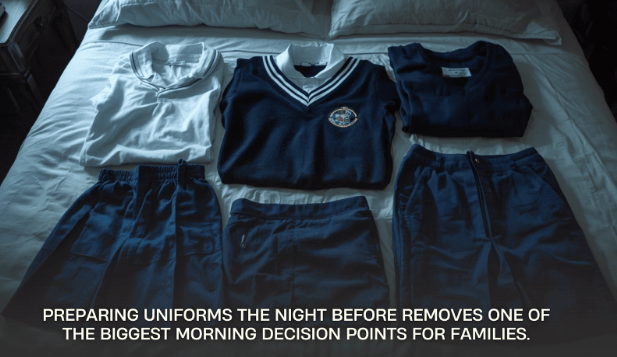
The clearest benefit of school uniforms is not style or appearance, it is removing one daily decision families don’t have the bandwidth for in the morning rush. When there is no choice to make about what to wear, that mental energy gets redirected toward breakfast, conversation, or simply leaving on time.
Research in child development consistently points to the concept of decision fatigue, the idea that the more choices a person faces early in the day, the more depleted their focus and self-regulation becomes as the day progresses. For younger children especially, reducing unnecessary decisions in the morning can support a calmer transition into the school day.
There is also the question of social leveling. In schools where uniforms are standard, children arrive looking broadly the same, which can soften some of the brand-related social comparisons that tend to emerge in upper elementary and middle school years.
This is not a cure-all for social dynamics, but for children who are sensitive to those comparisons, it can genuinely reduce a source of anxiety.
When families do opt for uniforms, the practical side matters too. Pieces need to hold up through repeated wear and frequent washing without losing their shape or color.
For parents who want to buy school-approved kids’ uniforms online, French Toast is a familiar option among many school families. The brand focuses on straightforward basics like polos, pants, skirts, and layering pieces that align with common dress code requirements.
Rather than piecing together outfits from different stores, having access to simple, consistent uniform staples can make back-to-school prep feel more manageable. For many families, the value is less about style and more about reliability and ease during an already busy season.
Getting Uniform Routines to Actually Stick
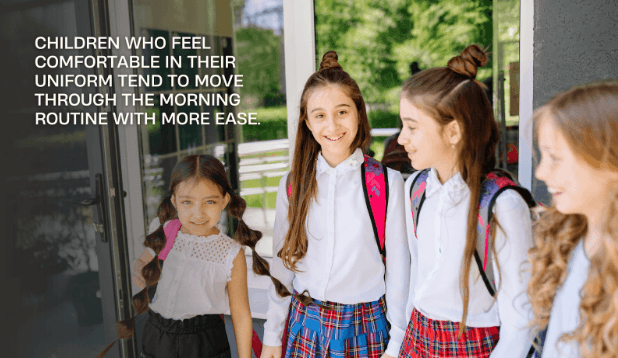
Even with uniforms in place, how you build the morning routine around them makes a significant difference. The uniform itself removes one barrier, but the habits surrounding it are what actually create a smooth morning over time.
Prep the night before, not the morning of
This sounds simple, but it is consistently one of the most effective changes families report. When the uniform is laid out, bags are packed, and shoes are by the door the evening before, the morning becomes a sequence of habits rather than a series of scrambles.
For younger children, involving them in the night-before prep gives back a small sense of ownership without opening the entire wardrobe to negotiation.
Let comfort be non-negotiable
A child who finds their uniform physically uncomfortable is going to resist it every single morning, regardless of how consistent you are with the routine.
Fabric softness, waistband comfort, and proper fit are all worth paying attention to when selecting pieces. A child who forgets they are wearing a uniform because it feels fine is a child who moves through the morning without incident.
Build in a small element of choice
Even within a uniform policy, there is often room for a child to choose their socks, their hair accessories, or the order in which they get dressed.
Offering a contained choice rather than no choice at all respects a child’s need for autonomy without reopening the full outfit debate.
This is particularly effective for children in the preschool through early elementary years who are naturally in a phase of asserting independence.
When Uniforms Are Not the Whole Answer
It would be dishonest to present uniforms as a guaranteed fix for every family. For some children, particularly those with sensory sensitivities, clothing textures and fits can be a genuine source of distress regardless of whether it is a uniform or not.
In those cases, the approach matters more than the policy: finding pieces in approved colors and silhouettes that work for the child’s sensory needs is a more effective strategy than pushing through discomfort in the name of compliance.
Similarly, for teenagers who are using clothing as a genuine form of self-expression and identity development, the conversation around uniforms requires more nuance.
Acknowledging that their frustration is valid while helping them find ways to express individuality within the constraints, through accessories, footwear, or after-school style, tends to land better than dismissing their feelings.
The goal, ultimately, is not a perfectly obedient morning. It is a functional one. One where children arrive at school feeling calm, settled, and ready to focus rather than still wound up from the getting-dressed argument that followed them out the door.
Making Uniform Season Work For Your Budget
The back-to-school season has a way of feeling rushed and overwhelming, especially when small daily challenges start adding up.
Uniforms are not a perfect solution for every family, but for many, they remove one recurring source of stress and make mornings feel a little more predictable. When combined with simple routines and a focus on comfort, they can help set a calmer tone for the start of the day.
If you are looking to keep things organized on the home front, the tips in this post about keeping your small home cool and comfortable all summer long also touch on family organization strategies that carry naturally into the school year.
Because in the end, the goal is not a perfectly smooth morning. It is one where everyone gets out the door feeling a little more settled, a little less rushed, and ready for the day ahead.
0
Leave a Reply