Open most home kitchen drawers and you’ll find the same story: a block with twelve slots, half of them holding knives nobody has touched in years. The other half get used every single day, and they’re doing all the real work.
That’s the thing about knives. You don’t need a lot of them. You need the right few, kept sharp, and a clear sense of which one to reach for.
You Need Three Knives, Not Twelve
A working kitchen runs on three blades: a chef’s knife, a paring knife, and a serrated knife. Everything else in a twelve-piece set is a specialist tool for a job most people rarely do, and it usually ends up dull and forgotten.
Buying fewer, better knives also changes how you cook. When each blade has an obvious job, you stop hunting through a drawer mid-recipe and start reaching for the right tool without thinking about it.
The Chef’s Knife Does Most Of The Work
If you own one knife, it’s this one. An 8-inch chef’s knife handles chopping, slicing, mincing, and dicing, which covers the bulk of what happens on a cutting board on any given night.
The shape matters more than people expect. A slightly curved blade lets you rock the knife through herbs and onions instead of chopping straight down, which is faster and safer once it becomes second nature.
Weight is personal. Some cooks want a heavier blade that does the work of cutting through denser vegetables on its own. Others prefer something lighter they can control with more precision. Handling a few options before buying is worth the trip.
The handle matters just as much as the blade. A grip that feels secure and comfortable after ten minutes of chopping will feel very different after an hour of prepping a big meal. Cooks with smaller hands often do better with a slimmer handle, while a bulkier grip can feel more stable for someone with a heavier hand.
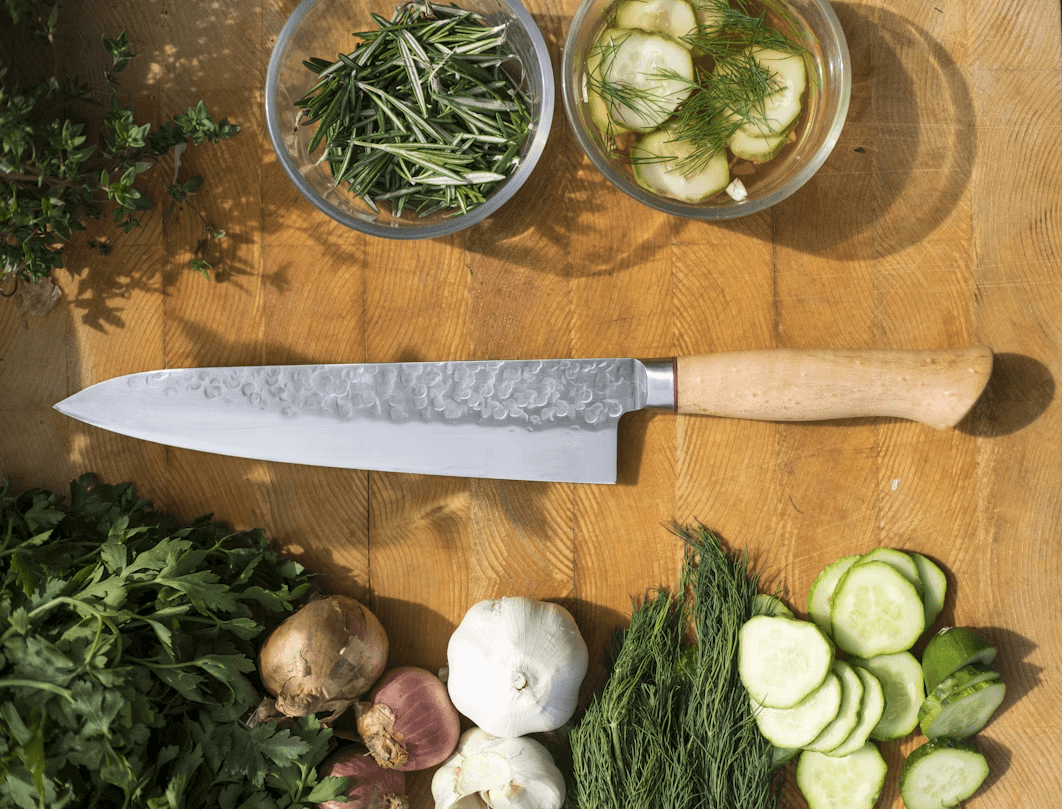
Blade length is worth thinking about too. An 8-inch chef’s knife is the standard for a reason: it’s long enough to get through a butternut squash or a whole chicken but short enough to control with one hand. A 6-inch version can feel more manageable for smaller kitchens or smaller hands, though it trades away some reach on bigger cutting jobs.
The Paring Knife Handles The Small Stuff
A paring knife is small on purpose. Its 3 to 4-inch blade is built for tasks where a full-size chef’s knife is clumsy: hulling strawberries, deveining shrimp, peeling an apple, trimming the fat off a small cut of meat.
It’s also the knife most people underuse. Once a paring knife earns a permanent spot next to the cutting board instead of buried in a drawer, it gets reached for constantly.
A Serrated Knife Solves A Problem The Other Two Can’t
Try slicing a ripe tomato or a crusty loaf of bread with a straight-edged chef’s knife and you’ll see the problem immediately: the blade slides across the skin or crust instead of biting into it. A serrated knife’s teeth grip that surface first, so it cuts cleanly instead of crushing.
This is the knife that saves bread, tomatoes, citrus, and delicate cakes from getting mangled. It’s a narrow job, but it’s one the other two knives genuinely can’t do well.
What Separates A Good Blade From A Frustrating One
Not all knives at a given size perform the same. A blade forged from a single piece of steel that runs the full length of the handle, known as full tang construction, holds an edge longer and balances better in the hand than a cheaper stamped blade. German-forged lines built this way, full-tang, high-carbon options such as Wüsthof Classic knives, are a common reference point for what that construction feels like once you’ve used it for a while.
The difference shows up most in the small moments: how the knife feels balanced when you pick it up, how much force it takes to get through a dense squash, whether the edge still feels sharp after a month of regular use.
Keep It Sharp Or It Isn’t Safe
A dull knife is more dangerous than a sharp one, because a dull blade needs more force and is more likely to slip. Most home cooks wait far too long between sharpenings.
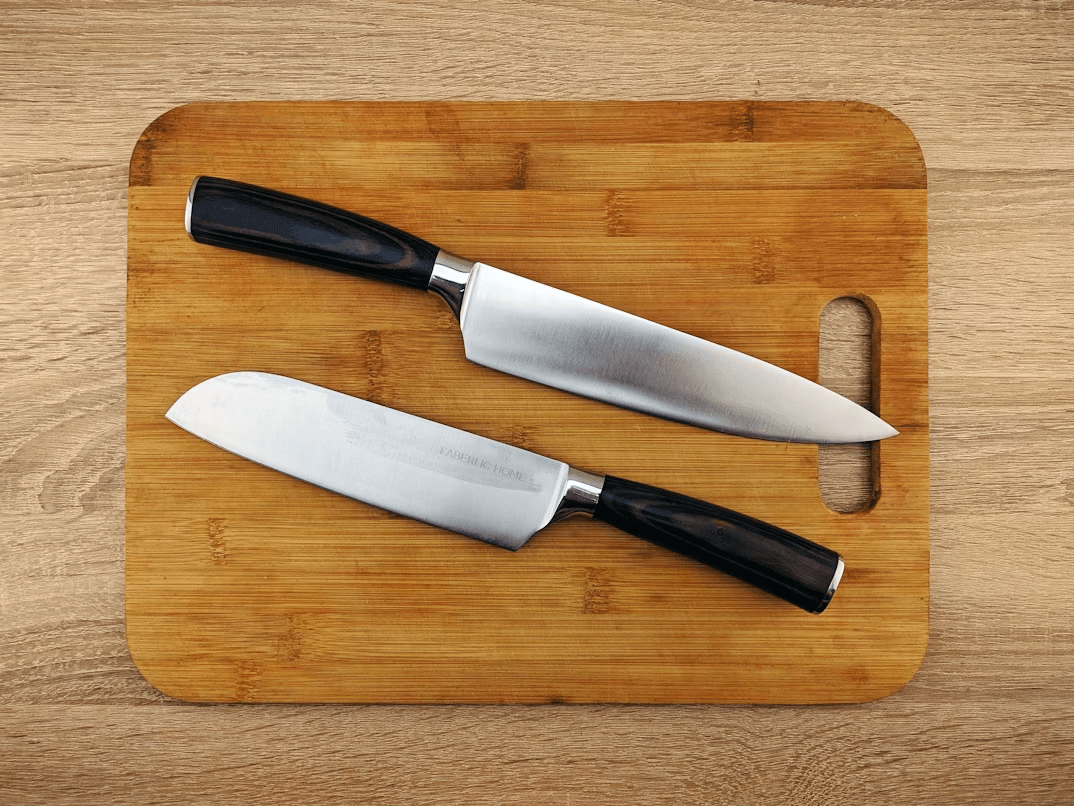
A honing steel, used before or after most cooking sessions, realigns the edge and keeps it working between real sharpenings. Actual sharpening, which removes a thin layer of metal to rebuild the edge, only needs to happen every few months for a knife in regular use, either with a whetstone or through a professional sharpening service.
A simple test tells you which one you need. If a knife glides through a tomato’s skin without pressing down, it’s sharp enough. If it squashes the tomato before it cuts through, it’s time to sharpen, not just hone.
Wash It, Dry It, Store It Right
Good knives deserve basic care. Hand wash them and dry them right away. A dishwasher’s heat and the way blades knock against other items in the rack dulls the edge and can chip it.
Cutting boards matter here too. Using a separate board for raw meat and one for produce, and washing both thoroughly with hot, soapy water between tasks, is a basic step for preventing cross-contamination in a home kitchen.
Storage matters just as much as cleaning. Loose knives in a drawer dull against each other and pose an obvious safety risk when you reach in without looking. A knife block, a magnetic strip, or individual blade guards all keep edges protected and hands safe.
Fewer Knives, Used Well
The home cooks who feel most at ease in their kitchen usually aren’t the ones with the biggest knife collection. They’re the ones who know exactly which three knives to reach for, keep those blades sharp, and store them properly between uses.
Start there. A chef’s knife, a paring knife, and a serrated knife, chosen well and cared for consistently, will outperform a drawer full of knives that never get used.
0
Leave a Reply