• Skip to primary navigation
  • Skip to main content
  • Skip to primary sidebar
  • Skip to footer

Whipperberry

WhipperBerry • Your Home For Creative Inspiration

  • Home
  • Recipes
    • Starters
    • Easy Weeknight Dinners
    • Main Dish
    • Salads
    • Side Dish
    • Soups & Stews
    • Desserts
    • Breakfast
    • Miscellaneous
  • Tutorials
    • Creative Crafts
    • DIY Decor
    • Fabric Crafts
    • Food How-To
    • Jewlery
    • Paint Projects
    • Paper Art
    • Party Styling
    • Photography and Graphic Design
    • Silhouette
  • Holidays
    • Easter
    • Mother’s Day
    • Father’s Day
    • 4th of July
    • Halloween
    • Thanksgiving
    • Christmas
    • Valentine’s Day
  • Gift Ideas
    • Gifts For Everyone
    • Gifts for Dad
    • Mother’s day
    • For The Girls
    • For The Kids
    • Teacher Gift Ideas
    • Christmas
  • Printables
    • Holiday
    • Gift Idea
    • LDS Primary
  • Travel
  • About
    • Terms
  • Contact
  • Nav Social Menu

    • Facebook
    • Instagram
    • Pinterest
    • RSS
    • Twitter

Food

Saucisson & Pâté en Croûte: The French Charcuterie Duo

0 · Dec 21, 2025 · Leave a Comment

French entertaining doesn’t have to be complicated. If you can slice, plate, and pour a drink, you can host like a Parisian. Two items do an unbelievable amount of heavy lifting:saucisson and pate en croute. Together, they deliver contrast (rustic vs. refined), variety (lean cured meat vs. rich pâté), and that “wow, you really planned this” feeling—without requiring hours in the kitchen.

This guide walks you through how to buy the right styles, how to serve them at their best, what to pair with them (wine, cheese, bread, condiments), and how to store leftovers safely so nothing goes to waste.

Why this combo works so well

A great appetizer spread is about balance:

  • Texture: firm slices + tender pâté filling
  • Flavor: salty, peppery, garlicky cured meat + buttery, savory pâté
  • Visuals: simple slices look abundant; a cross-section of pâté looks chef-y
  • Effort: minimal prep, maximum impact

If you’re building one “signature board” for a party, this pairing can anchor the entire spread.

What to look for when buying saucisson

There are plenty of styles, and your best choice depends on your crowd and your menu. Here’s how to pick confidently.

1) Choose the flavor profile

Common directions you’ll see:

  • Classic / pur porc: clean pork flavor, pepper, garlic
  • Peppercorn: bold and snappy; great with red wine
  • Herbs / herbes de Provence: aromatic and crowd-pleasing
  • Smoked: deeper flavor; pairs well with pickles and mustard
  • With nuts (hazelnut/walnut): excellent with apples and mild cheeses

If you’re unsure, buy one classic and one “fun” flavor to create variety.

2) Check firmness and slice-ability

A good cured sausage should feel firm and dry, not soft or squishy. If it’s pre-sliced, look for:

  • slices that aren’t wet or greasy
  • fat that’s creamy-white, not yellowed
  • no excessive liquid in the pack

3) Plan your quantity

For appetizers:

  • 2–3 slices per person if you have multiple items
  • 4–6 slices per person if it’s a charcuterie-forward snack spread

A useful shortcut: 80–120g of charcuterie per person for an appetizer-heavy table.

How to serve saucisson so it tastes its best

Small details matter here—and they’re easy.

Bring it closer to room temp

Cold mutes flavor. If it’s been refrigerated, let it sit 15–20 minutes before serving.

Slice thickness

  • Thin slices highlight aroma and spice.
  • Slightly thicker slices feel more rustic and “meaty.”

If your guests aren’t used to charcuterie, go a touch thicker—they’ll find it easier to enjoy.

Add two “helpers” on the plate

Charcuterie shines with acidity and crunch:

  • Cornichons
  • grainy mustard
  • pickled onions
  • radishes
  • thin apple slices
  • crusty bread

These cut richness and make each bite feel fresh.

What pate en croute actually is (and why guests love it)

At first glance, it looks like a fancy loaf. In reality, it’s brilliantly practical: a seasoned meat pâté baked inside pastry, often with a visible mosaic of meat, herbs, pistachios, or a thin gelée layer that keeps it moist.

It feels “special occasion,” which is why it shows up at holiday tables, celebrations, and upscale deli counters.

Choosing the right style

When shopping, look for:

  • Clean slices that hold their shape
  • A pastry crust that looks baked through (not pale or soggy)
  • A filling that looks moist, not crumbly
  • Balanced fat (some is good; pools of grease aren’t)

If you can choose thickness at the counter, ask for 1–1.5 cm slices—thick enough to feel luxurious, thin enough to portion easily.

The easiest serving formula (works every time)

If you want a French-looking plate without stress, do this:

  1. One main platter: your charcuterie stars
  2. One bread basket: baguette + seeded crackers
  3. One “acid + crunch” bowl: cornichons + pickled onions
  4. One fruit element: grapes or sliced pears
  5. One cheese (optional but powerful): brie, comté, or goat cheese

You can assemble this in 10–12 minutes, and it looks abundant.

Mid-table upgrade: make it feel like a curated tasting

Here’s where you re-introduce the stars in a more “intentional” way. About halfway through your spread planning (or midway through the article, if you’re using this as content), call out the pairing directly again: saucisson brings rustic cured spice, while pate en croute adds a refined, pâtisserie-meets-charcuterie centerpiece.

To elevate the experience, create three bite paths and label them (even casually on a small card):

Bite path 1: Classic French

  • baguette + pate en croute + cornichon

Bite path 2: Wine bar style

  • saucisson + aged cheese + mustard

Bite path 3: Sweet-salty

  • saucisson + apple slice + soft cheese

Guests love being “guided,” and it makes your table feel planned—even if it took you 15 minutes.
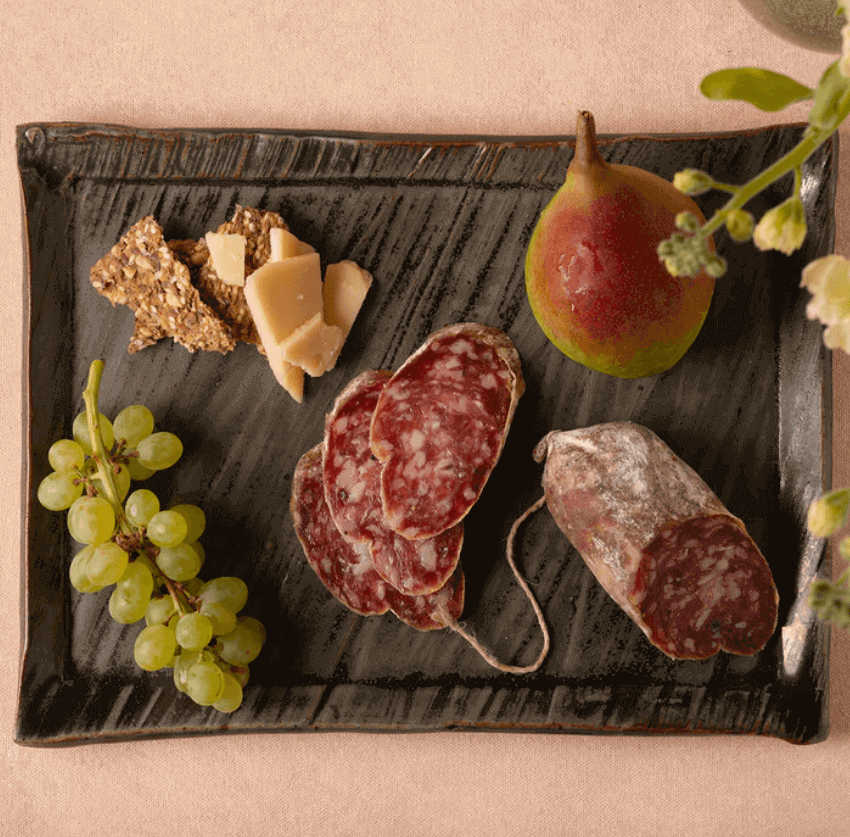
Pairings: wine, beer, and non-alcoholic options

Wine

  • Beaujolais / Gamay: bright, easy, perfect with cured meats
  • Côtes du Rhône: peppery reds match spice and richness
  • Crémant or Champagne: cuts fat, feels celebratory
  • Dry Riesling: excellent with mustard and pickles

Beer

  • Saison: peppery, dry, food-friendly
  • Pilsner: crisp and refreshing
  • Amber ale: works with pastry and richer pâté notes

Non-alcoholic

  • Sparkling water + citrus (keeps the palate fresh)
  • Apple cider (especially with cured meat)
  • Black tea (surprisingly great with rich pâté)

Storage and food safety (so leftovers stay great)

  • Keep both items refrigerated until serving time.
  • Don’t leave them out longer than 2 hours (less if it’s hot indoors).
  • Wrap leftovers tightly:
    • saucisson: parchment + a loose wrap (it likes to breathe a bit)
    • pate en croute: airtight container to prevent drying

Shelf life (general):

  • saucisson: often several days to a week once opened (depending on dryness)
  • pate en croute: usually best within 2–3 days after slicing

If your pâté starts to dry, serve it with mustard, pickles, or a tiny drizzle of olive oil to restore mouthfeel.

Saucisson & Pâté en Croûte FAQ

Do I need cheese if I have these two?
Not required, but one cheese adds contrast. Choose either one soft (brie) or one firm (comté).

What’s the simplest bread choice?
A fresh baguette. Warm it briefly if you can.

How do I keep the board from looking sparse?
Add small bowls (pickles, nuts, olives). They fill space and look intentional.

Quick closing

If you’re trying to host with maximum impact and minimal stress, you can build your entire appetizer identity around this duo. Slice, plate, add pickles and bread, pour something crisp—and your table is instantly “French.”

Grilled Key West Swordfish with Mango Salsa

0 · Nov 3, 2025 · Leave a Comment

A Taste of the Tropics You Can Make at Home

When it comes to seafood that’s both hearty and elegant, few fish can compete with fresh Key West swordfish. Its mild, sweet flavor and steak-like texture make it the perfect choice for grilling. Pair it with a vibrant mango salsa, and you’ve got a dish that captures the sunshine and spirit of the Florida Keys—no plane ticket required.

Why Swordfish Is So Special

Swordfish is often called the “steak of the sea” for good reason. Its firm texture stands up beautifully to the grill, and its natural sweetness means it doesn’t need much seasoning to shine. When you start with fresh Key West swordfish, you’re already halfway to an incredible meal.

griled key west swordfish

Ingredients

To serve four, you’ll need:

  • 4 swordfish steaks (6–8 oz each, about 1 inch thick)
  • 2 medium mangoes, peeled, pitted, and diced into small cubes
  • 3 tablespoons olive oil
  • 3 tablespoons fresh cilantro, finely chopped
  • 2 tablespoons red onion, finely chopped
  • Zest and juice of 2–3 limes
  • Salt and freshly ground black pepper, to taste

Pro tip: Use firm, just-ripe mangoes—overripe ones can turn mushy when mixed.

Step-by-Step Preparation

1. Heat the Grill

Preheat your charcoal or gas grill to medium-high heat. Make sure the grates are clean and lightly oiled to prevent sticking.

2. Mix the Mango Salsa

Combine the mango, red onion, cilantro, lime juice, and lime zest in a bowl. Gently toss everything together, taking care not to crush the mango cubes. Set aside.

3. Grill the Swordfish

Brush each swordfish steak with olive oil, then season both sides with salt and pepper. Grill for about 3 minutes per side, or until the fish is opaque and flakes easily with a fork.

4. Plate and Serve

Transfer the swordfish to plates and top each one with a generous spoonful of mango salsa. Serve right away with grilled vegetables, a crisp salad, or your favorite summer slaw.

Serving Suggestions

This dish pairs perfectly with chilled white wine or a light craft beer. For a full tropical experience, add sides like coconut rice or grilled pineapple.

key west swordfish

Bringing Key West Home

If you’d rather skip the fishing trip, you can have fresh Key West swordfish delivered straight to your door from Eaton Street Seafood Market. They ship overnight across the U.S., so you can enjoy the authentic flavors of Key West wherever you are.

Fresh, simple, and bursting with island flavor—this grilled swordfish with mango salsa is everything a tropical dinner should be.

A Mom’s Guide to Halal Food in Singapore for Curious Travelers

1 · Oct 22, 2025 · Leave a Comment

As a mom who loves exploring new places and cultures with my family, I’ve found that the best way to truly experience a destination is through its food. Singapore is one of those places where every bite tells a story, rich with Malay, Chinese, Indian, and other global influences. It’s a city where culture and cuisine go hand in hand.

If you’re like me and want to explore it all while keeping things family-friendly and inclusive, learning about halal food in Singapore is a great place to start. Whether you follow halal guidelines or simply enjoy discovering local favorites, this guide will help you find flavorful, welcoming spots across the city. There really is something for everyone.

How Halal Dining Works in Singapore

At its heart, halal dining reflects both faith and respect. If you aren’t Muslim, it helps to know that the term halal means “permissible” in Arabic and refers to food prepared according to Islamic dietary laws. This includes specific methods for handling ingredients and prohibitions on certain items, such as pork and alcohol.

Ever wondered how to tell whether a restaurant or food stall in Singapore is halal? Fortunately, the city makes it refreshingly straightforward. The Islamic Religious Council of Singapore (MUIS) oversees halal certification, and eateries that meet its standards display a distinctive logo—usually at the entrance or on menus. You’ll spot it at everything from fast-food outlets to fine-dining restaurants.

A close-up of a halal meal on a table

Still, certification isn’t the only way businesses serve halal food. Many small or family-run eateries prepare their dishes in accordance with halal principles even if they haven’t gone through the MUIS process. When in doubt, it’s always fine to ask staff about ingredients or preparation methods. Most are happy to explain their practices, and the conversation can often lead to helpful local recommendations.

Where to Eat

The beauty of halal dining in Singapore is that it spans the city’s most vibrant districts. Each neighbourhood offers its own rhythm and flavours, so you can plan your meals alongside your sightseeing without going out of your way.

In Kampong Glam, the air hums with history. This is Singapore’s heart of Malay and Arab heritage, where you’ll find traditional eateries tucked between textile shops and perfumeries. Nearby Bugis and Arab Street have evolved into trendy café districts, with halal brunch spots, dessert shops, and Middle Eastern fusion kitchens drawing both Muslim and non-Muslim diners.

For those who prefer more modern-style halal food Orchard Road and Downtown are home to an array of halal-certified restaurants inside shopping centres and hotels. These range from casual international buffets to upscale steakhouses, perfect for when you want a sit-down meal after a day of shopping. Further east, Changi Village moves at a slower pace, where seaside stalls serve local favourites like nasi lemak and satay against the backdrop of the shoreline.

Even popular destinations like Sentosa and Marina Bay have halal options within walking distance of major attractions, so you’re never far from a satisfying meal. Maybe you’ll be tracing the city’s heritage trails or enjoying its skyline views on your next visit; rest assured that, whatever you choose to do, there’s always a halal meal waiting nearby.

Local Halal Classics You Can’t Miss

Nasi Lemak

Few meals feel as quintessentially Singaporean as a plate of nasi lemak. Fragrant rice cooked in coconut milk anchors the dish, surrounded by sambal, crispy anchovies, fried chicken, and a hard-boiled egg. The mix of textures and flavours—spicy, sweet, and savoury—makes it just as satisfying at breakfast as it is at dinner. You’ll find excellent versions across hawker centres and casual eateries, each with its own loyal following.

Satay

As evening falls, the scent of grilled meat fills the air around open-air food courts. Satay marinated skewers of beef, chicken, or lamb is a beloved street food that invites you to linger. The smoky aroma, paired with a rich peanut dipping sauce, turns a simple snack into a social ritual. Grab a plate with rice cakes and cucumber slices to complete the experience.

Bbq grill with various halal foods cooking

Laksa

Comforting yet complex, laksa is a perfect example of the cultural fusion that defines Singapore’s cuisine. This noodle soup combines coconut milk, curry paste, and seafood or chicken for a creamy, aromatic broth that warms you instantly. Its roots lie in Peranakan cooking a blend of Chinese and Malay traditions while regional versions add their own flair, some producing thicker, spicier broths while others make lighter, tangier ones.

Roti Prata

When the craving hits for something flaky and indulgent, roti prata answers the call. Made from dough stretched thin and cooked on a hot griddle, this Indian Muslim favorite comes crispy on the outside and soft within. Dip it in curry or enjoy it with sugar for a sweet twist. It’s equally loved as a hearty breakfast or a late-night comfort meal.

Tips for Non-Muslim Foodies

Be Mindful of Ingredients

Halal food excludes pork and alcohol, and some dishes may use alternatives you’re not accustomed to beef bacon or nonalcoholic flavourings. Embrace the difference; it’s part of what makes the cuisine distinct.

Ask and Learn

Curiosity is welcome. Don’t hesitate to ask staff about how they prepare certain dishes or what certain terms mean. Most locals are proud to share insights, and these exchanges often lead to a deeper understanding of both the food and its cultural context.

Cut halal sandwich on wooden table in Singapore

Respect Prayer Times and Practices

In some eateries, you might see staff pause briefly for prayer, especially during quieter hours or Ramadan. Patience and understanding help keep the dining environment comfortable for everyone.

Experience the Festive Side

If your visit coincides with Ramadan, take the opportunity to explore evening bazaars or break fast with locals at community events. The atmosphere—filled with laughter, generosity, and incredible food—is unforgettable.

Conclusion

Singapore has a way of making everyone feel at home, especially around the dinner table. As a mom traveling with family, I love how easy it is to find delicious, halal-friendly meals no matter where the day takes us. From busy hawker centers to quiet cafés, every meal becomes part of the adventure.

Whether this is your first visit or one of many, make time to explore this rich and flavorful side of Singapore’s food scene. Pack your curiosity and your appetite, and get ready to enjoy a taste of the city’s warm and welcoming spirit, one plate at a time.

How To Do the Food Scene Right—Wherever You Are

0 · Oct 15, 2025 · Leave a Comment

Have you ever arrived in a new town, scanned a handful of restaurants, and wondered which ones are truly good—and which ones just look good online? We’ve all been there. Sevierville makes that decision even trickier, but not because it’s confusing. Here, the food actually lives up to the stories.

This isn’t a guide to chasing trends or finding the “#1 spot” on social media. It’s about discovering food that feels real—the kind made with care, eaten without a camera, and remembered because it warmed more than your stomach.

In this post, we’ll share how to explore Sevierville’s food scene (and any town’s, really) the right way: by slowing down, trusting your senses, and letting the food do the talking.

Let the Food Be the Focus, Not the Backdrop

Meals used to be the center of the day. Now they’ve become a backdrop for conversation, or worse, content. Doing the food scene right means letting the meal be the event. Don’t talk over it. Don’t photograph it endlessly. Just eat. When food is cooked with care, and rooted in local rhythm, it deserves full attention. You don’t have to dress it up. You just have to show up and treat it with the same honesty it was made with.

There’s a growing fatigue around overdone presentation and overpromised flavor. People want substance again. They want food that reminds them what real tastes like. And that means going into every new town—whether it’s one with three restaurants or three hundred—with the same mindset. Look past the presentation. Watch the rhythm. Follow the locals. Trust the simplicity. The rest will take care of itself.

When you hit the road, especially in places like Sevierville where food still means something beyond trend cycles, that mindset becomes even more important. You’re not looking for flash. You’re looking for what people rely on. The difference isn’t subtle. It’s felt with every bite.

food scene

Start With the Locals, Not the Algorithm

Food culture used to move through conversation—people recommended their favorite spots over coffee or while waiting in line at the post office. Now, it moves through filters and sponsored posts. That doesn’t mean the digital map is useless, but it’s rarely the full story. The best food is still grounded in consistency, community, and habit. If a place draws people in daily, feeds them well, and sees them return without fanfare, it’s doing something right.

In Sevierville, you notice that quickly. The pace isn’t rushed, but the food doesn’t hang around long. BBQ in Sevierville holds its own because it’s built on repetition that works. Take Buddy’s bar-b-q for example. It’s not trying to shock anyone into noticing it. It’s been doing the same thing since 1972: hickory-smoked meats, made fresh on-site every day. No tricks. No shortcuts.

The pork, chicken, ribs, and brisket get treated with the same care as the hawg-back potatoes and scratch-made sides. Everything’s fresh, never frozen, and the portions don’t leave you asking what happened to your money. The entire menu echoes something most travelers forget to look for—food that locals eat on weekdays, not just on Instagram weekends.

Knowing how to pick places like that, whether you’re in Sevierville or anywhere else, is more important now than it used to be. A fast-moving culture, saturated with content and short attention spans, has trained people to scan for visual cues instead of listening to human ones.

If you ever find yourself in Mississippi, follow the same rule—skip the filters and look for where the locals actually eat. From smoky BBQ joints to spots serving locally crafted beverages, these hidden gems often turn out to be some of the best restaurants in Mississippi. But flavor and tradition don’t show up in lighting. They show up in process and repetition and in that quiet satisfaction that builds when people do one thing very well, over and over again.

Read the Context, Not Just the Menu

Most travelers skim a menu to find out if the food fits their preferences. They should be looking at something else entirely: how the place functions in the neighborhood. Are there regulars? Do the staff act like they know who’s coming in?

Do you see locals waiting patiently for their turn, not because they don’t have options, but because this is the option? These are the things that tell you more about the food than any chalkboard special ever could.

One of the clearest signals that a place is worth your time is if it doesn’t try too hard. A menu that sticks to what it does best, a dining room that’s functional rather than flashy, a line that moves quickly without panic—these signs point to a place that isn’t just feeding people but feeding its people. If you’re the outsider, your job isn’t to search for novelty. It’s to respect the routine.

Trendy spots often rise fast and vanish even faster. Meanwhile, steady operations that have stood for decades keep going quietly in the background. They don’t need gimmicks or reinvention because they already know what works.

That kind of focus is rare, especially in a time when everything from tech to food seems to chase constant disruption. But in food, consistency is rebellion. It’s a refusal to compromise in a world that encourages shortcuts.

how to do the food scene right

Ignore the Noise and Trust the Repetition

Doing the food scene right means resisting the urge to chase whatever’s trending. Algorithms can’t taste. Ratings get gamed. What lasts, and what actually fills you up—in both the literal and the cultural sense—is often the thing that looks least impressive at first glance.

Repetition matters. When a kitchen does the same thing every day, and people keep showing up for it, that’s data worth listening to.

Think about how many places use variety to hide the fact that they haven’t mastered anything specific. A restaurant with a short menu is betting on its execution. A restaurant with a bloated one is often hedging.

And you don’t need to overthink it. The plate either hits or it doesn’t. If it hits, don’t go looking for a better version of it somewhere else. That mindset—always assuming there’s something better around the corner—is how people end up eating six meals and not enjoying any of them.

Know When to Stop Searching

Ultimately, food isn’t about finding “the best.” It’s about finding what feels right. When you sit down somewhere that smells like home—even if you’re miles away from it—and your plate tells a story that doesn’t need any extra words, that’s when you’ve found it.

In Sevierville, that might be a slow-smoked rib at Buddy’s bar-b-q or a plate of sides that taste like they’ve been made the same way for generations. In another town, it might be something completely different. The point is the same: food doesn’t need a filter to be meaningful. It just needs honesty, time, and a hungry heart willing to listen.

So next time you’re traveling, skip the checklist. Follow the locals. Trust your nose. And when you find that one place that just feels right, stay a while—you’ve found your story for the day.

  • « Go to Previous Page
  • Page 1
  • Interim pages omitted …
  • Page 3
  • Page 4
  • Page 5
  • Page 6
  • Page 7
  • Interim pages omitted …
  • Page 14
  • Go to Next Page »

Primary Sidebar

Heather from Whipperberry
Hello... my name is Heather and I'm the creator of WhipperBerry a creative lifestyle blog packed full of great recipes and creative ideas for your home and family. I find I am happiest when I'm living a creative life and I love to share what I've been up to along the way... Come explore, my hope is that you'll leave inspired!

Footer

  • Privacy Policy
  • Crafts
  • Food
  • Gifts
  • Holidays
  • Home
  • Mom Life
  • Recipes
  • Travel

Copyright © 2026 · Seasoned Pro