• Skip to primary navigation
  • Skip to main content
  • Skip to primary sidebar
  • Skip to footer

Whipperberry

WhipperBerry • Your Home For Creative Inspiration

  • Home
  • Recipes
    • Starters
    • Easy Weeknight Dinners
    • Main Dish
    • Salads
    • Side Dish
    • Soups & Stews
    • Desserts
    • Breakfast
    • Miscellaneous
  • Tutorials
    • Creative Crafts
    • DIY Decor
    • Fabric Crafts
    • Food How-To
    • Jewlery
    • Paint Projects
    • Paper Art
    • Party Styling
    • Photography and Graphic Design
    • Silhouette
  • Holidays
    • Easter
    • Mother’s Day
    • Father’s Day
    • 4th of July
    • Halloween
    • Thanksgiving
    • Christmas
    • Valentine’s Day
  • Gift Ideas
    • Gifts For Everyone
    • Gifts for Dad
    • Mother’s day
    • For The Girls
    • For The Kids
    • Teacher Gift Ideas
    • Christmas
  • Printables
    • Holiday
    • Gift Idea
    • LDS Primary
  • Travel
  • About
    • Terms
  • Contact
  • Nav Social Menu

    • Facebook
    • Instagram
    • Pinterest
    • RSS
    • Twitter

Crafts

 The Best Paint for Furniture – What you NEED to Know

67 · Jan 27, 2023 · Leave a Comment

Looking for the best paints for furniture? Great. I’m going to make this as quick and easy as possible for you if you’re short on time and then go into detail (probably too much detail) to help you make the best choice for YOU.

Painting furniture is a great way to bring new life to existing pieces or transform thrift store finds. The right colors and finishes can change a boring chair or end table into the focal point of any room.

Can You Use Any Paint For Furniture?

No. You can’t use any paint for furniture. You need to choose the right type of paint for the type of furniture you’re painting.

Choosing the right paint for the job can make the difference between something that looks like a designer piece and something that falls flat—just ask any interior painting company with years of hands-on experience.

There are a variety of paints that can be used for furniture. However, there are also some that won’t be a good choice.

The easiest way to see if the paint you have is suitable for the furniture you want to paint is simply to read the label.

Paint that is formulated for plastic or metal is not going to adhere well to wood. Any paint labeled as “high temperature” is great for painting an outdoor grill or vehicle, but will eventually flake off of wood or wicker. 

Why It’s Important To Choose The Right Wooden Furniture Paint

Choosing the best paint for your wooden furniture is crucial to keeping it looking good over several years.

It would be so disappointing to have your painted furniture showing scratches, chips, or stains after you spend time (and money) working on them.

Before choosing your paint, give consideration to how much daily use and what interactions your piece of furniture will have. Let’s say you have a basic wooden table that you want to paint.

You could choose from a number of different types of paint for this project, and with the right technique they could all turn out looking great. So how do you choose?

First, keep in mind that a table is a piece of furniture that is going to get a lot of regular use. You might be eating meals at this table, or playing games, or maybe you’ll use it just as a space to pay bills and check your email.

Regardless, the table will constantly have a number of items on the tabletop, as well as wear and tear from people touching it.

When choosing a paint for a piece of furniture like this table, you want to choose a paint and finish that will be durable enough to stand up to daily use. It would be a shame to spend the time and money to paint this table beautifully, only to have it scuff and chip within a year or so.

If you are going to paint something like a cabinet, end table, or hutch that will get touched on a regular but not daily basis, you might not have to worry about high durability quite as much.

You should still choose a paint and finish that will be resistant to wear and tear, but that doesn’t have to be the top priority.

You should also give consideration to the type of finish you choose for your painted furniture. Paint with a matte or satin finish or topcoat will be more prone to showing dust and dirt.

Semi-gloss or glossy finished pieces are going to be more resistant to any dirt and will be easier to keep clean. 

What Is The Best Type Of Paint For Furniture?

The “best” paint for any furniture project will depend on how you want your finished piece to look, and what type of furniture you will be painting.

Here are some of the most common paint types for painting wood furniture:

Chalk Paint

Chalk paint is so trendy right now! It’s perfect if you want your furniture to have a velvety matte finish.

Chalk paint is also the best choice if you want to create a distressed look on any piece of furniture. This is the best choice if you want your painted furniture to fit in with a “farmhouse” or “country chic” aesthetic.  

If you plan to use chalk paint on a surface that will be touched quite a bit, you will need to apply a protective wax sealant to keep this paint from scratching and chipping.

This will give it a very subtle sheen, but not enough to detract from the signature flat appearance chalk paint is known for. Most brands of chalk-style paints also have their own wax sealant available.

You might not need to use a primer with many brands of chalk paint, as it usually applies evenly and smoothly.

It is important to make sure it is completely dry between coats; this will make it more durable. Fortunately, chalk paint is known for having a quick drying time.

Chalk paint is one of the few paints that is non-toxic and has very little odor. It also cleans up very easily with just soap and warm water.

Milk Paint

Milk paint is also becoming quite trendy right now with home decor designers as well as home crafters. It is similar in appearance to chalk paint; as it has a lovely matte finish.

The finish does have a slight sheen to it, but it’s not noticeable enough to even be described as “satin”.

Milk paint is durable and actually cures to a more long-lasting hardness over time. If you want to be sure that your milk paint will be resistant to scratching and chipping, you can mix a bonding agent in with the paint powder.

If you want full opaque coverage with milk paint, it’s best to start with a primer coat. You’ll need at least two to three coats to get a solid finish. A single coat of milk paint can look semi-transparent, which can be used to create a sheer wash of color over a wood surface.

This technique is an easy way to create the look of a faded antique heirloom.

Milk paint is sold in powdered form that is mixed with an equal amount of water. The powdered paints can easily be combined to create a custom color.

It dries quickly and has very little to no odor. All milk paint powders are completely non-toxic, so they’re an excellent choice for painting furniture for children’s bedrooms. 

Latex Paint

Latex paint is one of the most commonly available home paints. Wall paints are very often latex based. Because there are so many brands and they are readily available, latex is one of the more affordable options for home painting projects.

Another advantage of latex paint is the vast selection of colors available. Just about any color you can imagine can be found in a brand of latex paint. It’s also available in a variety of finishes, such as gloss, semi-gloss, and satin.

You can use latex paint for wood furniture, but it requires quite a bit of preparation. You’ll need to sand your furniture before painting.

Latex won’t adhere well to a smooth surface; it needs a little bit of texture to grip. Also, applying a primer coat is so important before painting with latex!

Even if the brand of paint you are using is described as “paint and primer in one”, you’ll get the best results if you start with a primer coat.

The possible downside to using latex paint on wood furniture is that it isn’t as durable over time as other paint formulas. Taking the time to properly prep your surface will help the paint last longer, but there are other options that are more long-lasting.

Acrylic Paint

Most of the specialty furniture paints and designer brand home decor paints are acrylic based. If the paint is labeled as “Paint and Primer In One”, it is also probably acrylic paint.

These paints are a good choice for wood furniture projects. In most instances, you can get away with not having to apply a primer or protective top coat.

You might still need to do a little bit of light sanding, especially if your surface originally had a shiny varnish on it.  

Acrylic paint is known for being “self-leveling”.

This means that it will dry with little to no visible brushstrokes. It takes a little bit longer to dry than chalk paint or milk paint, but you might not need to use a protective top coat with this paint.

You can even distress it with a little sanding, but it’s not as easy to do this as it is with chalk paint or milk paint.

Alkyd-Hybrid Paint

Alkyd Hybrid (or Acrylic-Alkyd) Paint is a relatively new type of paint that has been widely available for the past decade or so. This paint is an enamel that is water-based instead of oil-based like traditional enamel paints.

This paint has beautiful vivid colors associated with oil paints, without harsh odors and harmful chemicals. It levels flawlessly, with a finish that will show no brush strokes or streaking.

It’s durable and highly resistant to scratches and scuff marks. It is also easy to clean with just soap and water. This type of paint is a good choice for kitchen furniture or any furniture that will experience a lot of daily wear and tear.

One downside to Alkyd Hybrid Paint is that it takes quite a while to fully cure. While it may feel dry to the touch in about a day, the actual curing time can take up to a week.

It’s best to not place anything on top of it or move it too much for a week to 10 days after painting.

Alkyd Hybrid Paint requires a bit more preparation work than some of the other paints. You’ll need to sand pretty thoroughly before applying, but you won’t need to apply a protective topcoat.

Oil Based Paint

Oil-based paints have beautiful color saturation and can be applied to almost any surface. They don’t show streaks or brushstrokes, and they’re probably the most durable paint choice for wood furniture.

It will saturate any porous surface, creating a smooth hard finish with each coat of paint. They do cost a bit more than other paint types, but this paint is strong and will look good for a long time.

However, there are some significant downsides to using oil paint. First and foremost, oil-based paints have a high VOC (volatile organic compound) content.

That means they’ll have a pronounced odor, and you will absolutely have to work in a well-ventilated area when using oil paint. VOCs are considered a mild health hazard; enough so that home decor oil paints are becoming increasingly harder to find in stores.

Oil paints take a long time to cure. It can take up to one or two days for it to feel dry between coats of paint. 

You’ll need to use mineral spirits or turpentine to clean your brushes and tools when using oil paints. You can also use these as a paint thinner if the paint is thicker than you would like.

Which Type of Paints Have The Best Coverage For Furniture?

If you want a smooth opaque coverage on your painted furniture, you really can’t beat the results of using either acrylic or alkyd-hybrid paint. Both of these paints have gorgeous color saturation, and self-level and apply smoothly like acrylic paint. With alkyd paint, you might not even need to apply a primer coat. It’s easy to get flawless, full coverage in just a couple of coats of paint.

Chalk Paint can give you a lovely matte coverage with the right preparation. It can take several coats to get full coverage, though. The key to getting the best coverage with chalk paint is to sand your wood surface and apply a primer coat first.

Milk paint is a little tricky to use if you want a fully opaque coverage. For the best results, you should apply a primer coat to your sanded wood surface first. The first coat of milk paint might look a little bit semi-transparent. It usually takes three (or sometimes four) coats of milk paint for an opaque finish. Another trick to getting nice coverage from milk paint is to mix in a bonding agent.

Oil paints have beautiful colors and are easy to apply for a smooth, opaque finish. However, the downsides to using oil paints are that it tends to drip, and there is a long drying time between coats. You need to do quite a bit of sanding before painting with oil paints, and applying a primer coat will help you get the best results.

What Are The Best Brands For Wooden Furniture Paint?

Painting furniture is a popular hobby right now, and choosing the right brand of paint can be a daunting task. It’s always a good idea to do some online research and read user reviews of any product, but here are a few recommendations:

Best Acrylic Paint: Jolie Paint Matte Finish

Jolie Paint has created an acrylic paint with a pretty matte finish that truly resembles the look of chalk paint or milk paint. This paint comes in 44 trendy colors. It is non-toxic and has a low VOC content, and cleans up easily with soap and water. It is recommended to use a protective wax or polyurethane topcoat with this paint. 

Best Chalk Paint: Retique It 

Retique It brand of chalk paint has superior coverage and dries to a silky matte finish. It is manufactured in the U.S.A. Their neutral color shades are very popular and are perfect if you’re looking to create the appearance of an older piece of furniture. Like all chalk paints, they’re non-toxic, hypo-allergenic, and free of VOCs. 

Best Milk Paint: Old Fashioned Milk Paint Co.

Old Fashioned Milk Paint Co. creates powdered paints in 32 classic and trendy colors. They specialize in colors meant to recreate the look of colonial furniture style. All their colors are vibrant and resistant to fading.

This powdered paint is made in small batches, and the unmixed powder will last for years. Milk paint is great for smaller to medium projects because you can mix up only as much paint as you need. 

Best Alkyd Paint: Advance Waterborne by Benjamin Moore

Advance Waterborne is pricier than other brands, but the quality can’t be beaten. This paint has a self-leveling formula and a satin finish that makes it easy to achieve a professional-looking outcome on any painting project. 

It covers so well that you might be able to finish with only one or two coats if you use a primer. It is available in any of the Benjamin Moore colors, so you can customize it to match your decor in any room.

Best Oil Paint: Rust-Oleum Protective Enamel 

Rust-Oleum Protective Enamel sets the standard for affordable, high-quality oil enamel. It comes in many vibrant, long-lasting colors that are available in gloss, semi-gloss, and flat finishes. Rust-Oleum brand is known for curing to a hard protective finish and is perfect for wood or metal surfaces.

Unlike many oil paints, this brand will be dry to the touch in just three to four hours. It’s probably best to let the paint dry at overnight before applying a second coat, though.

You should work in a well-ventilated area when using this or any oil-based paint. It’s a good idea to keep some turpentine or mineral spirits on hand for clean-up, too.

Does Furniture Paint Need Primer?

It’s easy to get impatient with all the preparation needed for a painting project and want to skip the primer coat. Don’t skip this step. It can make a world of difference in how your painted furniture will look once all the painting is done. This is especially true if you’re using chalk paint or milk paint. Priming also helps your paint adhere to the wood better, and your lovely paint job will last much longer. It also helps to prevent the paint from chipping and scuffing.  A coat of primer also prevents any dark wood grain or imperfections in the wood from showing through the paint.

There are a lot of paint brands that advertise as being “all in one” or “paint + primer”. Technically, you should be able to skip the primer coat if you use one of these paints. However, most of the time I still do a quick primer coat even when using an “all in one” style paint. If nothing else, the paint just glides on more evenly over a primed surface. 

What’s The Best Paint For Upcycling Furniture?

Transforming old furniture from yard sales or thrift stores is such a fun creative outlet! You can take a very ordinary piece that might be several decades old, and with a little time and creativity, it can become a beautiful accent for your home.

There really isn’t any definite answer as to what paint is the best for upcycling. It genuinely depends on what you envision your finished project to look like. 

For a classic “country” or “farmhouse” style, you can’t go wrong with chalk paint or milk paint. Both of these paints can be distressed if you want your furniture to have an authentic antique appearance.

A satin or semi-gloss finish acrylic or alkyd-hybrid paint are great choices for more contemporary styles. These types of paint can give you a more smooth finish and are available in a wide variety of colors. 

What Are The Best Furniture Paint Colors?

Choosing the perfect color for your painted furniture should be fun, but it’s easy to get overwhelmed with choices. When trying to decide on a color, consider where in your home you’ll be displaying your painted furniture. You don’t have to match the colors in the room, but you can choose a color that is complimentary, or just in the same general pallete.

When in doubt, stick to neutrals or lighter shades. Neutral shades don’t have to be boring! Cream-colored furniture with dark hardware can look quite sophisticated. Pale gray tones are very trendy right now and look good with almost any decorating scheme. 
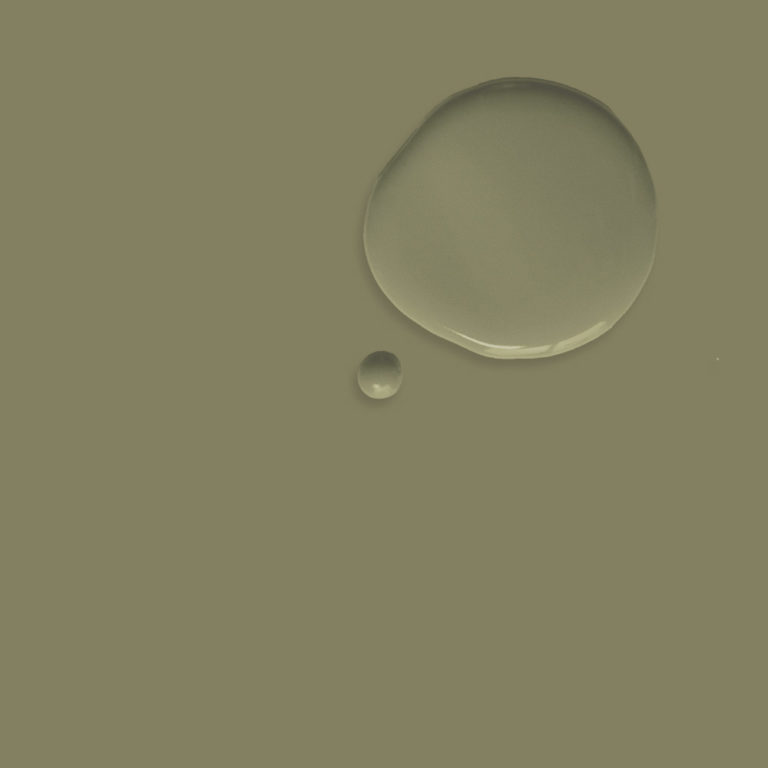
What’s The Best White Paint For Furniture?

White is always a good color choice to bring new life to old furniture. It’s classic and seems to look subtly elegant on any type of furniture.

Choosing the “perfect” shade of white paint can seem a little confusing at first. Once you start looking at paint you’ll find yourself faced with choices of true white, warm & cool whites, eggshell, ivory, off-white, cream, and more!
Don’t panic! Figuring out which white paint to use really doesn’t need to be complicated. First, look at the space where you might display your painted furniture.

Is there any white in that room? If so, is it a bright white? Or is it more of a cream color? If you want your space to look like a professional designer put it together, try to match your white paint with whatever white might already be in the room.

The look of matching shades of white is subtle, but it ties a room together nicely.

The Best 3 White Paints

Benjamin Moore Decorator’s White is one of the most popular shades for home decor. It’s a favorite of interior decorators. The color is a clean classic white, that isn’t too bright or harsh. It has a soft tone, but you won’t notice any yellow undertones. You can get this lovely color in Benjamin Moore’s Advance Waterborne alkyd-hybrid paint.

Snow White, by Old Fashioned Milk Paint Co. is a good choice for a white milk paint. It has a soft cool undertone but doesn’t look gray. It actually looks like milk. It’s a nice soft shade that would work well as the main color or trim color on any wooden furniture. 

Retique It Chalk Paint makes two wonderful shades of white paint. Ivory Tower is a warm white that looks like aged antique white paint. Warm undertones have a tendency to appear yellow when it comes to white paint, but this one just looks like antique ivory. 

The other shade of white from Retique It that is popular is their Snow. It’s just what the name says: pure snowy white paint. It’s bright, without being harsh. This is a great color on its own or to mix with another shade for your own customized shade.

How To Prepare Wood Furniture For Paint

Now that you’ve read about different types of paint for furniture, let’s take a moment to “talk” about preparation. The key to getting great results on any painting project is to do the prep work. It’s not the most fun part of the job, and sometimes it can take more time than the actual painting. However, if you don’t take the time for some prep work you’ll be disappointed with your final project.

The first step is to clean the furniture you’re about to paint. Most of the time, it can be done with soap and water, but a household cleanser might be needed if there are any stains or spots.

The next step is sanding. This is particularly necessary if the furniture has any kind of glossy/varnished finish on it. You don’t have to sand all the way down to bare wood. You’re trying to scuff up the surface enough that the wood will be porous. This will help any primer and/or paint stick to it easier. Paint won’t adhere to a shiny varnished surface, so sanding is really important if you’re upcycling an older piece of furniture. 

After you’ve sanded the furniture, you need to clean it again. This will be easier than the first cleaning. The goal here is to wipe away all of the dust from the sanding you just finished. You can usually do this with a damp cloth.

If there are any holes or deep scratches you want to repair, now is the time to do it. Wood putty is available at any home improvement store or online, and it’s very easy to apply. Simply spread it into the hole, scrape it evenly across the surface with a putty knife, and let it dry. Drying times can vary, so read the instructions.

If there are any sections of the furniture where you don’t want paint, now is the time to cover them with painters’ tape. This includes any hardware if you didn’t remove it already. Be sure the edges of your tape are stuck down smoothly so no paint will seep underneath.

Now it’s time to apply the primer coat! Primers do come in different shades. As a general rule, it’s best to use a light-colored primer under light colors, and a darker primer under medium to dark colors.  Primer is easy to brush on; just make sure you get an even coat over the entire piece of furniture. Allow enough time for the primer to dry completely, and you’re ready to paint!

How To Apply Paint For Wood Furniture

You’re done with all the tedious prep work and are finally ready to paint! Your first step is to inspect the piece you’re going to paint. Make sure you don’t miss any spots when you apply the primer. Look for any dust or hair that might be on it; you don’t want to accidentally paint over any.

Depending on the size and shape of the furniture you’re about to paint, you need to decide what kind of tools you’ll use for painting. Brushes of assorted sizes work for any job. If your project has tight corners, intricate details, or small areas like table legs, you’ll need some smaller brushes as well as larger ones. Wide brushes or rollers are perfect for broad flat surfaces.

Thin, even coats of paint will give you professional results. Several thinner coats are better than one or two thick coats. Thicker coats of paint won’t stick to the furniture as well and will be more prone to scratching and shipping. 

For the first coat of paint, brush or roll your paint in the same direction as the wood grain as much as possible. Allow enough time for the paint to fully dry before applying your second coat. For the next coat of paint, you can brush or roll the paint in the opposite direction. This will help give you full coverage that doesn’t show any streaks or brush strokes.

When painting a vertical surface, be mindful of any drips and smooth them out as soon as you can. You don’t want to find drips after your paint has already dried!

If you want a semi-transparent washed finish, with some of the wood grain or prior paint job showing through, brush the paint in a very thin coat in the same direction as the wood grain. If the paint is going on too thickly, wipe it gently with a rag, again moving in the same direction as the wood grain.

Should You Use A Sprayer Or Brush For Furniture?

Whether you use traditional brushes or a paint sprayer for your project is completely up to you. You can achieve great results with either method. 

Spraying will work better if you’re painting a large piece of furniture, while brushes might give you better control over small and more intricate pieces. Painting with brushes and rollers will take you a little longer than using a sprayer.

Paint sprayers typically can cost anywhere from $50 to $150 on average. If you paint furniture on a regular basis, it’s worth purchasing one to add to your DIY supplies. If you’re new to furniture painting, or only do it once in a while, using brushes and rollers  might be a more budget-friendly option for you.

Sprayers are relatively easy to operate, but it does take a little practice. Sprayers do an excellent job of creating a painted surface absolutely free of any brushstrokes. The key to getting that perfectly smooth appearance is to keep your arm moving at all times when using a paint sprayer. Holding the sprayer in place will make your paint drip, and the coverage will be uneven. Before painting  on your wood furniture, it’s a good idea to practice with the sprayer on a large piece of cardboard to get used to how it operates, and to make sure your paint is the right consistency.

The best paints to use in a sprayer will be thinner in their consistency. Most paints can be thinned out with a little water.  The exception to this is oil-based paint. You’ll need to use mineral spirits or turpentine to thin out oil paints. It’s best to check the label of whatever paint you choose to find out if it is suitable for use in a paint sprayer.

If you use a sprayer, it’s important to wear a face mask and goggles to protect yourself from overspray. You should only use a sprayer in a well-ventilated area. If you’re spraying inside, but sure to cover the floor, walls, and anything else around your workspace so you don’t get overspray on them.

Is There A Difference Between Wood Furniture Paint And Metal Furniture Paint?

The short answer to this question is: yes, there is a difference between paint used for wood furniture and metal furniture. You should always make sure the paint you use is suitable for the surface you’re painting.

Any paint that is meant to be used for metal surfaces will be formulated to resist rust, corrosion, and adverse weather conditions. 

You will still need to use primer, but because this type of paint is meant to be protective as well as decorative, you won’t need a top coat.

You can use paint meant for metal on wood furniture, but the paint will soak into the wood much more than other paint types. You can offset having too much paint soak into your wood by applying a coat or two of primer before painting.

If you try to use paint that is made for wood on a metal surface, it probably won’t work very well. Even with a primer coat, the wood is not going to stick as well, and it will be more likely to run and drip.

If you’re going to paint metal furniture meant for outdoor use, paint formulated for wood is not going to hold up well against the elements. 

Summary of the Best Paint for Furniture

Whew! What a long post. It’s hard to put all of this into words to make it

Painting furniture is such a satisfying hobby! If it’s something you’ve been wanting to try, hopefully, this has helped to answer some questions for you.

Like any home project, having an idea of the best products to buy and how to use them will make the job easier and more fun.

The Best Paints for Cabinets in Your Kitchen (2024)

40 · Jan 16, 2023 · Leave a Comment

Looking to paint your kitchen cabinets but not sure which paint to use? You’re in the right place. If you’re short on time I’ll give you my top pick now. Just remember, while some paints are better than others for your kitchen cabinets, it really does come down to preference.

Overall Best Paint for Kitchen Cabinets

My top pick for cabinets overall is Rust Oleum Milk Paint. The reason for choosing milk paint is its durability and the fact it has great coverage, while still having that chalky-looking finish. Now, this isn’t for everyone because you may want a different look. It’s also not the easiest way to paint your cabinets because there’s a lot of prep and follow upw work.


Get It Here


A close runner-up is Beyond Paint Furniture, Cabinets and More All-in-One.  This is one of the most user-friendly paints on the market. It’s perfect for anyone who is a beginner at home painting and wants the job to be the quickest and easiest. It has a great finish too but I just prefer the milk paint look a little more. They have some great colors to choose from but it’s a bit more on the expensive side. The upside here is there’s very little sanding or prep needed and it’s almost impossible to mess it up. 


View It Here


Why Using the Best Cabinet Paint is Important

Painting your kitchen cabinets is a great way to change the style of your kitchen. You can make outdated cabinets look sleek and modern, or transform plain cabinets into striking focal points. Cabinet painting is a major job, and not using the best paint or taking the time to do it correctly can lead to some awful results.

Several years ago, my husband and I were house hunting. At that time, many of the homes we looked at were being sold by “flippers”. These were usually older homes that someone bought & remodeled; hoping to “flip” them for a profit. Most of these homes had some kind of remodeling done in the kitchen.

Many of these remodeled kitchens turned out beautifully, but there were more than a few that had badly painted cabinets and doors.

There’s just no other way to describe it; they were bad. From a distance, it wasn’t really noticeable, but if you looked closely you could see plenty of mistakes. It was enough to turn us off as potential home buyers.

I remember noticing cabinets that had uneven paint coverage, small paint spots on the wall and inside edges where it hadn’t been taped properly, and in one case…a hair that had been painted over!  It was obvious some of the paint jobs had been done hastily, as the latex paint was lifting up on some edges, or had teeny bubbles in some corners.

Using the right paint and proper techniques is so important. There’s a saying that the kitchen is the heart of any home. If that’s so, the kitchen should be taken care of in the best possible way, even if that simply means picking out the best paint for a cabinet makeover.

Important Things to Consider When Picking The Best Brand of Paint for Your Kitchen Cabinets

When trying to decide which brand of paint you should use for your kitchen cabinet transformation, you should keep a few key things in mind.

First, make sure that the paint you like is suitable for kitchen cabinets. Many brands make paints that are specifically for cabinets and doors.

You should also compare the prices of different paint brands. A gallon of paint in similar colors can vary widely in what it will cost you, depending on the brand. Paints branded by famous home designers will undoubtedly cost more, but a mass-produced brand might do the job for you just as well. 

Finally, read online reviews when deciding which brand of paint to choose. I really can’t stress this enough.

Even if, at first glance, a particular paint has a lot of five-star ratings, browse through the less-than-favorable reviews, too.

If you notice that many users are having similar issues with the product, don’t rush to buy it right away. It’s also good to look at reviews on multiple websites such as Amazon, Google, and the paint manufacturers’ websites.

What is the Best Type of Paint for Cabinets?

Some types of paints are much better suited for cabinets than others. You want to be sure that your paint will hold up to lots of touching/movement, will be resistant to dirt and stains, and will be easy to clean. Paints that are formulated with built-in primer are a good choice, although in some instances you might want to use a separate primer anyway.

Here are brief descriptions of the types of paint you might find, and how well they’ll work for your kitchen cabinets.

Oil-Based Paints

Oil-based paints are durable, and the colors look rich and vibrant when the paint dries. They come in just about any color you can imagine, and are fairly resistant to dirt and stains.

However, there are some significant drawbacks to oil-based paints. They take a really long time to dry.

Waiting for the paint to dry between coats could add a couple of days to your painting projects. Oil paints also have a high amount of VOC (volatile organic compounds).

This means it is imperative that you have good ventilation in the room while you’re painting, and you should absolutely wear a filtered mask while painting. Unfortunately, the “new paint” smell of oil paints can take a week or more to go away.

Lastly, oil-based paints need to be cleaned up from your tools/work area with mineral spirits, and leftover paint is considered a hazardous material and needs to be disposed of properly.

Latex Paints

Latex paints are acrylic pigments in water-based paint. Latex is the most common type of paint you’ll find for any interior painting project.

The colors and finish are comparable to oil-based paints. The biggest difference between latex and oil-based paints is the drying time.

Latex paint dries pretty fast. In fact, it can seem like it dries almost too fast; making it difficult to get the paint applied perfectly smooth without streaks or uneven spots. Usually, this can be remedied with a second coat of paint, though. 

Latex paints have a much lower VOC content, so they don’t smell as strong as oil-based paints. You’ll still need to have good ventilation in your workspace, but the paint odor won’t linger much once the paint is completely dried.

Hybrid Alkyd Enamel Paint

Somewhat new to the world of home renovations, hybrid alkyd enamel paints bring the advantages of both oil-based and latex paints together.

Hybrid alkyd paints are water-based (like latex paint) but still contain alkyd resins (like oil-based paint). The result is a type of paint with the rich colors and durability of oil paints, but that dries quickly and has low VOC levels like latex paint.

Hybrid Alkyd paint also cleans up easily with soap and water and is virtually odorless. The durability makes this type of paint an excellent choice for kitchen cabinets, trim, and doors.

Chalk Paint

There are quite a lot of opinions about whether or not chalk paint is a good choice for kitchen cabinets. The matte finish and soft colors of chalk paint look absolutely gorgeous if your kitchen has a “farmhouse” or “country chic” style. Personally this is my favorite type of look.

Because chalk paint is a fairly thick paint, it can produce better coverage with few coats.

However, there are a few downsides to using chalk paint on your cabinets. Most importantly, chalk paint is prone to chipping.

That’s perfect for furniture that you want to have a distressed appearance, but it’s not a good idea for kitchen cabinets. Also, the matte finish of chalk paint will absorb any crumbs, dust, or grease from your normal kitchen use. 

For these reasons, it is absolutely necessary to finish chalk-painted cabinets with a coat or two of wax sealant. Your cabinets will have a slight sheen but will be much better protected. Eventually, you’ll have to touch up the wax sealant to keep your cabinets looking as good as they did when you first painted them.

Milk Paint

Milk paint will give you a smooth matte finish similar to chalk paint, but it’s a more durable choice for kitchen cabinets. I’ve written a full blog post covering milk paint vs chalk paint.

You can find milk paint in colors very similar to chalk paint colors, but the finish has a very slight satiny sheen to it.

This makes it a good choice for surfaces like cabinet doors, which will need frequent cleaning. Even though it is known to be a strong, long-lasting paint, you will still need to apply a protective top coat once your painted cabinets are fully dry.

Milk paint is sold in powder form and then you mix it with water to achieve the desired consistency. You need to be sure it is free of lumps after mixing to get a perfectly smooth finish.

While milk paint is known to be durable, it can still be a little bit prone to chipping on anything that will be touched or moved frequently. You can prevent chipping and scuffing by mixing in a bonding agent to make the paint more adhesive and long-lasting.

Milk paint can be a good value since you can mix the powdered form in just the quantity you need for your project. It’s practically odorless and cleans up easily with just mild soap and water.

Which Paints Have the Best Coverage?

If you’re looking for a smooth, opaque coverage for your cabinets you’ll get the best results with latex or hybrid alkyd paints. Both of these paints will dry with vibrant colors and a smooth finish if applied carefully.

Of these two, the hybrid alkyd paint is easier to get an even finish in just one or two coats. Latex paint will need at least two coats to achieve an even appearance.

Another great option is any paint that is a “paint and primer” formula. You can find these from most major latex paint brands. In some cases, you might still want to do a primer coat, but the paint-and-primer formulas do a great job of providing even full coverage. 

Do You Need a Special Paint for Wood Kitchen Cabinets?

Any of the types of paint already described in this article will work just fine on wood cabinets, whether they’ve been painted before or not.

You don’t need any special paint for your wood cabinets, but you might need to do a little bit of extra prep work to get the best results.

Wood cabinets are likely to have a light varnish or polyurethane top coat. In order for the paint to adhere evenly, you should clean the cabinets thoroughly and then lightly sand the top coat.

You don’t need to sand completely down to bare wood. The sanded surface is simply so the paint will be able to “grip” onto your cabinets. 

Can You Make Old Cabinets Look Modern?

Updating old cabinets is one of the most striking ways to make your kitchen look modern and stylish.

Changing the color of your kitchen cabinets is a simple way to update their look. This is especially true in older homes.

Even what was once a bright white paint job can appear yellowed and dingy over time. Kitchen cabinets that are still painted avocado green or sunny yellow (all the rage several decades ago!) can look brand new simply by changing the color to something more modern.

Muted shades, earthy colors, classic whites, and soft gray tones are all very popular colors for kitchen decor right now. Glossy finish paints look good if your kitchen has modern stainless steel appliances. The shiny finish will give your kitchen a contemporary designer look.

The other way to make your older cabinets look brand new is to change the hardware. This is an easy fix, but once it’s done you will be amazed at how it transforms the overall look of your kitchen.

Opt for sleek, minimalist hardware designs for the most contemporary style. Hidden hinges, as opposed to visible or ornate styles, are also a good way to update the look of your cabinets.

Can You Make New Cabinets Look Rustic?

Transforming new cabinets to have a rustic, or antiqued appearance is an easy and fun way to change the look of your kitchen.

Changing the paint color to a soft, lighter shade is a great way to get that “farmhouse” style that is so popular right now. Many paint brands even offer shades that are marketed as “farmhouse” or “country”.

Soft pastel hues and creamy shades of white are perfect to get a rustic aesthetic in your kitchen.

Painting your cabinets with chalk paint or milk paint, then sanding lightly for a “distressed” look can add a rustic appeal. However, you should only do very light distressing for anything in your kitchen, and you’ll definitely need to have a strong protective top coat over your paint.

Choose a top coat with a satin finish to keep your cabinets protected while preserving as much of the matte finish as possible.

Switching out your cabinet hardware is an easy way to transform your modern kitchen. Look for hardware that has a brushed or satin finish as opposed to anything shiny.

Oil-rubbed bronze, antiqued brass, and brushed nickel hinges and handles all have an attractive antique appearance. There are even companies that sell reproductions of antique hardware, right down to matching screws.

To complete the look, you could change your kitchen sink fixtures to match the new cabinet hardware.

How Much Money Do You Save By Painting Cabinets Yourself Instead of Hiring Someone?

Repainting kitchen cabinets sounds like it should be a simple DIY job. Unfortunately, that just isn’t the case.

It’s time-consuming and isn’t something that can be done by yourself over a long weekend. Realistically, prepping and painting your cabinets can take up to a week before your kitchen is fully usable again.

You can save a lot of time by hiring professionals to paint your cabinets, but it will cost considerably more.

On average, the cost of having kitchen cabinets repainted can range from $900 to $1500, depending on the material costs, the size of your kitchen, the number of cabinets, and how much prep/minor repair work needs to be done.

If you decide to tackle the job yourself, you can spend as much as $150 to $500 on paint and supplies.

This, of course, depends on the price of the paint you choose, how much you need, and what additional supplies you need to purchase.

So you can conceivably cut the cost of your kitchen cabinet painting by half (or maybe more) by doing it yourself. However, when you hire professionals you will have the job done in much less time, and it will be done properly.

Kitchen cabinets that are painted professionally can last decades without needing much more attention than regular cleaning.

Best Paint Finish For Kitchen Cabinets

Another consideration when choosing paint for your kitchen cabinets is deciding what type of finish will be the best choice.

Gloss or semi-gloss finishes are really optimal for any painted surface in the kitchen. The glossy finish helps to repel dirt and makes the painted surface easy to clean.

Although they look great, matte finishes aren’t always the best choice for the kitchen. That doesn’t mean you can’t use chalk paint or milk paint on your cabinets; you’ll just have to apply a protective top coat of wax or polyurethane.

The top coat will have a soft satiny sheen, so the paint won’t have the velvety matte look that these paints are known for.

Without the top coat, dirt, crumbs, and kitchen grease will stick to the paint, and it won’t be easy to clean without scuffing or chipping the paint.

Best DIY-Friendly Cabinet Paint

Beyond Paint Furniture, Cabinets and More All-in-One is one of the most “user-friendly” paints on the market. It’s perfect for anyone who is a beginner at home painting. It has a great finish and is the easiest to use.

The product description states there is no sanding or priming needed with this paint. It comes in a variety of colors that are perfect for any style of kitchen. It’s a thick paint that applies easily with a roller and dries to a smooth, semi-glossy finish. Beyond Paint has some great colors to choose from too.

User reviews indicate that it lives up to the boast of needing little to no prep work, with a high rate of satisfaction.

View It Here

The Best Oil-Based Paint For Cabinets

Rust-Oleum Protective Enamel is an oil-based paint that is a great choice for almost any home painting project.

The colors are rich and vibrant, and they look fresh and glossy after the paint is dry. Even though this is an oil-based paint, it has a relatively quick drying time of 3 to 4 hours.

Rust-Oleum is known for being one of the most durable home paints on the market, which makes it a good option for high-touch areas such as kitchen cabinets. However, I don’t think this is the best option.

The Best Chalk Paint for Cabinets

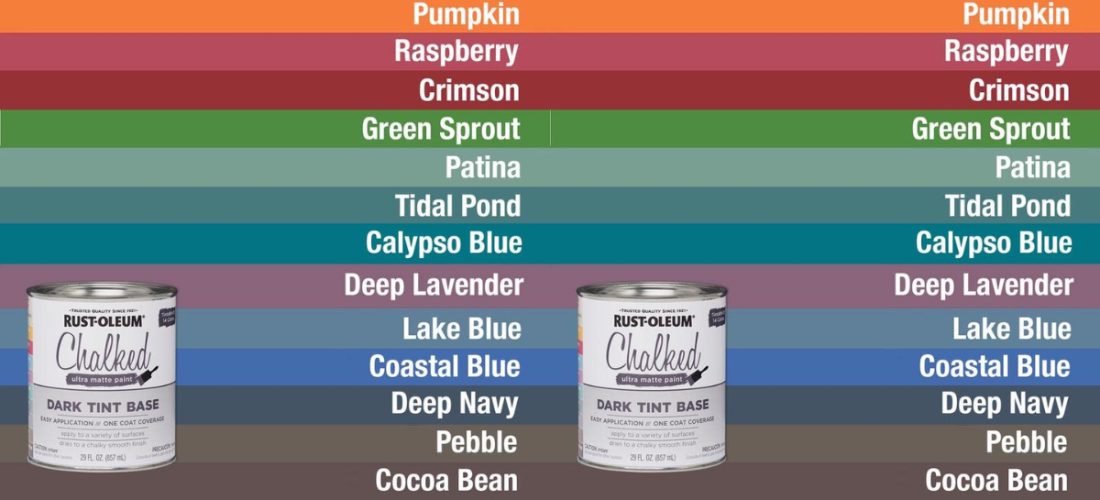
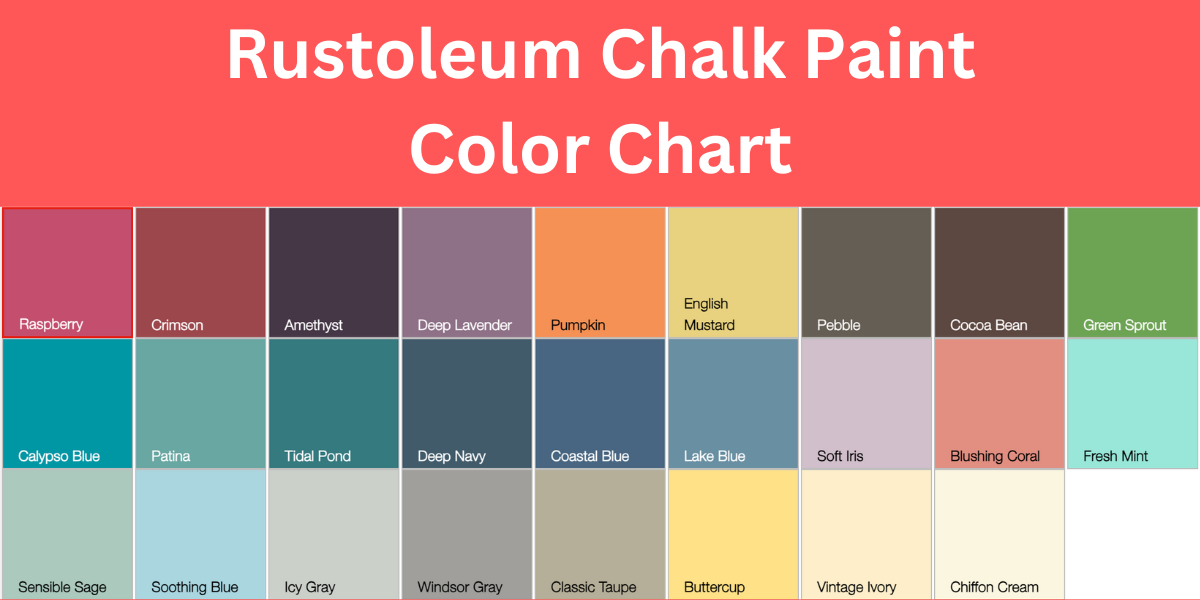
Rust-Oleum Chalked Ultra Matte Paint is available in a variety of contemporary colors at a budget-friendly price.

It applies easily with a brush or roller and dries to the touch in approximately 30 minutes. The final appearance is a velvety matte finish. You can read more about the best chalk paint brushes here.

Like any chalk-style paint, you will need to apply a protective top coat if using this on kitchen cabinets. You can seal this with a wax coating or with the Rust-Oleum brand clear top coat. I wrote a whole post about the best chalk paint waxes here.

Rust-Oleum produces a matte finish clear top coat, but a semi-gloss or satin finish will be easier to keep clean in the kitchen. You can read more about the best chalk paints here.

I’ve mentioned this a few times already but I don’t think chalk paint is the best option. If you’re set on chalk paint though, then Rust-Oleum is the one to go with.

The Best Milk Paint for Cabinets

Old Fashioned Milk Paint Powder is an excellent choice if you want a rustic or farmhouse look for your kitchen. This powdered paint can be used as a semi-transparent wash (with one coat), or as a full matte finish paint (with two to three coats).

The colors are rich and won’t fade over time. Old Fashioned Milk Paint also produces a bonding agent that can be mixed in, to add more durability and adhesion to this paint. One of the nice features of any milk paint is that it is non-toxic and virtually odorless.

Like chalk paint, you will need to apply a protective top coat over this paint for the best results. It’s also important to mix the paint powder thoroughly and let it sit for a few minutes before painting to minimize bubbles in the paint.

The Best Paint and Primer for Kitchen Cabinets

Prestige Interior Paint and Primer is available in over 40 colors. These neutral shades are perfect for modern kitchen designs.

The semi-gloss finish allows for easy cleaning and keeps the paint looking fresh. This is an acrylic latex that has a low VOC content, so there is very little odor and it cleans up easily with soap and water. 

Best Kitchen Cabinet Paint From Sherwin Williams

For a professional-looking finish to your painted cabinets, you can’t go wrong with Sherwin Williams’ ProClassic Waterborne Interior Acrylic Enamel.

It is available in high-gloss, gloss, semi-gloss, and satin finishes, and you can get any of the Sherwin Williams paint colors.

This is a thicker paint that is formulated to stand up to heavy-use surfaces. It goes on smoothly with either a brush or roller and dries to show no brush marks at all. It is important to use a primer coat with this paint for the absolute best results.

The Best White Paint Colors for Kitchen Cabinets

Classic white cabinets look great in any kitchen decorating style. Picking out white paint can be trickier than you might think, though! Basically, whites can be “neutral”, “cool”, or “warm”. 

The neutral, or true whites will be the most “white”. They’re bright, reflective, and probably best suited to modern decor.

Cool whites have undertones of blue, gray, or even greenish hues. You don’t really notice the undertones, but they’ll look best in a kitchen with cooler complimentary colors.

Warm whites will have undertones of yellow, pink, or even pale orange. You have to be careful if you choose a warm white paint color because it can look yellow very easily.

Paints described as “off-white” or “cream” usually have warm undertones.

Here are a few popular white paints that are suitable for kitchen cabinets:

Sherwin Williams Alabaster White-Best Warm White

This paint has warm undertones of pale yellow and gray. It’s a lovely soft shade that looks especially pretty in natural light. Be aware that fluorescent lighting does bring out the yellowish tones in this paint.

Benjamin Moore Decorator’s White-Best Cool White

This cool white is a favorite with interior designers as well as DIY home painters. This is almost a pure white, with very subtle cool undertones that look beautiful in any light.

It always looks crisp and modern and has absolutely no yellowish cast to it.

Sherwin Williams High Reflective White-Best True White

This absolutely bright white paint is probably the closest you can buy to a pure white. It has an LRV (light reflective value) of 95, which means that it is so bright it can reflect 95% of light off of its surface.

With decorative light fixtures and even candles, this can produce some dramatic light effects in your kitchen. While this true white paint looks bright and clean, it looks best in a kitchen that has some touches of color in it as well.

Without touches of color to accent the room, using this paint could make your kitchen look a little bit sterile.

Top Techniques for Painting Kitchen Cabinets

Now that you’ve read through some suggestions on the best types of paint, you’re probably wondering how to get started! Using a good technique is just as important as choosing the best paint for the job. I have a full blog post on this where I go into detail. You can read about how to paint kitchen cabinets here.

The first thing you need to do is make sure your cabinets are clean and dry. Then you should give them a light sanding, and clean them again to get rid of any sanded dust.

A primer coat is a good idea at this point, even if the paint you’re using is the kind that is described as “paint and primer in one”.

Once your primer coat is dry, you’re ready to apply your first coat of paint. Brushing with a 2.5-inch fine bristle brush will give you great results.

If you prefer using a roller, you’ll have better control with a mini roller than with a full-size one. Apply your first coat all over, then leave it to dry fully. Even if it feels dry to the touch after a couple of hours, it’s best to let it dry fully for several hours to overnight.

Then, you’ll want to sand it very lightly before applying a second coat and possibly a third coat. Thin coats of paint are better than thick coats. The thinner layers will provide a stronger, more long-lasting bond.

If you’re applying a protective sealant coat, be sure your paint is absolutely dry before you apply. In fact, making sure you allow enough drying time at all steps of your painting is crucial to achieving a professional look.

The last technique that should be mentioned is using a paint sprayer. This can make the job of actually painting go quickly, but it does require quite a bit of prep work to protect everything from any overspray.

If you opt to give a paint sprayer a try, be sure to wear goggles and a face mask for your own safety.

Make sure your kitchen and/or workspace are well-ventilated, especially if you’re working with oil-based paints.

How to Get a Smooth Finish When Painting Kitchen Cabinets

If your goal is to have a perfectly smooth finish, there are a couple of tricks that can help you achieve this.

The first tip to getting that beautifully smooth look on your cabinets is sanding. You’ll want to sand lightly with 220-grit sandpaper before applying your primer.

Then, you’ll want to lightly sand with your 220-grit between each layer of primer, paint, and top coat. This helps each layer adhere perfectly and level out to a smooth appearance. Be sure to lightly clean up any dust after sanding, so you’re not painting the dust into your surface!

The next tip for a smooth look is to use a foam paint roller. Foam rollers spread paint with almost no texture in the finished project.

You’ll probably still need to use a small brush for tight areas, but a 4-inch foam roller will make the job go quickly and give you great results. 

How to Paint Over Oak Cabinets White Without The Grain Showing

Oak cabinets are lovely if you want the look of natural wood grain and color. They’re also very sturdy. If you are considering painting over oak cabinets and don’t want the appearance or texture of the wood grain to show, you’ll need to take a couple of extra steps.

First, you’ll need to sand and fill in that wood grain. The grain on oak is deeper than a lot of other hardwoods.

You should use a medium sandpaper, and sand in the direction of the woodgrain using even pressure. Use a damp cloth to clean up any sanding dust before the next step.

Next, you’ll need some wood putty and a spackle spatula. Apply a very thin coat of the wood putty on the cabinet, and spread it over the surface.

You’re trying to just fill in the grain so you’ll have an even surface all over. Use the spatula to spread it evenly. You can sand any uneven spots after it is fully dry, but it will be easier if you can get it even while the putty is still wet.

Let this dry overnight, then get your light sandpaper and give it a light sanding again. You’ll need to wipe up any sanding dust again, of course.

The final step before painting is to apply one or two primer coats. The coats will act as a final barrier to prevent the wood grain from showing, as well as help your paint to adhere evenly.

Be sure to allow plenty of drying time between your primer coats, then you’re (finally) ready to paint your oak cabinets.

How Much Paint do You Need for a Cabinet?

Many paint manufacturers will have an estimate on the paint can that will tell you how many square feet the container of paint will cover.

As a general rule, one gallon of paint should cover 350 square feet, which is approximately enough to paint a bathroom or small room.

Two gallons of paint is considered enough for an “average” home painting project and should cover approximately 800 square feet. If you keep that in mind, a gallon of paint should be enough to paint your kitchen cabinets with multiple coats. 

How To Prep Cabinets To Be Painted?

There’s no easy way to say this: painting kitchen cabinets requires a lot of prep work! Not just prepping the cabinets, but also prepping your entire kitchen.

Before you even get started, you’ll need to remove everything from your kitchen countertops. You might want to move any furniture out of the kitchen also.

Cover your countertops, appliances, and floor with heavy paper or plastic sheeting.

Remove any curtains from nearby windows, and cover the windows with plastic. If you’re going to use a paint sprayer, you should hand some plastic sheeting to block off the entrance to the kitchen.

It’s easier to paint cabinet doors if you remove them from the cabinet boxes. Be sure to organize the hardware in small containers or plastic bags, and label them in a way that makes sense to you.

Now it’s time to clean! You’ll need to scrub the doors and outside surfaces of the cabinet boxes on the wall with soap and water.

Kitchen cabinets are going to pick up dirt, grease, and dust from daily use. You don’t want to paint over even tiny amounts of dirt, so making sure they’re spotlessly clean will help make your cabinets look wonderful.

Finally, it’s time to begin taping/masking off so you can get started with the paint!

How To Tape Cabinets To Be Painted

Personally, I find taping to be the most tedious part of any home painting project. But, I also know that taking the time to carefully tape off before painting can make the difference between a professional-looking job, and a less-than-wonderful-looking job!

In addition to masking tape, you’ll need some heavy brown paper. You can usually find rolls of it at most home improvement stores, as well as online. Tape several inches of the paper to the walls and ceiling all around the cabinet boxes.

You’ll also need to tape along the interior edge of the cabinets. Take your time and be sure to get the tape and paper right up to the edge of the cabinets.

It’s not the most fun part of the job, but doing it correctly will save you from doing unnecessary touch-ups and cleaning later.

If you’re going to use a paint sprayer, you should tape a sheet of plastic across the open cabinet boxes so you don’t get paint inside.

You should also tape the paper over the backsplash, countertops, floors, and most of the walls to avoid getting any overspray on them.

Wrapping Up on The Best Kitchen Cabinet Paints

Painting your cabinets is a great way to dramatically transform your kitchen. With the right paint, you can create a cozy “farmhouse chic” space or a crisp modern one.

It’s a big undertaking to try yourself, so doing some research on what paint you should use is worth the time. It’s also important to remember that a great paint job starts with great prep work, and kitchen cabinets take a lot of preparation.

In the end, though, you can have a stunning kitchen that reflects your personality and style. 

The 5 Best Chalk Paint Brushes (2024)

15 · Jan 11, 2023 · 1 Comment

Hey there! I’ve been using chalk paint for over 15 years now. It’s one of the things that I know more than anything. One thing is for sure… you need to get the right brush to make the final chalk paint projects come out right.

If you’re short on time I’ll go ahead and give you my favorite brush so you can go pick it up and then I’ll give you the top 5.

The best chalk paintbrush for most projects is the Country Chic Chalk Paint Brush.

Get It Here

This chalk paintbrush is great because it’s so versatile and very high quality. It leaves the least amount of brush strokes possible. The cost for this is on the higher side but it’s not the most expensive. You know what they say – you get what you pay for. This brush will last you for years to come and for many other chalk paint projects.

Top 5 Best Paint Brushes For Chalk Paint

In a hurry? I’ll give you the top 5 that you can investigate for yourself.

  1. Country Chic Chalk Paint Brush
  2. Modern Art Supplies Set
  3. Bristello Set
  4. FolkArt Home Decor Chalk and Wax Brushes
  5. Brossum 2 in 1

Should You Use A Different Brush For Chalk Paint?

Yes. In short, you should get the right kind of brush to make sure you get the best end results for your home projects.

Refinishing furniture and home accents with chalk paint is one of the most popular home decorating trends right now.

If you’ve read other articles on this website, you know that there is a large variety of chalk paint brands on the market, with a large selection of colors and price points. You want to make sure you’re selecting the best chalk paint for the project.

When you’re choosing your materials for a chalk paint project, selecting your brushes is just as important as choosing your paint.

Using the best brush for your chalk-painted piece will ensure you get the best possible results on your finished project. 

What To Look For In A Brush For Chalk Paint

Chalk paint is a bit different from oil-based or latex paints. It’s a thicker texture, and in order to get that lovely matte finish it needs to be applied evenly and smoothly. Also, chalk paint is very similar to milk paint. I wrote a whole post about the difference between chalk paint vs milk paint.

Not all paintbrushes will give the best results. The best brushes for chalk paint should have a few key features.

Whether you choose a brush with synthetic or natural bristles, you want to make sure to use a brush with dense, stiff bristles. Soft bristles won’t hold up to the thick texture of most chalk-style paints.

A brush with a sturdy, wooden handle will make it easier to spread the paint evenly. If the handle has a little bit of a curved shape, it will feel more comfortable in your hand.

When painting a large piece of furniture, using a comfortable brush will reduce any strain on your hands or wrist.

Look for a brush with a stainless steel or nickel-plated ferrule. The ferrule is the metal piece that connects the bristles to the handle on a paintbrush.

Stainless steel is the best choice, as it is strong and resistant to corrosion or contamination. The strength of stainless steel helps to hold the bristles securely enough that the brush shouldn’t shed very much, if at all. 

Nickel-plated steel is another good choice for a brush ferrule. The nickel plating is still corrosion-resistant, but it’s not quite as sturdy as stainless steel.

You’ll have to be careful that the edges of the ferrule don’t become bent.

The final consideration when choosing a brush for your chalk painting project is the size and shape. You don’t want to use too large a brush for smaller projects, or for painting smaller areas.

Round or wide brushes are great for large, flat areas. Smaller, oval-shaped brushes are a good choice to paint smaller items or to paint corners or tight areas. 

Types Of Brushes For Chalk Paint for Furniture & Projects

Now that we’ve outlined some of the key features to look for in a good quality paintbrush for chalk-style paints, below are some details on the different types of brushes available.

Synthetic brushes

Synthetic brushes have bristles that are made of nylon, polyester, or a   combination of the two. These brushes work well with the thicker texture of chalk paint.

They easily give a smooth finish with little to no visible brush strokes. Another benefit of synthetic brushes is that they clean up easily and keep their shape.

Natural Brushes

Natural paintbrushes have bristles that are made of animal hair or bristles.     Most commonly, they are made from boar, ox, or goat hairs. The natural bristles hold a larger quantity of paint, so you won’t have to reload your brush quite as often.

 The downside to using a natural bristle brush is that they tend to shed, especially during the first use. Be sure to look for brushes that are described as “low shedding”.

Another disadvantage is that when using water-based paints (like chalk paint) on natural bristles, the brush can lose its shape. The natural bristles sometimes soak up more of the paint and swell, leading to the bristles spreading and not staying dense.

Oval Brushes

Oval brushes are great for painting narrow spaces or trim. The dense bristles provide excellent coverage and make it easy to achieve a perfectly smooth appearance. The bristles on oval brushes usually have a “domed” surface. This gives you better control when painting over carved or textured surfaces, or in narrow spaces.

Flat Brushes

Flat brushes typically can be found in two varieties: the “paddle-shaped”   brushes with a wooden handle, and “wide chip” brushes with a broad piece of wood for the handle.

Either style has a wide group of bristles, with a flat brush edge. These brushes hold a large quantity of paint and are great for covering wide smooth surfaces. These especially work great when using chalk paint on glass.

A flat brush makes it easy to achieve a perfectly smooth finish free of brush strokes or streaks.

If flat brushes are your brush of choice, it’s a good idea to buy them in different sizes to make it easier to paint smaller areas.

Round Brushes

Round brushes are the brush of choice for many crafters who do a lot of chalk paint projects. The rounded shape with densely packed bristles makes it especially easy to control how and where you apply your paint.

These brushes will easily give you a flawless finish with minimal effort.

They’re comfortable to hold, and smaller sizes are perfect for painting over carved or textured areas.

Using a round brush effectively takes a little bit of getting used to, but they are a popular choice for chalk painting with good reason. They hold a large load of paint, so you can spread more paint at one time over an area.

This is the secret to how a round brush always produces those amazingly smooth finishes with no streaks or visible brush strokes.

How Much Are Chalk Paint Brushes?

Brushes for chalk paint can vary in price from around $9 up to $35, depending on the size, the material it’s made of, and the brand name.

There are so many varieties of brushes available, it can be overwhelming to choose one. 

Here are some recommendations on good quality chalk paint brushes.

As with any craft tool or supply you’re considering buying, it’s a good idea to read customer reviews to see what ordinary people think of the product. 

Synthetic Brush – Chalk Paint Oval Brush, by Country Chic

Country Chic brand makes a variety of chalk-style paints and brushes at reasonable prices. This one retails for $21.95 to $26.95, depending on which size you buy. This oval brush with synthetic bristles is ideal for chalk paints. It comes in two sizes, so you can use it on smaller areas as well as large pieces.

Pros:

  •  Densely packed bristles hold a lot of paint, enabling you to get smooth coverage.
  •  The curved handle is easy to hold and control.
  •  Advertised as “non-shedding”, and user reviews back up that claim.

Cons:

  •  It’s priced a little bit higher than other similar brushes.
  •  The largest size available is two inches wide. A larger option would be nice for big projects.
  •  Because the bristles are so dense, it takes a little more effort to clean.

Natural Brush – Professional Chalk Paint & Wax Premium Brush Set

Modern Arts is a small company that makes quality paint brushes and accessories at affordable prices. This three-piece set sells at a very reasonable price of $19.97.  They are suitable to use with both chalk paint and wax finishes.

Pros:

  •  The wooden handles are lightweight and ergonomically designed to reduce strain on your wrists while painting.
  •  The round brush can be loaded with a good amount of paint to make the job go more quickly
  •  This is a great price for three different-sized brushes at a price similar to what you might pay for one brush of another brand.

Cons:

  •  Some user reviews mention that there is some shedding. This isn’t unusual for any brush with natural bristles.
  •  Natural bristles can be harder to clean.
Get it Here

Oval Brush – Oval Brush for Chalk Paint by Bristello

Bristello brand brushes are known for being some of the best available for any water-based paints. Their synthetic bristles hold their shape better than other brands and are easy to clean.

This brush is a bit more expensive at a price of $24.95, but these brushes are impressively durable.

Get it Here

Pros:

  • The bristles are specially treated and dyed for easy clean-up and shape retention.
  • Designed by a professional painter
  • No shedding
  • This brush applies chalk paint with no brush marks or streaks.

Cons:

  •  The handle is straight and thin, so it might not be as comfortable as curved wood handles.
  •  It’s a pricier brush, but this brand is known for its quality.

Flat Brush – FolkArt Home Decor Wide Brush

FolkArt makes a variety of home decor paints and brushes at budget-friendly prices. This four-inch wide “chip style” flat brush is great for applying chalk paint to large surfaces. Priced at $14.00, it’s an affordable specialty brush.

Pros:

  •  The broad handle makes it easier to control the brush; perfect for smooth application and blending different colors of paint.
  •  Nylon bristles clean up easily with mild soap and water.
  •  Wide surface makes large painting projects go quickly.
  •  It’s a decent brush at a budget-friendly price.

Cons:

  • The broad handle might not be as comfortable as an ergonomically designed handle.
  • Some user reviews mention that this brush has a tendency to shed when first used.
Get it Here

Round Brush – Brossum Large 2-in-1 Round Paint and Wax Brush

Brossum Brushes were designed to be an affordable alternative to expensive chalk paint brushes made by designer companies. The results are budget-friendly brushes that give results comparable to many of the pricier options. This round brush is priced at only $12.50 and is perfect for achieving a flawlessly smooth finish with any chalk style paint.

Get It Here

Pros:

  •  The natural bristles are attached with “ridiculously high-grade epoxy glue” for maximum retention and minimum shedding.
  •  The comfortable curved handle has an attached cord to hang the brush after washing. This will help the bristles maintain their shape.
  •  This brush can be used with chalk paint or wax sealants.

Cons:

  •  While it sheds much less than other natural brushes, some minimal shedding might occur with the first use.
  •  Some user reviews mention the bristles have a slight smell when wet.

Wrapping This Up

When choosing a chalk paint brush it’s best to get one that’s specific for chalk paint. It’s also a good idea to get the best quality brush that’ll last you a while and make your projects come out great.

As you’ve read, you should also make sure to get a paintbrush that’s specific for chalk paint.

If there are any questions leave a comment and I’ll do my best to get back to you!

Milk Paint vs Chalk Paint – What’s the Difference?

45 · Dec 30, 2022 · Leave a Comment

Milk paint and chalk paint seem very similar and it can be hard to tell the difference. I’m going to clear this up for you in the quickest way possible and also provide some more in-depth information for you.

If you’re a fan of the “farmhouse” or “country chic” home decor styles like me, you’ve undoubtedly noticed the trend of refinishing furniture and home accessories with colorful matte finish paints.

Chalk paint and milk paint are the two most popular products to achieve this look. One may be better than the other depending on what you’re painting. The best paint for cabinets may be different than the best paint for furniture.

Have you wondered what the difference is between these two paint products? They’re very similar but have some significant differences. 

Key Takeaways:

Chalk paint and milk paint are very similar but with a few key differences. However, milk paint can leave brush strokes and add texture. Chalk paint is thicker and covers textured surfaces better. Use milk paint if you want the outcome to look aged or rustic because it keeps textures. The brand I recommend is Rust-Oleum Milk Paint.

Get it Here

What Is Milk Paint?

Modern milk paint is still made with milk protein (casein). It is sold in a powdered form, instead of a ready-to-use liquid. To use it, you’ll need to mix the powder with an equal amount of water.

Then, you need to let the paint sit for a few minutes to allow any bubbles to dissolve. Freshly mixed milk paint might have a slight odor that is described as “milky” or even “grassy”, but the scent completely vanishes once the paint dries.

You shouldn’t mix up too much milk paint at one time, as it has a relatively short shelf life once mixed. It will only be good for a few days to a week if kept in a sealed container.

You can extend the shelf life a little bit by keeping your mixed paint in the refrigerator. The milk paint powder, however, should be good for years as long as it is kept dry.

Milk paint is one of the most environmentally friendly paints you can buy. It is water-based, non-toxic, and completely free of volatile organic compounds (VOCs).

It’s also easy to create custom colors with milk paints, as you can easily combine the different pigments and then mix them with water.

Milk paint is a little bit thinner than chalk paint, so it can be used as a “wash” to allow wood grain details to show. To achieve a smooth, opaque finish, two or even three coats (depending on your surface) are needed.

Fortunately, milk paint dries very quickly so it doesn’t take much time to cover something with multiple coats of paint. The end result is a mostly matte finish with a very slight velvety sheen.

Brief History of Milk Paint

Milk paint has been around in some form for literally thousands of years. In fact, when the ancient Egyptian tomb of King Tutankhamun was discovered in 1924, some of the artifacts recovered were found to have been painted with milk paint.

The earliest forms of milk paint were made simply of milk, lime, and natural pigments made from plants or minerals.

What Is Chalk Paint?

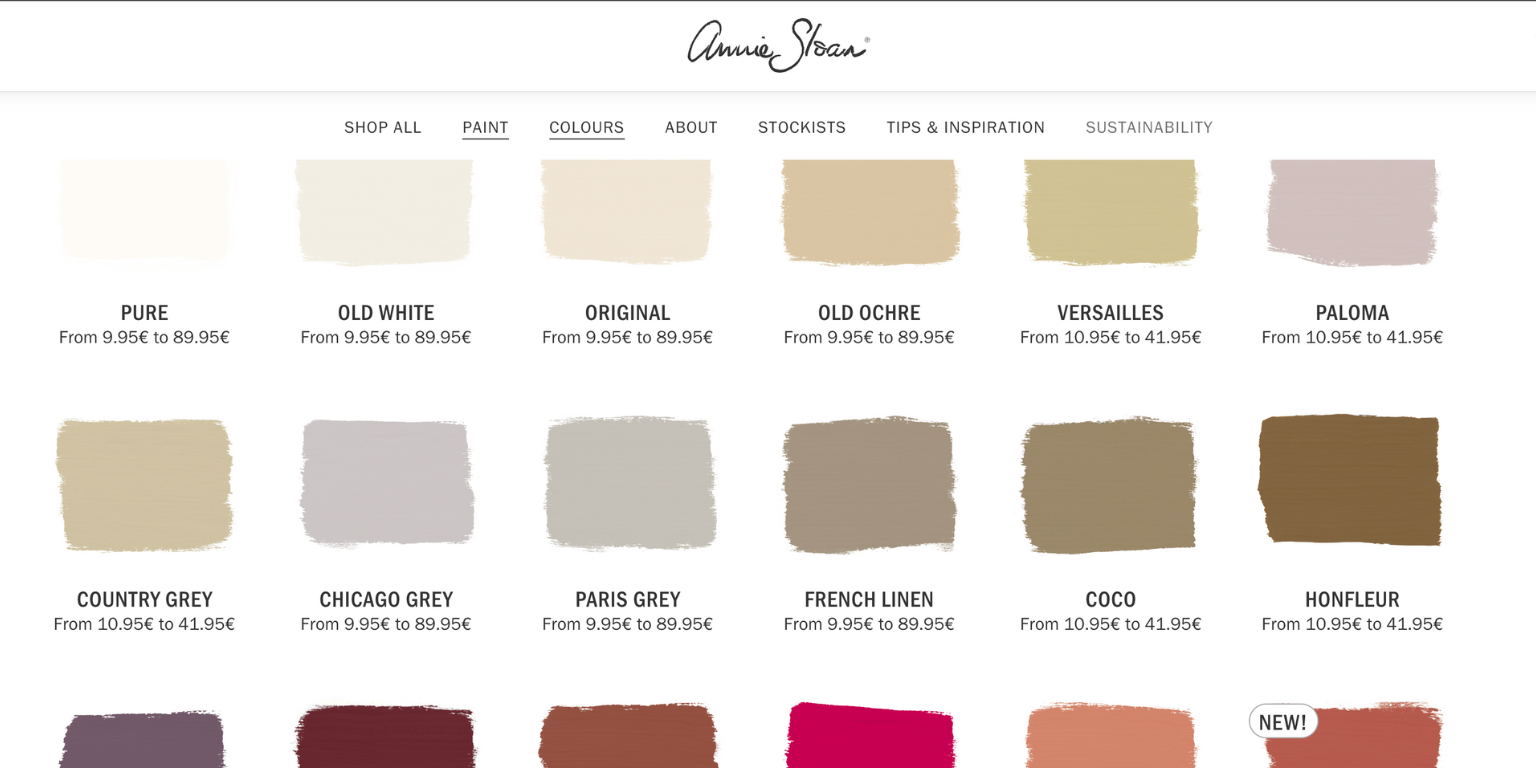
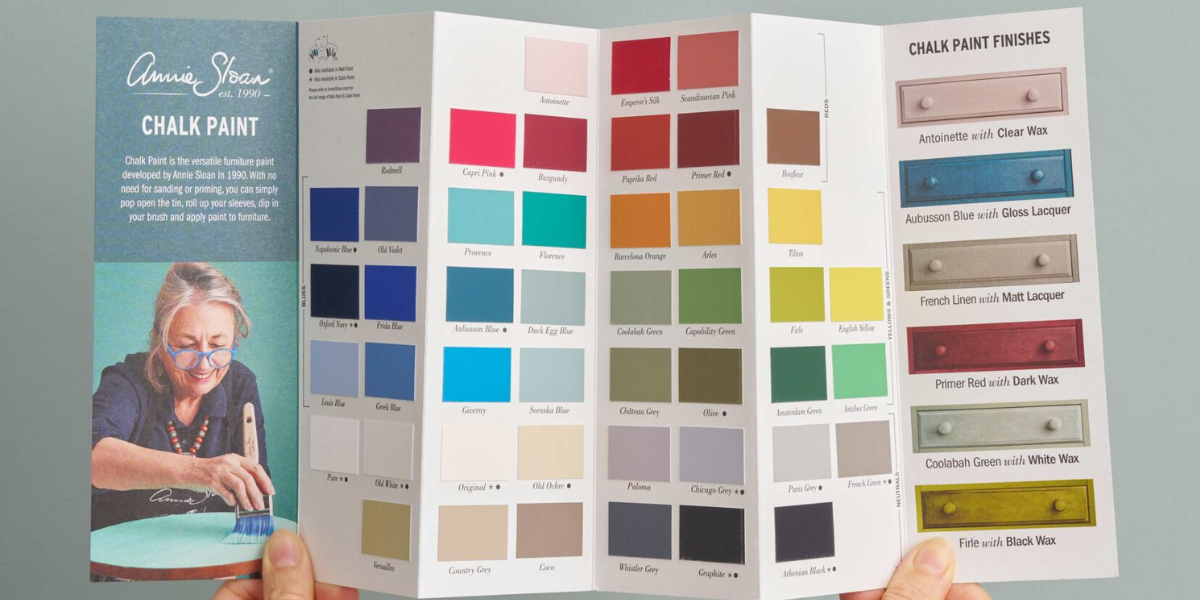
Chalk paint is a decorative paint first invented by designer Annie Sloan in 1990. In fact, the term “chalk paint” is a registered trademark for that company. Since 1990, many other paint companies have created their version of chalk paints.

Chalk paint is a water-based, non-toxic paint that dries to a smooth, completely matte, “chalky” finish. Once it dries, there is absolutely no sheen to it at all.

This finish is achieved by the addition of minerals to a basic paint formula. It’s a popular choice for anyone who wants to transform an old piece of wood furniture or to create a “distressed” appearance on an object.

Chalk-style paint is easy to apply and comes ready to use. Other than stirring it a bit like you would any other paint, you can paint with it as soon as you open the can.

It will adhere to just about any porous surface without the need for any sanding. If you want to use it on a shiny or varnished surface, a little bit of light sanding will help the paint stick. The coverage is smooth, and for many projects, only one or two coats of paint are needed.

Much like milk paint, chalk-style paint is very environmentally friendly. It is water-based, non-toxic, and has a very low amount of volatile organic compounds. Some brands of chalk-style paint have a low odor, but it disappears when the paint is dry. 

Something interesting is you can even make your own chalk paint. There are two ways to do it. One is with BB Frosch and the other is your own homemade chalk paint recipe.

Uses For Milk Paint

Milk paint adheres to just about any porous surface. If you want to paint something that has a shiny surface, or wood with varnish on it, just lightly sand it and the milk paint should adhere with no problem.

Milk paint is a great choice for furniture, glass, and metal pieces. It is more difficult to get a distressed look on furniture than when using chalk-style paint, but it’s durable enough that you don’t necessarily have to use a finish coat with it.

Milk paint is also a good paint to use for cabinet doors, wood trim and framework, or even interior walls in your home. It holds up well to any piece that will be touched frequently.

Because milk paint is thinner than chalk paint, you’ll need to use at least two coats if you want opaque coverage. A single coat of milk paint will be semi-transparent and can be a lovely way to highlight wood grain and textures. 

Is Milk Paint Durable?

Milk paint is incredibly durable. The casein proteins and lime in the paint dry to form an impressively hard bond to whatever surface they’re in contact with.

Once you complete painting something with milk paint, the finish will stay vibrant for years. It shouldn’t chip (unless you purposely distress it) and the colors won’t fade significantly over time.

It’s a great choice if you want a matte finish on surfaces that will be touched quite a bit.

Usually, it isn’t necessary to apply any top coat to surfaces painted with milk paint, but if you want a top coat, an oil-based product such as tung oil is preferable to a finishing wax. Be sure to let the paint dry for at least 24 hours before finishing with any oil products.

Milk Paint vs Chalk Paint On Kitchen Cabinets

Both milk paint and chalk paint can make your kitchen cabinets look great. If your kitchen has a “farmhouse chic” decorating theme, either of these paints will look fabulous.

However, milk paint has a slight advantage over chalk-style paint if you’re going to paint your cabinets. That advantage comes down to the durability of milk paint. 

Chalk paint on cabinets will look great at first, but it won’t be long before it will start to show some wear and tear. If you choose to use chalk-style paints on cabinet doors, you will definitely need to apply a finishing wax top coat.

This will help your chalk-style paint last longer, but your paint job won’t look quite as perfectly matte on the surface. Even with a wax top coat, the wax will periodically need to be refreshed.

Milk paint is a better choice for cabinet doors. You’ll still have a mostly matte finish with just a slight sheen, but you’ll also have increased durability. Since cabinet doors are something that will frequently be moved and touched, you need paint that can handle a lot of use. 

Milk Paint vs Chalk Paint For Furniture

Deciding whether to use milk paint or chalk-style paint on a piece of furniture really depends on what you want your finished piece to look like. Both paints are good choices for transforming wood furniture into eye-catching vintage-style pieces.

Because milk paint is thinner than chalk-style paint, you can use one or two coats to give furniture a “washed” appearance. This is a good way to highlight any piece with attractive wood grain. If you want a more opaque finish, you can apply more coats of milk paint, allowing time to dry between each coat.

Because milk paint is so highly durable, you can get away with not needing a sealant over your paint. The paint will last for years and the colors stay beautifully vibrant.

It’s possible to get a “distressed” or “chippy” look with milk paint, but it takes a little more work than with chalk-style paint. Because milk paint dries to such a hard finish, it’s more challenging to sand or chip it away.

Try sanding your furniture before the milk paint is fully dry to make it easier.

Chalk-style paint, on the other hand, distresses beautifully with just a bit of light sanding. It’s easy to bring out carved details or wood grain when using chalk-style paints. Chalk paint also goes on smoothly, with even coverage. However, if your painted furniture will be something that gets touched a lot, you will need to apply a wax sealant coat over chalk-style paint to protect it. 

Milk Paint Brands

There are several brands of milk paint available. Some may be better than others so make sure to read the descriptions. I wrote a full post about the best milk paints already but here are some of the most popular brands:

Real Milk Paint Co

The Real Milk Paint Co. has an impressive selection of over 50 colors. It dries quickly and has no odor once dried. It is made of 100% organic materials. It’s easy to mix to a smooth consistency and doesn’t need any primer for most surfaces. However, this gets a bad rep online and I wouldn’t recommend this one.

Rust-Oleum Milk Paint

Rust-Oleum is one of the most popular brands of milk paint. It is also one of the highest-rated. If I had to suggest only one brand of milk paint, this is the one I recommend. It may be priced slightly higher than others but I believe it’s worth it.

Get it Here

Miss Mustard Seed

Miss Mustard Seed’s Milkpaint is another brand with a large selection of colors and non-toxicity. Miss Mustard Seed also produces additives for its milk paint, such as an anti-foaming additive for smooth mixing and hemp seed oil as an eco-friendly finishing product.

Old Fashioned Brand Milk Paint

Old Fashioned Brand Milk Paint has a slightly small selection of colors, but they are especially vibrant. Like other brands, this paint is non-toxic and safe for use on children’s furniture and toys. Old Fashioned Brand is made in small batches, using all-natural earth pigments.

Is Milk Paint Or Chalk Paint Cheaper?

The three brands of milk paint mentioned above range in price from approximately $23 to $28 for enough powder to mix one pint of paint.  Depending on the brand, chalk paints range in price from approximately $16 to $28 for the same amount of paint. While it may seem there’s not a huge difference in price, milk paint might be a better value in the long term. Because the powdered form of milk paint can last for years, you can mix as small a quantity as you need for your project and not have to worry about having wasted leftover paint.

Which is Right for You?

In summary, milk paint and chalk paint are both great but for slightly different purposes. Determining which is right for you is completely dependent on the project and the look you’re going for. Have a look around the website to get some ideas for chalk paint and milk paint projects.

  • « Go to Previous Page
  • Page 1
  • Interim pages omitted …
  • Page 25
  • Page 26
  • Page 27
  • Page 28
  • Page 29
  • Interim pages omitted …
  • Page 88
  • Go to Next Page »

Primary Sidebar

Heather from Whipperberry
Hello... my name is Heather and I'm the creator of WhipperBerry a creative lifestyle blog packed full of great recipes and creative ideas for your home and family. I find I am happiest when I'm living a creative life and I love to share what I've been up to along the way... Come explore, my hope is that you'll leave inspired!

Footer

  • Privacy Policy
  • Crafts
  • Food
  • Gifts
  • Holidays
  • Home
  • Mom Life
  • Recipes
  • Travel

Copyright © 2026 · Seasoned Pro